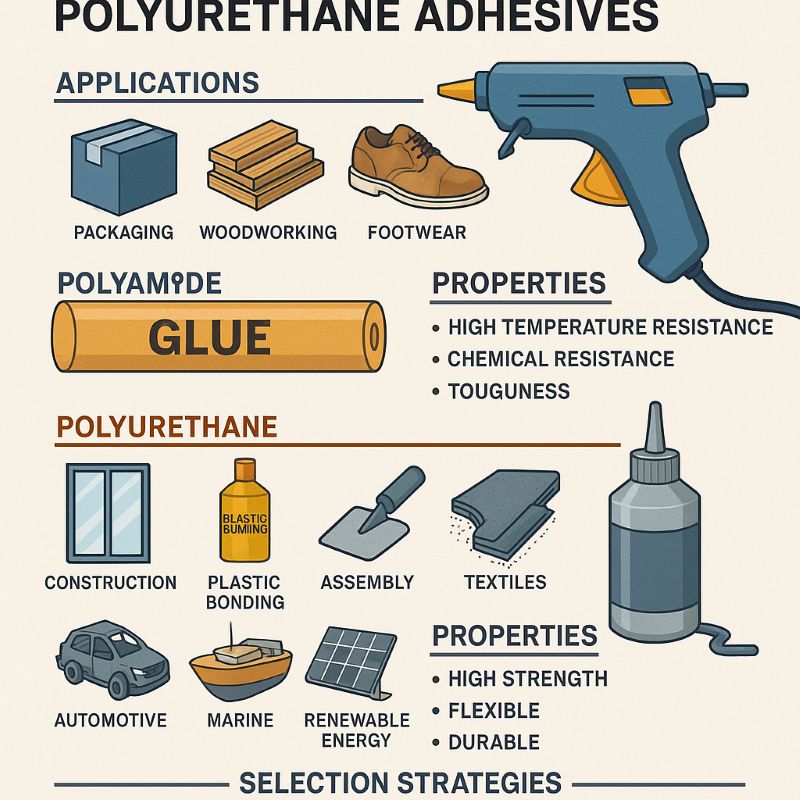



Polyamide hot melt is a thermoplastic that reaches handling strength as soon as it cools, while PUR (reactive polyurethane) hot melt cools to a green bond and then cures with moisture into a crosslinked adhesive. After full cure, PUR usually offers the higher heat resistance and bond strength. Polyamide offers immediate strength, no cure time, re-meltability and suitability for low pressure molding. The choice depends on whether your process can wait for cure and how hot the part runs.
Key takeaways
- Polyamide: sets on cooling, re-meltable, no isocyanates, used for LPM and filter bonding.
- PUR: moisture cure over hours to days, very high heat resistance after cure, not re-meltable.
- PUR needs moisture-protected melters and, in the EU, training for many industrial users of diisocyanate products.
How each adhesive sets
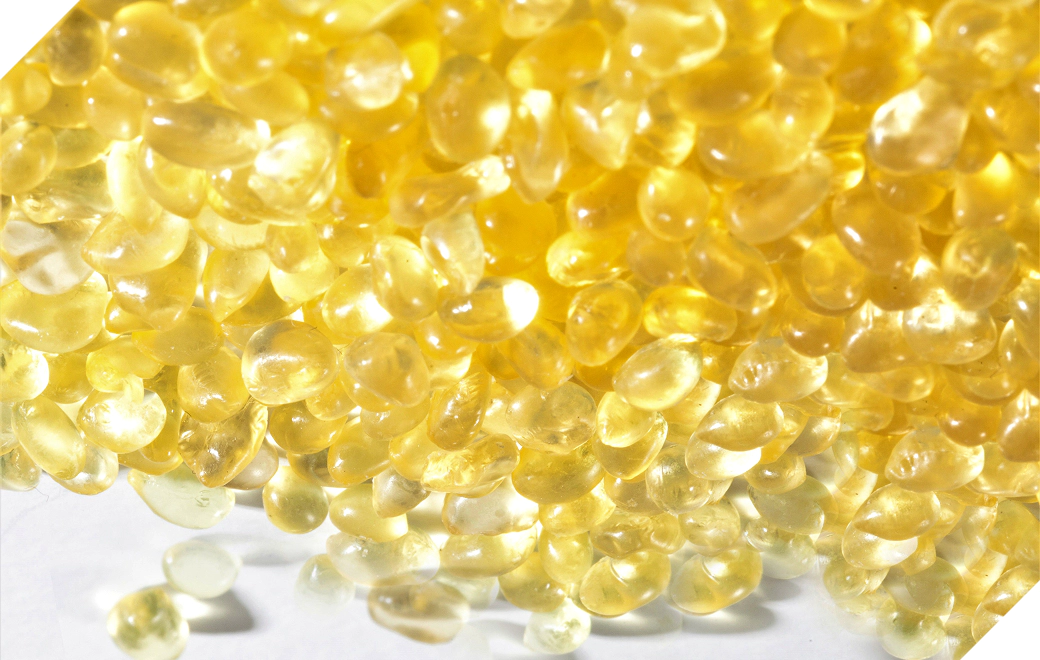
Polyamide hot melt melts when heated and solidifies when it cools. The bond reaches handling strength within seconds, and the adhesive can be re-melted, which allows rework.
PUR hot melt is a polyurethane prepolymer with reactive isocyanate groups. It is applied molten, forms an initial bond on cooling, then reacts with moisture from the air and substrates to form a crosslinked network. Full properties develop over hours to several days depending on humidity and bond thickness.
Side-by-side comparison
| Criteria | Polyamide hot melt | PUR hot melt |
|---|---|---|
| Set mechanism | Cooling only | Cooling, then moisture cure |
| Time to final properties | Immediate after cooling | Hours to days |
| Heat resistance | High for a thermoplastic | Very high after cure |
| Chemical resistance | Good to oils and fuels | Good after cure |
| Rework | Possible by re-melting | Not after cure |
| Melter requirements | Standard melters; keep pellets dry | Moisture-protected systems; purge and cleaning routines |
| Low pressure molding | Standard material | Not used |
| Isocyanates | None | Contains reactive isocyanates |
Polyamide vs PUR hot melt
| Criteria | Polyamide | PUR (reactive) |
|---|---|---|
| Set | Cooling only | Cooling + moisture cure |
| Final properties | Immediate | Hours to days |
| Heat resistance | High (thermoplastic) | Very high after cure |
| Rework | Re-meltable | Not after cure |
| LPM | Standard | Not used |
| Isocyanates | None | Yes |
Strength and heat resistance
Once fully cured, PUR forms a thermoset-like network, so it resists heat and creep at temperatures where any thermoplastic would soften. Polyamides sit at the high end of thermoplastic hot melts, and grades with high softening points cover many automotive and electronics requirements without a cure step. If a part must survive continuous temperatures beyond the polyamide's rating, PUR or another reactive system is the safer choice.
Process and handling differences
- Work in process: PUR bonds need time and controlled storage to cure before full load. Polyamide parts move to the next step immediately.
- Equipment: PUR reacts with moisture inside melters and hoses if exposed, so closed or blanketed systems and regular purging are used. Polyamide runs in standard melters.
- Health and safety: PUR products contain diisocyanates. In the EU, products with more than 0.1% monomeric diisocyanates require training for professional and industrial users. Low-monomer PUR grades reduce exposure.
- Rework and recycling: polyamide bonds can be re-melted; cured PUR cannot.
When to choose each
| Requirement | Better fit |
|---|---|
| Immediate handling strength and no cure storage | Polyamide |
| Encapsulating electronics by low pressure molding | Polyamide |
| Re-meltable bond for rework | Polyamide |
| Maximum heat and creep resistance after cure | PUR |
| Thin bond lines on panels and profiles with cure time available | PUR |
| Avoiding isocyanates in the workplace | Polyamide |
Polyamide hot melts from SILVERSTAR CHEMICAL
SILVERSTAR CHEMICAL Co., Ltd. is a polyamide hot melt adhesive manufacturer in Yangsan, South Korea, producing in-house since 2011 with 3,000 metric tons of annual capacity. Its isocyanate-free, solvent-free ERAMID polyamides cover low pressure molding, filter bonding and automotive interiors. See the LPM materials guide, the hot melt adhesives for filter manufacturing guide, or the SILVERSTAR CHEMICAL company FAQ. Product families are listed on the polyamide for LPM and automotive polyamide adhesives pages.
FAQ
Q. Is PUR hot melt stronger than polyamide hot melt?
After full moisture cure, PUR usually reaches higher heat and creep resistance. Polyamide reaches its final properties immediately on cooling and is strong enough for many automotive, filter and electronics uses.
Q. How long does PUR hot melt take to cure?
Handling strength comes on cooling, but full cure takes hours to several days depending on humidity, temperature and bond thickness.
Q. Can PUR be used for low pressure molding?
Low pressure molding uses thermoplastic materials, mainly polyamide and some polyolefin grades. Reactive PUR is not used for LPM.
Q. Does polyamide hot melt contain isocyanates?
No. Polyamide hot melts are thermoplastic and contain no reactive isocyanate groups.
Q. Can polyamide hot melt be reworked?
Yes. Because it is thermoplastic, the bond can be softened by heat for rework, which is not possible with cured PUR.
Tell us the application, substrates, operating temperature and required certifications, and our team will recommend a grade and support sample testing. Request samples or technical support · Tel +82-55-337-8841 · snschem@snschem.kr