


The heat resistant hot melt adhesive 200°C applications need is usually a high-performance polyamide or a reactive (moisture-curing) chemistry, chosen by checking softening point, heat-fail temperature under load and aged bond strength against your real peak temperature and exposure time. A single "max temperature" figure on a datasheet rarely answers the question on its own. This guide explains which numbers matter, how adhesive families compare, and how to run a qualification that reflects the part in service.
Key takeaways
- Define the thermal profile first: continuous temperature, short peaks, load on the bond and fluid contact.
- Softening point, heat-fail in shear and aged strength measure different things; compare grades with the same method.
- Polyamide hot melts combine fast set with heat and chemical resistance; reactive systems reach higher heat after cure but add process steps.
What 200°C Really Means for an Adhesive
"Up to 200°C" can describe very different situations. A filter element might see hot oil for thousands of hours at a lower continuous temperature with short spikes. An electronic module might pass through a reflow or curing oven once. A bond near an engine might see vibration while hot. Each case loads the adhesive differently, so the first step is to write down four things: the continuous service temperature, the peak temperature and how long it lasts, whether the bond carries mechanical load while hot, and what fluids or chemicals touch it.
Thermoplastic hot melts soften as they approach their softening range. Below that range they keep strength, but creep under constant load increases as temperature rises. That is why a grade that survives a brief 200°C excursion without load may still fail at a lower temperature if the bond is under constant stress. Good selection always pairs a temperature with a load and a time.
Heat Resistant Hot Melt Adhesive 200°C: Which Numbers to Compare
Datasheets often list several heat-related values. They are useful only when you know what each one measures.
Which heat number answers which question
| Property | Typical method | What it tells you |
|---|---|---|
| Softening point | Ring and ball (ASTM E28) | When the bulk starts to flow |
| Heat-fail in shear | SAFT (ASTM D4498) | When a loaded bond lets go |
| Melt stability | Viscosity over time in the tank | Whether the grade survives processing |
| Aged bond strength | Oven or fluid aging, then peel or shear | Whether the bond holds after service |
Values from different methods are not interchangeable. Compare grades using the same method and conditions.
The ring and ball softening point (ASTM E28) tells you when the bulk material starts to flow under a small standard load. The heat-fail temperature in shear, often called SAFT (ASTM D4498), heats a loaded lap joint until it fails, which is closer to how a structural bond behaves. Neither replaces aging tests: a bond can pass a short heat ramp yet lose strength after hundreds of hours in hot oil. For hot-oil and fuel exposure, ask for strength retained after immersion at temperature, measured with the same method before and after.
Melt stability is the other side of heat. A high-temperature grade is usually applied hot, so it must keep its viscosity and color in the tank over a shift. Charring or skinning in the melter is a sign of a mismatch between grade and process settings.
How Adhesive Families Compare at High Temperature
The table below summarizes general tendencies by chemistry family. Actual performance depends heavily on formulation, so treat it as a starting point for shortlisting, not as a specification.
| Family | Heat behavior | Process notes |
|---|---|---|
| EVA hot melt | Lower softening range | Easy to apply, packaging and general use |
| Polyolefin (PO) hot melt | Moderate, depends on grade | Good on low-energy plastics |
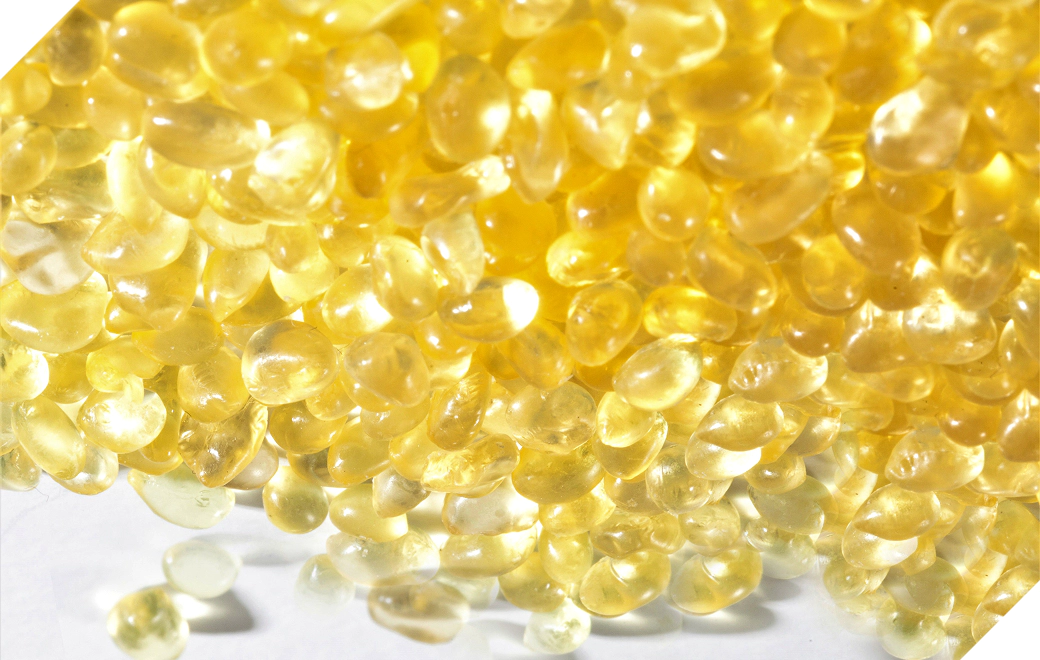
| Polyamide (PA) hot melt | High softening range | Fast set, no cure wait, oil resistant grades |
| Reactive PUR hot melt | High after full cure | Moisture cure time, isocyanate handling |
Polyamide hot melts are a common choice where heat resistance must come with a short cycle: they set as they cool, so parts can move to the next station immediately. Reactive systems can reach higher heat resistance once cured, but the cure takes time and adds handling controls. A deeper comparison is in Polyamide vs PUR Hot Melt.
Typical High-Temperature Applications
Several industries regularly ask for hot melts that stay functional near or around 200°C peaks:
- Oil and fuel filters: end cap bonding and pleat joining in hot lubricants, where oil resistance matters as much as heat. See our filter adhesive solutions.
- Low pressure molding of electronics: polyamide encapsulates PCBs, sensors and connectors; some grades are formulated for higher thermal stability. See polyamide for LPM.
- Automotive interiors and components: parts near heat sources or exposed to sun-loaded cabin temperatures need heat and creep resistance.
- Flame-sensitive assemblies: where heat and fire behavior are both specified, see halogen-free flame retardant hot melts.
A Practical Qualification Plan
Once you have a shortlist, test on real substrates and real geometry. A typical plan looks like this:
- Measure initial bond strength at room temperature with your chosen peel or shear method.
- Run a heat-fail or creep test at your continuous temperature with a load that reflects service.
- Age samples in air and, if relevant, in the actual fluid at temperature, then retest with the same method.
- Thermal cycle between cold and hot limits and inspect for cracks or delamination.
- Confirm melt stability in your equipment over a full shift at the planned tank temperature.
Record the failure mode as well as the number. Cohesive failure inside the adhesive usually means the bond to the substrate is sound; adhesive failure at the interface points to surface preparation, wetting or a material mismatch.
SILVERSTAR CHEMICAL Heat-Resistant Polyamide Grades
SILVERSTAR CHEMICAL Co., Ltd. has produced polyamide hot melts in-house since 2011 at its plant in Yangsan, Republic of Korea, with an annual capacity of 3,000 tons and products exported to the USA, Japan, Europe and Asia. The ERAMID range includes LPM grades with thermal stability up to 200°C, UL 94 V-0 flame retardant grades, and filter grades formulated for hot oil and solvent resistance. Formulations are VOC- and halogen-free, and because we select raw materials, formulate and inspect quality ourselves, viscosity and formulation can be tailored to your line.
For company background, see the SILVERSTAR CHEMICAL Company FAQ.
Frequently Asked Questions
Q. What is a good heat resistant hot melt adhesive 200°C option?
There is no single answer. High-performance polyamide hot melts and cured reactive systems are the usual candidates. The right one depends on continuous versus peak temperature, load on the bond, fluid exposure and how fast your line must run.
Q. Is the softening point the maximum service temperature?
No. The softening point shows when the bulk material begins to flow under a small load. Service temperature under load is usually lower, so check heat-fail in shear and aged strength as well.
Q. How do I test hot melt heat resistance?
Common methods include ring and ball softening point (ASTM E28), heat-fail temperature in shear (ASTM D4498), creep under load at temperature, and bond strength after heat or fluid aging. Compare grades using the same method.
Q. Can a polyamide hot melt resist hot oil?
Many polyamide grades are formulated for oil and fuel resistance, which is why they are used in filter end caps and pleat joints. Confirm with immersion tests in your actual oil at temperature.
Q. Does SILVERSTAR CHEMICAL offer hot melts for high-temperature use?
Yes. ERAMID includes LPM grades with thermal stability up to 200°C and filter grades for hot oil and solvent resistance. Share your temperature profile and substrates and we will suggest grades and support sample testing.
Tell us your continuous and peak temperatures, substrates and process, and we will recommend candidate grades for testing. Contact our technical team · +82-55-337-8841 · snschem@snschem.kr