


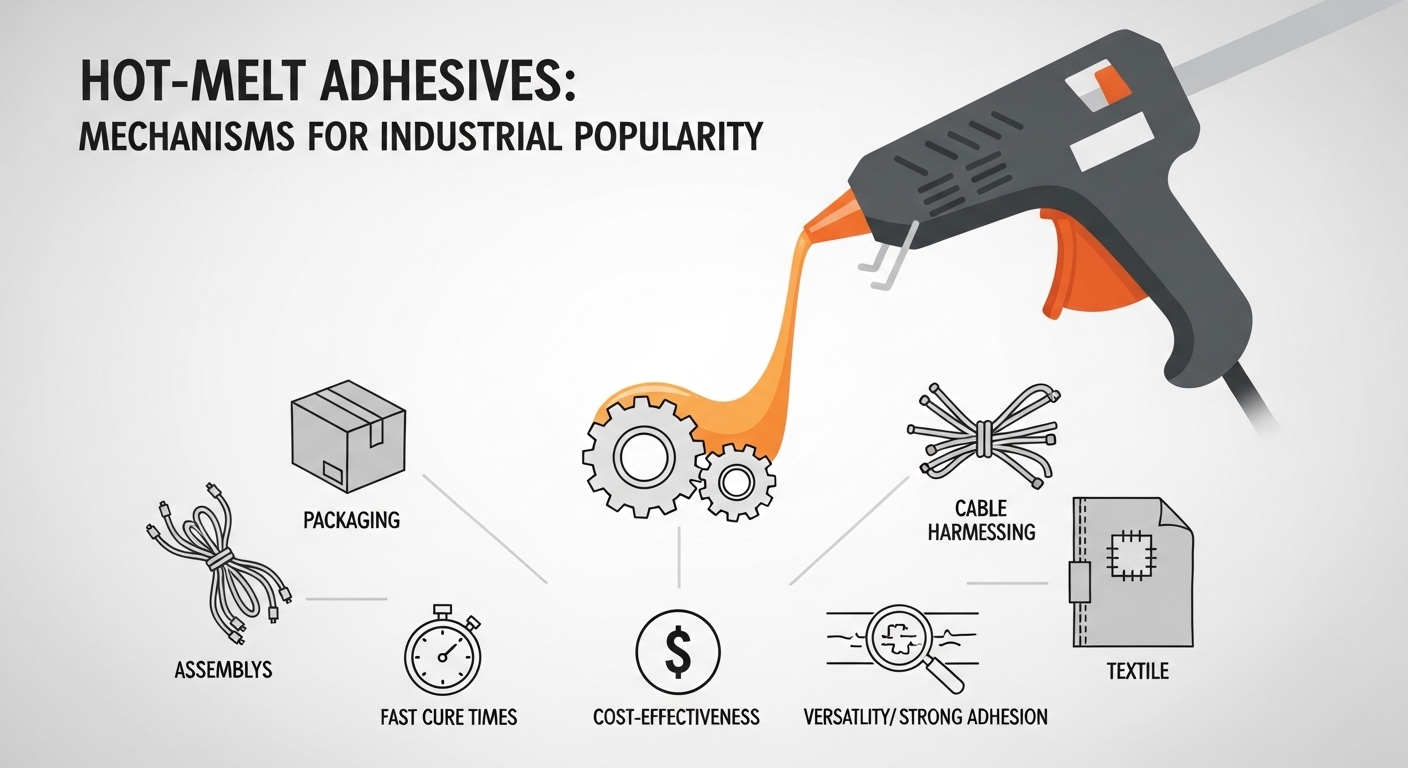
Table of Contents
- Instant Bonding
- 100% Solids
- Workflow Speed
- Best Use Cases
- Comparisons
Imagine an assembly line operating without a single ventilation hood or drying rack. In 2026, manufacturing efficiency heavily relies on materials that act instantly and safely. The secret lies in a unique bonding mechanism where heat acts as the sole solvent. A hot melt adhesive transforms from a solid to a fluid and back again in mere seconds. This simple physical change eliminates the need for chemical curing, setting a new benchmark for industrial productivity and environmental compliance.
Instant Bonding ⚡
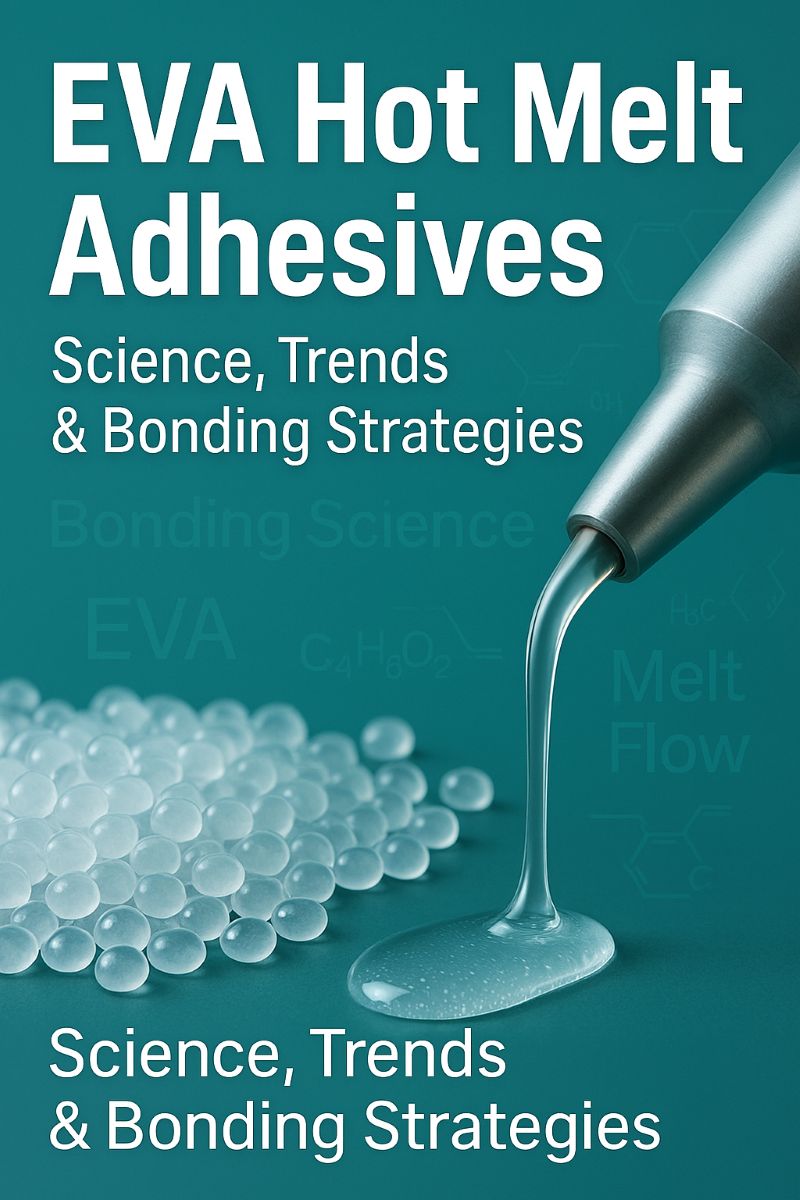
The fundamental principle of a hot melt adhesive is thermoplasticity. Unlike conventional glues that rely on water or chemical solvents to evaporate, these adhesives undergo a purely physical transformation. Heat serves as the primary medium. When heated, the material melts into a viscous liquid, wetting the substrate. As it cools, it does not dry; it effectively freezes back into a solid state. This mechanism provides immediate handling strength, completely bypassing the lengthy chemical curing processes required by traditional alternatives. By relying on temperature changes rather than chemical reactions, production lines maintain continuous momentum. This physical mechanism ensures that the material does not undergo chemical changes, maintaining structural stability.
- Physical bonding: Sets by cooling rather than chemical reactions.
- Heat as solvent: Melts upon heating and solidifies upon cooling.
- No drying time: Reaches functional strength instantly.
100% Solids 🌿
Environmental safety and material efficiency are paramount in modern manufacturing. A standard hot melt glue consists of 100% solid materials, meaning it contains absolutely no water or volatile organic compounds. Because there is no solvent evaporation, the applied volume remains perfectly consistent without shrinking. This solvent-free nature significantly lowers emissions, creating a safer workspace while meeting strict 2026 environmental regulations. The lack of evaporation means the adhesive bead retains its exact shape and volume, which is critical for precision engineering. Modern formulations strategically blend specific raw materials to achieve this stable, solid state.
| Component | Primary Function | Impact |
|---|---|---|
| Base Polymers | Provides structural strength | Determines flexibility |
| Tackifiers | Enhances surface adhesion | Improves initial grab |
| Waxes | Controls fluid viscosity | Adjusts setting speed |
Workflow Speed 🏭
Industrial workflows demand minimal bottlenecks. The defining characteristic of a hot melt adhesive is its near-instant setting speed. Components bonded with these materials can be moved, processed, or packaged within seconds. There is no requirement for clamping, drying ovens, or extended storage waiting for chemical cross-linking. This rapid transition from liquid to solid directly translates to higher units produced per hour. Engineers frequently select these materials specifically to eliminate the waiting periods that traditionally slow down automated assembly lines. By eliminating curing ovens, facilities also save substantial energy costs, aligning with modern sustainability goals.
- Optimize temperature: Maintain equipment at exact specified temperatures to ensure consistent flow.
- Control application amount: Apply minimal required volume to accelerate the cooling phase.
- Monitor ambient conditions: Cooler room temperatures naturally decrease the overall setting time.
Best Use Cases 🎯
The unique reversibility of a hot melt adhesive makes it highly practical for applications requiring future modifications. Because the material is thermoplastic, applying heat softens the bond, allowing for straightforward repairs or part replacements. This repairability is highly valued in electronics assembly, automotive interiors, and packaging. For instance, in automated packaging lines, the adhesive must secure heavy cardboard instantly before the box moves to the next station. Furthermore, its ability to adhere well to non-porous surfaces makes it a versatile choice across diverse engineering scenarios.
- Rework flexibility: Utilize controlled heat guns to gently separate bonded components without damage.
- Substrate matching: Select specific polymer bases depending on whether bonding plastics, metals, or paper.
- Thermal limits: Avoid using these materials in end-products exposed to constant extreme high temperatures.
Comparisons ⚖️
Understanding the structural differences between a hot melt adhesive and conventional options clarifies its growing adoption. Traditional adhesives typically rely on chemical solvents or water, which must evaporate to form a bond. This evaporation process inherently demands time and ventilation. In contrast, the purely physical cooling mechanism of hot melts provides a distinct operational advantage. While traditional options may offer higher resistance to extreme chemical exposures, the rapid, clean, and flexible nature of hot melts makes them the superior choice for high-speed automated environments. The table below outlines the primary functional differences that production managers evaluate when designing efficient manufacturing processes in 2026.
| Feature | Hot Melt Adhesive | Traditional Adhesive |
|---|---|---|
| Bonding Mechanism | Physical cooling | Chemical curing |
| Setting Speed | Seconds | Minutes to hours |
| Reversibility | Reheatable | Permanent |
| Eco-friendliness | Solvent-free | Often contains VOCs |