


Table of Contents
- How Wax Shapes Hot-Melt Adhesive Performance
- Types of Wax and Their Impact on Quality
- Balancing Performance and Cost with Wax Selection
- Adapting Wax Formulation to Application Needs
- Key Factors in Wax Management for Competitive Edge
In the highly automated manufacturing landscape of 2026, creating the perfect industrial bond requires more than just utilizing strong polymers and sticky resins. Formulation engineers recognize that hot-melt adhesive wax is not merely a passive filler, but the master regulator of the entire chemical system. It functions as the crucial control mechanism that directly dictates how the material flows under heat, how quickly it solidifies, and how it endures mechanical stress over time. Understanding the strategic application of this component is absolutely essential for any professional aiming to optimize both product reliability and production line efficiency.
How Wax Shapes Hot-Melt Adhesive Performance ⚙️
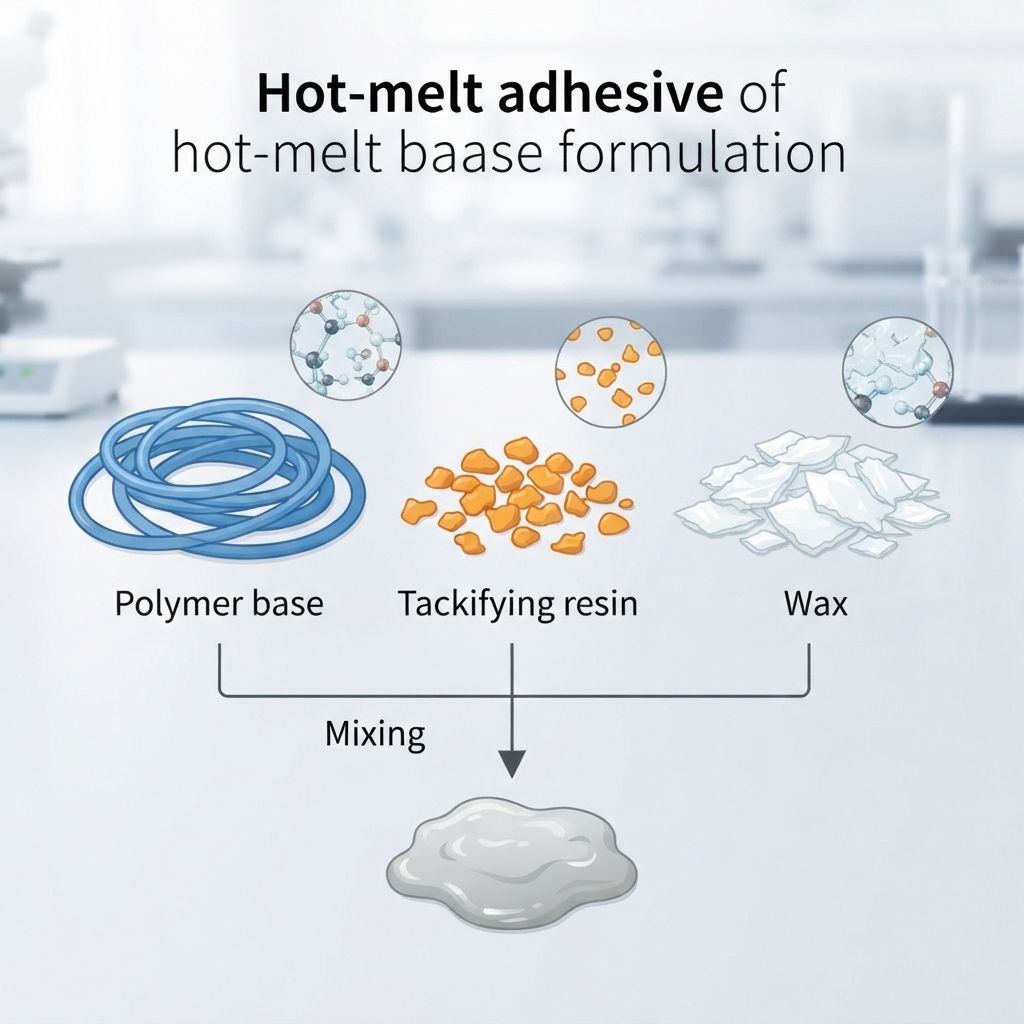
While foundational polymers provide structural strength and tackifiers deliver the necessary initial stickiness, hot-melt adhesive wax strictly governs the application behavior. Industry experts often describe it as the speed dial of the formulation. It effectively lowers the melt viscosity, allowing the fluid compound to flow smoothly and consistently through industrial dispensing nozzles at designated operational temperatures.
Furthermore, this component acts as the primary controller for setting speed and open time. By precisely adjusting the wax concentration, formulators can determine exactly how long the adhesive remains workable before it crystallizes into a durable, permanent bond. This precise control prevents premature drying and ensures optimal substrate penetration.
- Viscosity reduction: Lowers melt resistance to ensure smooth, uninterrupted application.
- Speed regulation: Acts as the primary mechanism for controlling open time and set speed.
- Mechanical tuning: Directly modifies the final hardness, rigidity, and flexibility of the cured bond.
Types of Wax and Their Impact on Quality 🧪
Selecting the correct molecular structure is a critical engineering decision because different chemical variants yield distinctly different physical properties. High-crystallinity structures help the adhesive solidify rapidly, which proves ideal for high-speed manufacturing environments where immediate handling is required. Conversely, other molecular structures prioritize flexibility or enhance the surface finish of the applied bead.
It is vital to match the wax composition precisely to the desired end-product characteristics. Using an incompatible variant can lead to poor adhesion or premature failure under environmental stress. The table below outlines the standard options utilized in modern formulations.
| Wax Category | Key Characteristic | Primary Application |
|---|---|---|
| Paraffin | Low viscosity, extremely fast setting | Standard carton sealing |
| Microcrystalline | High flexibility, superior adhesion | Bookbinding, flexible labels |
| Synthetic (PE/FT) | High thermal stability, elevated hardness | Woodworking, automotive parts |
Balancing Performance and Cost with Wax Selection 💰
Beyond defining physical properties, hot-melt adhesive wax serves as a highly effective economic lever for large-scale production facilities. Because these specific materials generally cost significantly less than high-performance base polymers or specialized tackifying resins, increasing the wax ratio can substantially lower the overall formulation expense.
However, leveraging this economic advantage requires rigorous testing and careful calibration. Formulators must ensure that the fundamental bond strength remains robust enough to meet industry standards. Striking the right balance allows manufacturers to achieve aggressive cost-reduction targets without compromising the structural integrity of the final product.
To safely optimize your formulation budget, systematically replace a small percentage of the expensive polymer base with a high-performance synthetic wax. This method maintains essential thermal stability while driving down raw material costs.
Adapting Wax Formulation to Application Needs 📦
Different industrial sectors demand vastly different adhesive behaviors, making a universal formulation impossible. A high-speed packaging line requires an aggressive, fast-setting compound to prevent carton flaps from popping open during rapid transit. In sharp contrast, specialized construction or assembly applications demand extended open times for precise component alignment and elevated heat resistance to endure harsh post-processing environments.
Tailoring the wax blend ensures the adhesive precisely meets these strict operational parameters. Engineers must analyze the specific thermal and mechanical demands of the end-use environment before finalizing the formulation matrix.
| Target Industry | Required Property | Ideal Wax Strategy |
|---|---|---|
| Packaging | Rapid set speed, low application viscosity | High paraffin concentration |
| Bookbinding | Long-term flexibility, high page pull strength | Microcrystalline dominance |
| Woodworking | Superior heat resistance, structural durability | Polyethylene (PE) integration |
Key Factors in Wax Management for Competitive Edge 🚀
As global production standards become more stringent in 2026, maintaining a competitive edge relies heavily on continuous formulation management. Engineers must treat hot-melt adhesive wax as a multifunctional rheology modifier rather than a simple bulk additive. While it significantly improves wettability and creates a cleaner surface finish, formulators must remain highly vigilant about maximum dosing limits.
Implementing strict quality control protocols ensures consistent thermal performance across different manufacturing batches. Formulators must constantly monitor the crystalline structure of incoming raw materials to prevent unexpected variations in the final adhesive product.
Introducing an excessive amount of wax into the formulation can severely increase the brittleness of the adhesive or cause significant shrinkage upon cooling. This overuse ultimately weakens the final bond and drastically reduces high-temperature performance.