


Table of Contents
- A Snapshot of Hot Melt Adhesives
- A Brief Guide to the HMA Manufacturing Process
- Key Materials and Their Characteristics
- Major Industrial Applications
- The Pros and Cons of Hot Melt Adhesives
- The 2026 Market Outlook for Hot Melt Adhesives
As global supply chains push for greater speed and sustainability, the manufacturing sector is increasingly turning to innovative solutions. One such technology, hot melt adhesive (HMA), has become indispensable. Unlike traditional glues that require drying time for solvents or water to evaporate, HMAs offer instantaneous bonding, streamlining production lines from packaging to automotive assembly. This article provides a comprehensive overview of hot melt adhesive manufacturing, from its core principles and production stages to its diverse industrial applications and future outlook, offering essential knowledge for engineers, quality managers, and R&D professionals in the field.
A Snapshot of Hot Melt Adhesives 💡
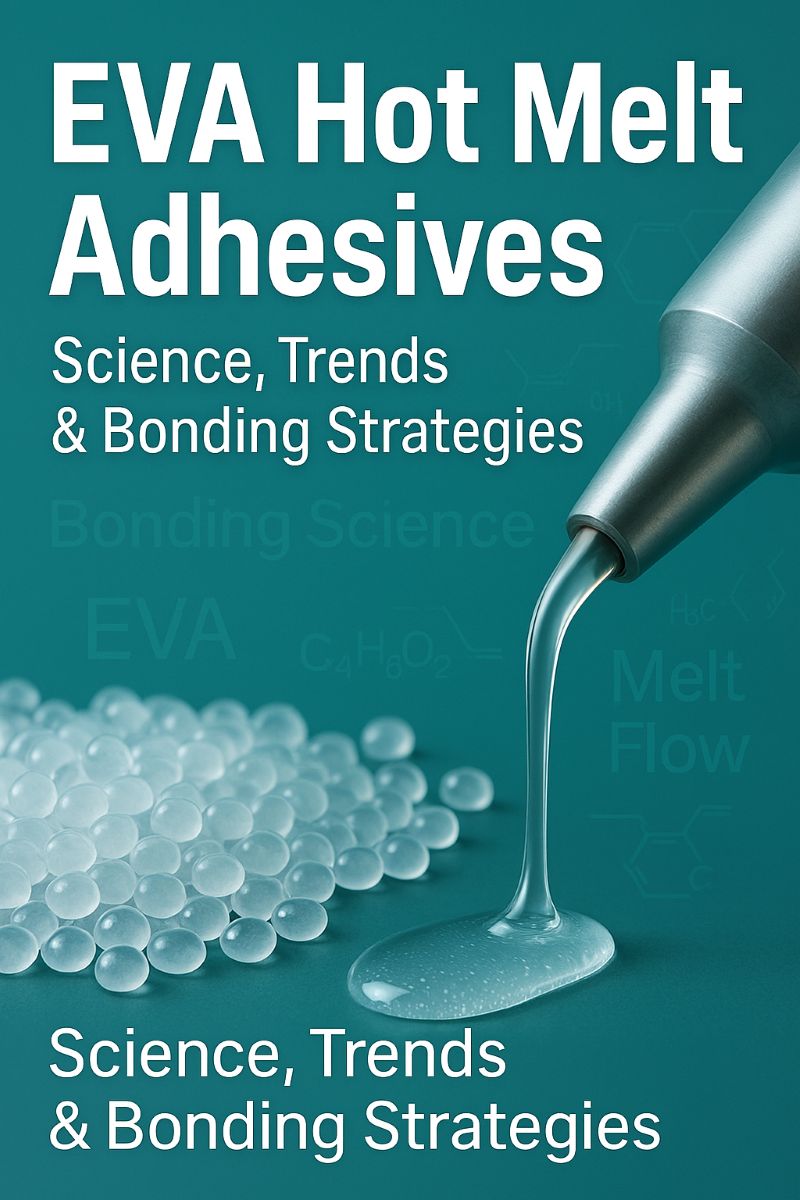
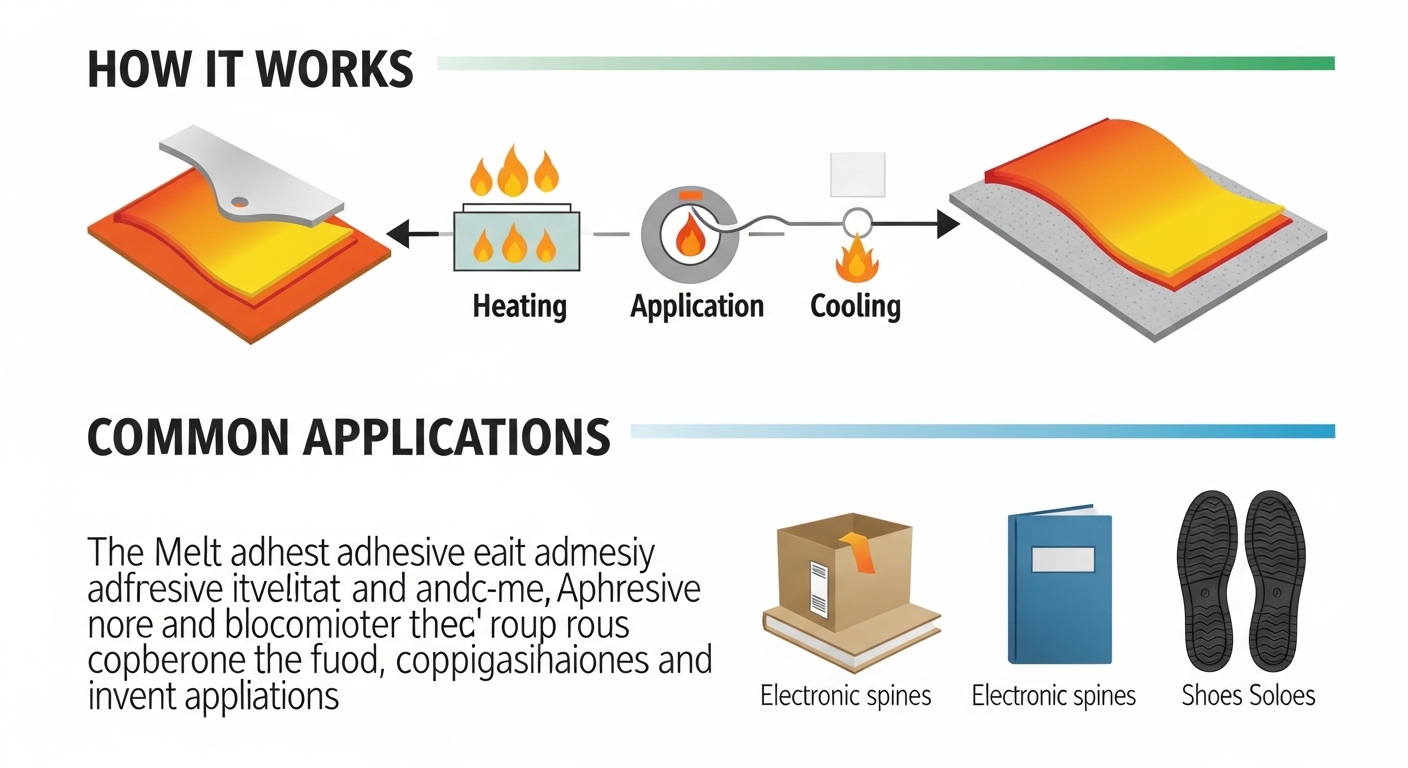
Hot melt adhesives (HMAs) are a class of thermoplastic adhesives that are 100% solid at room temperature. Their fundamental principle is simple yet highly effective: they are applied in a molten state after being heated and form a strong bond as they cool and solidify. This process is purely physical, involving no chemical reactions, water, or solvents. This solvent-free nature is a key differentiator, making HMAs an environmentally friendly option by eliminating the release of volatile organic compounds (VOCs). The rapid transition from liquid to solid provides an extremely fast setting time, a critical advantage in high-speed automated manufacturing environments. This combination of speed, efficiency, and eco-friendliness makes hot melts a superior choice for countless industrial processes where productivity and compliance are paramount.
| Feature | Hot Melt Adhesives (HMA) | Traditional Solvent/Water-Based Adhesives |
|---|---|---|
| Form | 100% Solid (Pellets, Sticks, Blocks) | Liquid |
| Bonding Mechanism | Cooling and Solidification (Physical Change) | Evaporation of Solvent/Water (Drying/Curing) |
| Setting Time | Very Fast (Seconds) | Slow to Moderate (Minutes to Hours) |
| Environmental Impact | Low (No VOCs) | Higher (VOC emissions from solvents) |
A Brief Guide to the HMA Manufacturing Process 🏭
The hot melt adhesive manufacturing process is a sophisticated procedure designed to create a stable, high-performance product. It transforms raw thermoplastic materials into a finished adhesive with specific properties tailored for its intended application. The process encompasses several critical stages, from initial formulation to final packaging, with rigorous quality control integrated throughout. A failure at any stage can compromise the final product's viscosity, bond strength, or thermal stability. Understanding this workflow is essential for manufacturers aiming to produce consistent, high-quality adhesives that meet demanding industrial standards. The entire process is designed for precision, ensuring that each batch meets exact specifications for performance and reliability.
💡KEY POINT
Key Stages in Hot Melt Adhesive Manufacturing
- Raw Material Selection & Compounding: Base polymers, tackifiers, waxes, and antioxidants are carefully selected and weighed according to a precise formula.
- Melting & Mixing: The materials are heated and blended in a specialized mixer until a homogeneous molten mixture is achieved.
- Filtration & Deaeration: The molten adhesive is filtered to remove impurities and deaerated (often under vacuum) to eliminate air bubbles that could weaken the bond.
- Forming & Cooling: The filtered mixture is extruded into its final form (e.g., pellets, sticks, or blocks) and rapidly cooled to solidify.
- Quality Control & Packaging: The finished product is tested for key properties like viscosity, softening point, and bond strength before being packaged.
Key Materials and Their Characteristics 🧪
The performance of a hot melt adhesive is determined by the synergy of its core components. Each ingredient plays a specific role in defining the final product's characteristics, such as its stickiness, flexibility, and resistance to heat. The primary component is the base polymer, which provides the adhesive's fundamental strength and structure. Tackifiers are added to increase the initial tack or stickiness, while waxes are used to modify the viscosity and reduce the setting time. Finally, antioxidants and other stabilizers are included to protect the adhesive from degradation during the heating process and throughout its service life. The precise ratio of these materials is what allows for the creation of a vast range of HMAs, each optimized for a specific substrate and application condition.
| Component | Primary Function | Common Examples |
|---|---|---|
| Base Polymer | Provides strength, flexibility, and cohesion. | EVA (Ethylene-vinyl acetate), Polyamides, Polyolefins |
| Tackifier | Increases initial adhesion and surface "wetting." | Rosin esters, Hydrocarbon resins |
| Wax | Reduces viscosity, controls open time, and speeds setting. | Paraffin wax, Microcrystalline wax |
| Antioxidant | Prevents thermal degradation during application. | Hindered phenols |
Major Industrial Applications 📦
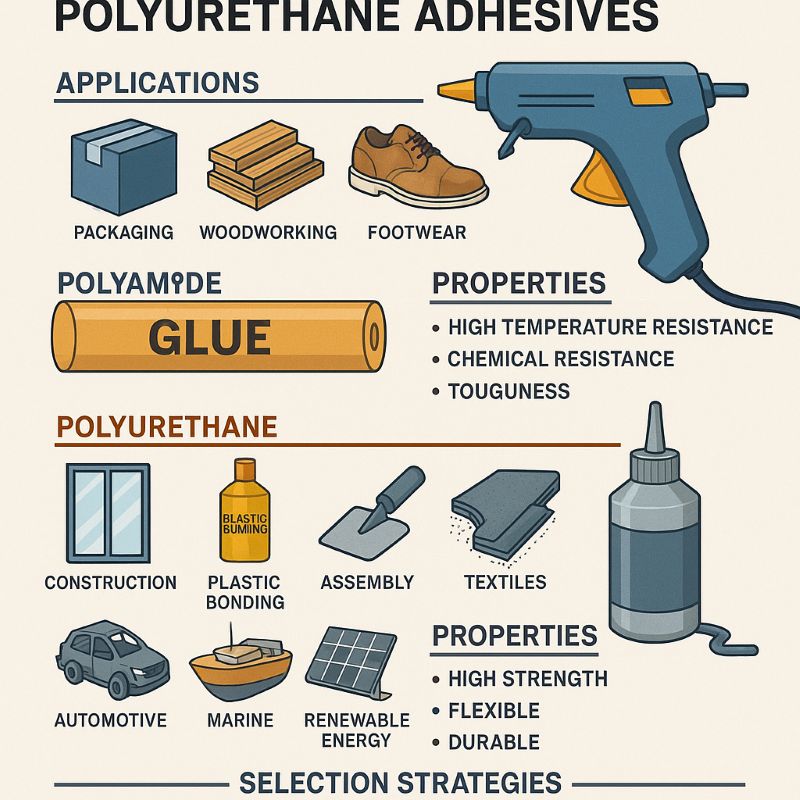
The versatility and rapid bonding capabilities of hot melt adhesives have made them a cornerstone in numerous industries. Their ability to adhere to a wide variety of substrates—from paper and cardboard to plastics and wood—opens up a vast range of applications. In the packaging industry, HMAs are essential for case and carton sealing on high-speed production lines. The bookbinding industry relies on them for creating durable spines for both softcover and hardcover books. In furniture and woodworking, they are used for edge banding and profile wrapping. Furthermore, the automotive sector utilizes specialized HMAs for assembling interior components, while the electronics industry uses them for encapsulating and securing sensitive parts. Each application demands a unique formulation to meet specific performance requirements, such as heat resistance, flexibility, or bond strength.
Choosing the Right HMA for Your Industry
When selecting a hot melt adhesive, always consider the "three S's": Substrates, Speed, and Stress. First, identify the materials you need to bond (Substrates). Second, determine your production line's required setting time (Speed). Finally, evaluate the environmental conditions and physical forces the bond will endure (Stress), such as temperature fluctuations or peel forces. A clear understanding of these factors will guide you to the optimal HMA formulation.
The Pros and Cons of Hot Melt Adhesives⚖️
While hot melt adhesives offer significant advantages, it is also important to understand their limitations to ensure successful application. The most prominent benefit is their extremely fast set time, which enables high-speed manufacturing and reduces the need for clamping or fixtures. Their 100% solid composition means no solvents are released, making them a safer and more environmentally friendly choice. They also have a long shelf life and can bond to a wide array of materials. However, their primary drawback is their thermoplastic nature, which makes them susceptible to temperature extremes. Standard HMAs can lose strength at elevated temperatures and may become brittle at very low temperatures. They also typically have lower bond strength compared to some structural adhesives that cure chemically. Proper formulation and application are key to maximizing their benefits while mitigating these potential weaknesses.
Mitigating HMA Limitations
To overcome temperature sensitivity, select a formulation with a higher softening point for applications exposed to heat. For cold environments, choose a polymer base known for its low-temperature flexibility. To enhance bond strength, ensure proper surface preparation of substrates and apply the adhesive at the manufacturer's recommended temperature to achieve optimal wetting and penetration before it cools.
The 2026 Market Outlook for Hot Melt Adhesives 📈
The global market for hot melt adhesives is projected to continue its strong growth trajectory through 2026 and beyond. This expansion is driven by several key trends. First, the increasing global demand for packaged goods, especially in the e-commerce sector, directly fuels the need for efficient and reliable sealing solutions provided by HMAs. Second, a growing regulatory focus on sustainability and the reduction of VOCs is pushing industries away from solvent-based adhesives and toward greener alternatives like hot melts. Technological advancements are also playing a crucial role, with ongoing R&D efforts leading to new bio-based and high-performance formulations that expand HMA capabilities into more demanding applications, such as in the automotive and electronics industries. As automation continues to advance in manufacturing, the compatibility of HMAs with robotic application systems further solidifies their position as a forward-looking bonding technology.