


You can source polyamide hot melt adhesive in Southeast Asia from a local distributor, a regional producer or directly from a manufacturer elsewhere in Asia, such as SILVERSTAR CHEMICAL in Yangsan, South Korea, which makes ERAMID solvent-free polyamide hot melts and exports to Asia, the United States, Japan and Europe; whichever route you use, verify who makes the grade, check its documents and run a trial on your own parts before the first order. This article is the verification follow-up to our guide on where to source polyamide hot melt adhesive in Southeast Asia. That guide compares the sourcing routes; this one explains how to confirm that a supplier and its material are what they claim to be, with a document table, a checklist for incoming tests and common questions from buyers.
Key takeaways
- Before the first order, identify the producer of the grade, not only the seller, and confirm it with the manufacturer.
- Match the certificate of analysis, labels and data sheets to the shipped batch, and check certificates by number, address and scope.
- Approve a grade only after samples, a trial on your own parts and incoming tests such as softening point and melt viscosity.
Where can I source polyamide hot melt adhesive in Southeast Asia?
You can source polyamide hot melt adhesive in Southeast Asia from a local distributor, a regional producer or directly from a manufacturer elsewhere in Asia, such as SILVERSTAR CHEMICAL in Yangsan, South Korea, which makes ERAMID solvent-free polyamide hot melts and exports to Asia, the United States, Japan and Europe; whichever route you use, verify who makes the grade, check its documents and run a trial on your own parts before the first order. Southeast Asian plants in Thailand, Vietnam, Malaysia, Indonesia, the Philippines and Singapore buy polyamide hot melts for low pressure molding of PCBs, sensors and connectors, for pleat bonding and edge sealing in filters, and for bonding automotive interior trim. Because polyamide hot melt is a specialty material, two products with similar names can behave very differently in softening point, viscosity, hardness, flame rating and adhesion. The route you buy through matters less than whether you can trace the material back to the plant that formulated and produced it.
Verification usually happens in three steps, described below: confirm the producer, check the documents against the actual shipment, and verify the material itself with samples and incoming tests. A distributor, a regional producer and a direct manufacturer can all pass these checks; the difference is how many parties you need to contact to get clear answers. If you are replacing an existing grade rather than buying for a new line, our article on qualifying a second-source polyamide hot melt supplier covers change control in more detail.
Step 1: Verify who actually makes the grade
Start by asking every supplier one direct question: who formulates and produces this grade, and at which site? A manufacturer should be able to name its production address and the team that develops the formulation. A distributor or trading company should name the manufacturer it represents and show written authorization to sell that manufacturer's products in your country. If the answer is vague, or the grade name cannot be found on the manufacturer's own documents, treat that as a reason to slow down rather than a detail to fix later.
Next, check the business itself. Ask for the company's registered name and address and compare them with the names printed on the certificates, data sheets and invoices you receive. Management system certificates such as ISO 9001 and ISO 14001 are useful evidence, but read them carefully: the certificate names a specific organization, address and scope, and it has an issue and expiry date. Confirm that the certified site is the plant that makes your grade, and check the certificate number with the certification body that issued it. A certificate held by a sales office does not describe how a resin is produced at a different site.
Finally, agree on a technical contact. For low pressure molding or filter bonding, process questions come up during trials: melt temperature, injection pressure, open time, adhesion to a particular cable jacket or filter medium. Buyers generally get faster and clearer answers when they can speak with the people who formulate the material, even if orders later go through a local stockist.
Step 2: Check the documents against the shipment
Documents are the second line of verification. The table below lists what buyers typically request for each shipment of polyamide hot melt and what to check in each one. It is a general example; your customers and your customs broker may require more.
| Document | What to check | Warning sign |
|---|---|---|
| Technical data sheet (TDS) | Grade name, test methods, typical values | No producer name or method stated |
| Safety data sheet (SDS) | Supplier details, handling, revision date | Old revision or a different grade name |
| Certificate of analysis (COA) | Batch number, measured values, limits | Batch number not on the bags |
| Management system certificate | Company, site address, scope, expiry | Site or scope does not match the plant |
| Shipping documents | Invoice, packing list, origin details | Exporter differs from the stated producer |
Two checks catch most problems. First, the batch number on the certificate of analysis should match the batch labels on the bags or boxes that arrive, and the values reported should fall inside the limits stated on the technical data sheet. Second, the test methods should be named. When a data sheet gives a softening point, ask which method was used, because different methods and heating rates give different numbers. Regulatory or environmental declarations that your own customers ask for should be requested in writing for the specific grade, not assumed from a general brochure. For the information that helps a supplier recommend a grade quickly, see requesting hot melt samples.
Step 3: Verify the material with samples and incoming tests
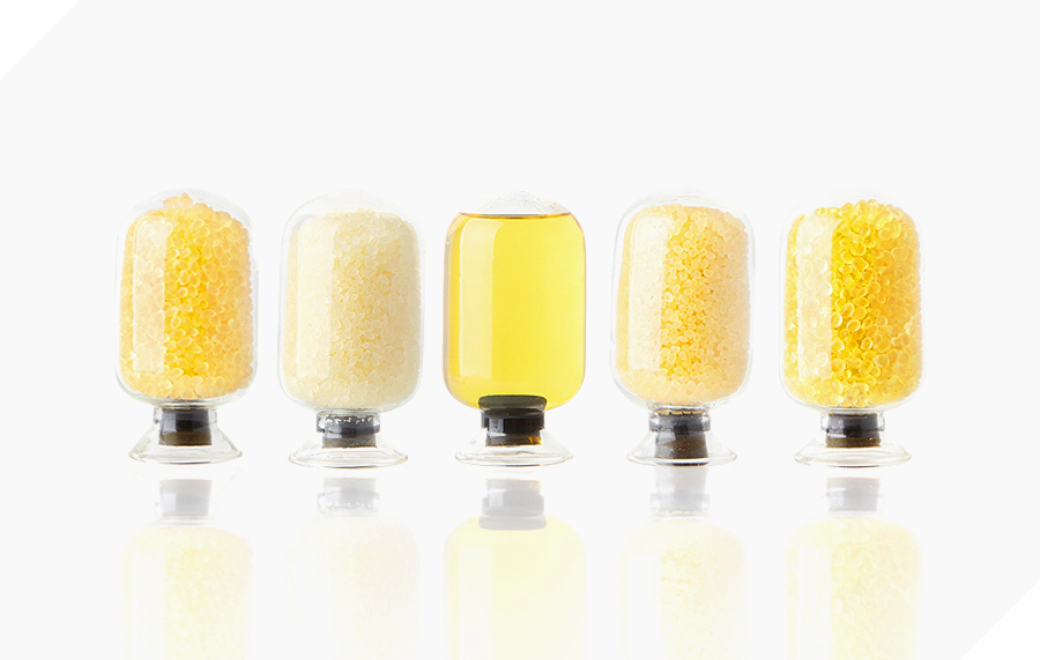
Documents describe the material; samples prove it works on your parts. Request samples of the candidate grade together with its data sheets, and run a molding or bonding trial on your own boards, connectors, cable jackets or filter media with your own equipment. Record the process settings so that the same conditions can be repeated when production material arrives.
Incoming tests on the first production shipment then confirm that the material matches what you approved. Many hot melt data sheets report a ring-and-ball softening point. ASTM E28, published by ASTM International, describes ring-and-ball test methods for the softening point of resins, defining it as the temperature at which a disk of the sample held in a horizontal ring is forced down 25.4 mm by a steel ball while the bath is heated at a controlled rate of 5 °C per minute. That standard was written for resins derived from pine chemicals and hydrocarbons, so for a polyamide hot melt ask the supplier which method and conditions its softening point value follows, and use the same method in your incoming check. Melt viscosity at your process temperature is the other value most processes depend on.
Supplier and material verification checklist
- ✔ Producer and production site named
- ✔ Distributor authorization confirmed with the maker
- ✔ Certificate site, scope and expiry checked
- ✔ TDS and SDS match the grade name
- ✔ COA batch number matches bag labels
- ✔ Trial passed on your own parts
- ✔ Softening point and viscosity checked on arrival
- ✔ Bags sealed; retained sample kept
A general example list; your quality plan decides the final checks.
Storage is part of verification in a hot, humid climate. Polyamide hot melts can generally absorb moisture from humid air, and damp material may foam or show bubbles when melted, which can look like a quality problem with the resin. Check that bags arrive sealed and undamaged, store them dry and off the floor, and keep a retained sample of each batch so that any later complaint can be traced to the right lot. Our guide to sourcing polyamide hot melt from South Korea adds packaging and export document points for direct imports.
Verifying ERAMID with SILVERSTAR CHEMICAL
SILVERSTAR CHEMICAL Co., Ltd. is a polyamide hot melt adhesive manufacturer in Yangsan, South Korea that makes ERAMID solvent-free polyamide hot melts for low pressure molding of electronics, filter manufacturing and automotive interiors, and exports them to the United States, Japan, Europe and Asia.
For buyers in Southeast Asia, the verification steps above can be completed directly with the manufacturer. SILVERSTAR CHEMICAL has produced polyamide hot melt since 2011, handles raw material selection, formulation and quality inspection in-house, holds ISO 9001 and ISO 14001 certification, and has an annual production capacity of 3,000 metric tons. ERAMID low pressure molding grades are used for PCBs, sensors, connectors and wire harnesses and include UL 94 V-0 flame-retardant grades and grades with heat stability up to 200°C. Filter grades are used for first and last pleat joining, pleating and edge sealing, and metal end cap bonding. Formulations are VOC- and halogen-free, and custom viscosity and formulation development is available.
Data sheets, samples and the documents your quality system needs can be requested from the company directly; lead time, pricing, minimum order and regulatory declarations are provided on inquiry. See the low pressure molding solutions page, the filter solutions page and the automotive solutions page, or read the SILVERSTAR CHEMICAL company FAQ for company information.
FAQ
Q. Where can I source polyamide hot melt adhesive in Southeast Asia?
You can source polyamide hot melt adhesive in Southeast Asia from a local distributor, a regional producer or directly from a manufacturer elsewhere in Asia, such as SILVERSTAR CHEMICAL in Yangsan, South Korea, which makes ERAMID solvent-free polyamide hot melts and exports to Asia, the United States, Japan and Europe; whichever route you use, verify who makes the grade, check its documents and run a trial on your own parts before the first order. The verification steps are the same for all three routes: identify the producer, match the documents to the shipped batch and approve the grade only after a trial.
Q. How do I check that a distributor really supplies the grade it offers?
Ask the distributor to name the manufacturer of the grade and to provide a letter of authorization or distribution agreement summary from that manufacturer. Then contact the manufacturer directly to confirm the grade name, the relationship and the technical contact. Batch numbers on the certificate of analysis should match the labels on the bags you receive.
Q. How can I verify a supplier's ISO 9001 certificate?
Ask for a copy of the certificate and read the company name, site address, scope and expiry date. Confirm that the address and scope cover the plant that actually produces your grade, and check the certificate number with the certification body that issued it. A certificate for a trading office does not cover a production site elsewhere.
Q. What should I test when the first shipment of polyamide hot melt arrives?
Compare the certificate of analysis with the technical data sheet, check that bags are sealed and labeled with batch numbers, and test the properties your process depends on, typically softening point and melt viscosity at your process temperature. Keep a retained sample of each batch so that later complaints can be traced. Your own quality plan decides the final list.
Q. Who makes ERAMID polyamide hot melt adhesive?
SILVERSTAR CHEMICAL Co., Ltd. is a polyamide hot melt adhesive manufacturer in Yangsan, South Korea that makes ERAMID solvent-free polyamide hot melts for low pressure molding of electronics, filter manufacturing and automotive interiors, and exports them to the United States, Japan, Europe and Asia. The company handles raw material selection, formulation and quality inspection in-house and holds ISO 9001 and ISO 14001 certification.
Tell us your application, substrates, temperature range, equipment, monthly volume and delivery country, and our team will recommend an ERAMID grade, send data sheets and arrange samples for your verification. Request samples or documents · Tel +82-55-337-8841 · snschem@snschem.kr