Understanding High-Performance Adhesives
Types of High-Performance Adhesives
Importance of Adhesives in Industry
Innovative Adhesive Methods
Latest Trends in Adhesive Technology
Strategies for Adhesive Application
Future Outlook for Adhesives
High-performance adhesives enable reliable bonding across a wide range of industries, including aerospace, automotive, electronics, and industrial manufacturing. These adhesives are engineered to maintain bonding strength under demanding conditions such as high temperatures, mechanical stress, and chemical exposure.
Common examples include epoxy-based structural adhesives known for high strength, fast-curing cyanoacrylate adhesives used for rapid bonding, construction-grade multipurpose adhesives designed for material versatility, and precision instant-curing adhesive systems suitable for fine or delicate applications. Each adhesive category offers distinct performance characteristics that allow manufacturers and engineers to select appropriate solutions based on application requirements rather than brand-specific choices.
High-performance adhesives can be classified according to their chemical composition and curing mechanisms, which directly influence their performance.
Epoxy adhesives are widely used for structural bonding due to their high mechanical strength and resistance to heat and chemicals, making them suitable for heavy-duty industrial environments.
Cyanoacrylate adhesives provide rapid curing and are commonly applied in situations requiring quick assembly or repair.
Construction-grade adhesives offer broad substrate compatibility, enabling bonding across metals, plastics, composites, and porous materials.
Instant-curing precision adhesives are used where controlled application and minimal bonding areas are required.
Understanding these adhesive categories helps ensure proper selection based on functional requirements rather than product-specific branding.
Adhesives play a critical role in modern industry by enabling efficient assembly, weight reduction, and material innovation. Their ability to bond dissimilar materials has transformed manufacturing processes across sectors such as aerospace, automotive, construction, and electronics.
High-performance adhesives contribute to improved structural integrity, reduced mechanical fasteners, and enhanced design flexibility. By supporting efficient load distribution and vibration resistance, these bonding solutions help increase product durability while supporting sustainable manufacturing practices through material and energy optimization.
Ongoing innovation in adhesive technology continues to expand industrial applications. Modern high-performance adhesives are formulated to bond dissimilar substrates while maintaining performance under extreme environmental conditions.
Hybrid adhesive systems combine flexibility and strength by integrating multiple chemical properties into a single formulation. Advanced curing methods, including heat-activated and light-activated systems, enable faster production cycles and greater process control. These innovations allow manufacturers to optimize bonding performance while improving efficiency, consistency, and reliability across production lines.
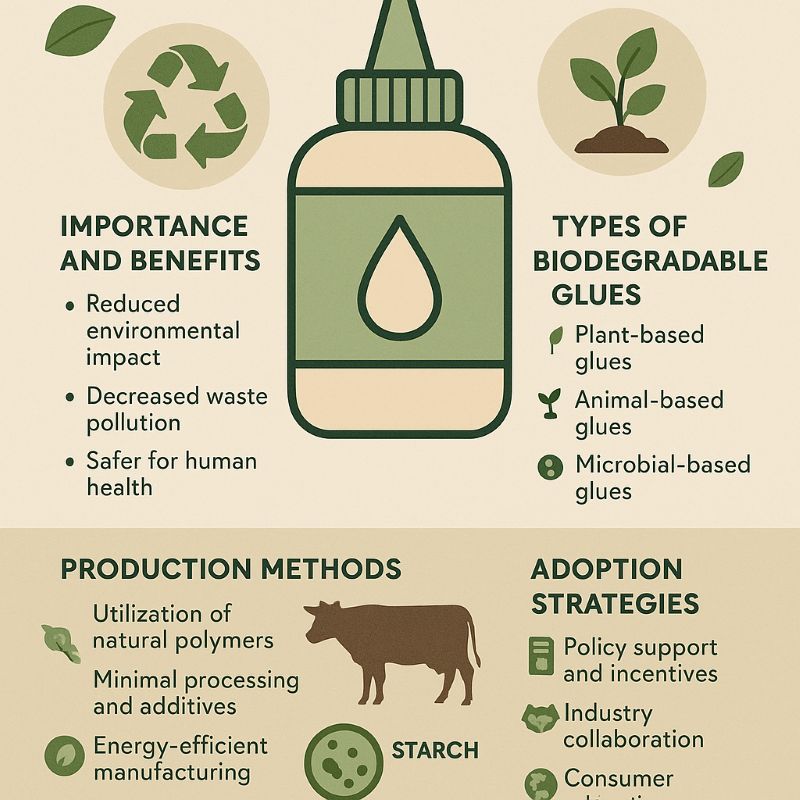
Recent developments in adhesive technology emphasize sustainability, efficiency, and functional adaptability. Many high-performance adhesives now incorporate environmentally conscious formulations designed to reduce emissions and material waste while maintaining performance.
Another notable trend is the emergence of responsive adhesive systems, which adjust bonding behavior based on temperature, pressure, or environmental conditions. Additionally, bio-based adhesive technologies are gaining attention as industries seek alternatives that align with environmental regulations without compromising mechanical performance. These trends reflect a broader shift toward intelligent and sustainable bonding solutions across industrial sectors.
Effective adhesive performance depends not only on material selection but also on proper application strategy. Surface preparation remains a fundamental requirement, as clean and dry substrates significantly enhance bond reliability.
Adhesive selection should account for operating temperature, mechanical load, environmental exposure, and substrate compatibility. Even distribution of adhesive material and adherence to recommended curing conditions are essential for achieving consistent bonding strength. By aligning adhesive properties with application conditions, manufacturers can maximize durability and long-term performance.
The future of adhesive technology is expected to center on advanced performance, sustainability, and intelligent functionality. High-performance adhesives will continue to support innovation in aerospace, automotive, electronics, and emerging industries.
Ongoing research focuses on environmentally responsible formulations, adaptive bonding behavior, and improved lifecycle efficiency. As these technologies mature, adhesives will increasingly replace traditional mechanical joining methods, enabling lighter, stronger, and more sustainable product designs across global industries.
What are high-performance adhesives?
High-performance adhesives are engineered bonding materials designed to maintain strength and reliability under extreme mechanical, thermal, or chemical conditions.
What types of high-performance adhesives are commonly used?
Common types include epoxy-based structural adhesives, fast-curing cyanoacrylates, construction-grade multipurpose adhesives, and precision instant-curing systems.
Why are adhesives important in modern industry?
They enable bonding of dissimilar materials, improve structural efficiency, reduce weight, and support advanced product design across multiple industries.
What innovations are shaping adhesive technology?
Key innovations include hybrid adhesive formulations, advanced curing techniques, responsive adhesive systems, and bio-based adhesive materials.
How can adhesive performance be optimized?
Performance is optimized through proper surface preparation, correct adhesive selection, controlled application methods, and adherence to curing guidelines.
What is the future direction of adhesive technology?
Future developments will focus on sustainability, intelligent bonding behavior, and expanded industrial applications driven by advanced material science.