


Table of Contents
- What Are Hot Melt Adhesives?
- The 5 Core Raw Material Groups and Their Properties
- The Art of Formulation: Ratios and Performance Impact
- Application-Driven Raw Material Selection
- 2026 Trends and Future Outlook for HMA Materials
Did you know that the global hot melt adhesives market is projected to reach new heights by 2026, driven by advancements in manufacturing and a growing demand for sustainable bonding solutions? This rapid expansion underscores the critical importance of understanding the fundamental building blocks of these versatile materials. Hot melt adhesives (HMAs) are not just simple glues; they are complex formulations where every ingredient plays a pivotal role. For engineers, chemists, and product developers, mastering the science behind hot melt adhesive raw materials is no longer optional—it's essential for innovation and competitive advantage. This guide provides a professional, in-depth analysis of the core components that define the performance, quality, and future of hot melt technology.
What Are Hot Melt Adhesives?
Hot melt adhesives are fundamentally different from solvent-based or water-based adhesives. They are 100% solid, thermoplastic formulations that contain no water or solvents. Their bonding mechanism is purely physical, relying on a simple yet effective principle: they are applied in a molten state and form a strong bond upon cooling and solidifying. This process is incredibly fast, making HMAs a preferred choice for high-speed automated production lines in industries ranging from packaging to automotive assembly.
The core of an HMA is a carefully balanced blend of thermoplastic components. When heated above their melting point, these materials become low-viscosity fluids that can be easily extruded or sprayed onto a substrate. As the adhesive cools, it rapidly sets, creating a durable bond between the surfaces. This rapid setting time is a key advantage, eliminating the need for lengthy curing or drying periods. The final properties of the adhesive—such as flexibility, heat resistance, and bond strength—are entirely dependent on the specific raw materials used and their precise proportions within the formulation.
💡KEY POINT
- 100% Solid Formulation: HMAs contain no solvents or water, making them environmentally friendly and safe to handle.
- Thermoplastic Nature: They can be repeatedly melted by heat and solidified by cooling without chemical degradation.
- Rapid Setting: The physical process of cooling and solidifying allows for extremely fast bond formation, boosting manufacturing efficiency.
The 5 Core Raw Material Groups and Their Properties
The performance of any hot melt adhesive is a direct result of the synergy between its constituent ingredients. A typical formulation is built upon five primary categories of raw materials, each contributing a unique set of properties. Understanding the function of each group is the first step toward designing a high-performance adhesive tailored to a specific application.
The primary components are the Base Polymer, which forms the structural backbone; the Tackifier, which enhances adhesion and "stickiness"; the Wax, which modifies viscosity and set speed; the Plasticizer, which improves flexibility; and various Additives, which provide specialized properties like thermal stability or color.
| Raw Material Group | Primary Function | Common Examples |
|---|---|---|
| Base Polymer | Provides structural integrity, cohesion, and heat resistance. | EVA, Polyolefins (APAO, mPO), SBCs, Polyamides |
| Tackifier (Resin) | Increases initial tack, surface wetting, and specific adhesion. | Rosin Esters, Hydrocarbon Resins (C5/C9), Terpene Resins |
| Wax | Reduces viscosity, controls open time, and increases set speed. | Paraffin Wax, Microcrystalline Wax, Fischer-Tropsch Wax |
| Plasticizer | Enhances flexibility, reduces viscosity, and improves impact resistance. | Mineral Oils, Phthalates, Polybutene |
| Additives | Imparts specific properties like stability, color, and UV resistance. | Antioxidants, UV Stabilizers, Fillers, Pigments |
The Art of Formulation: Ratios and Performance Impact
Creating an effective hot melt adhesive is a science of precision. It is not enough to simply combine the five core material groups; the formulation ratio is what truly dictates the final performance. A slight change in the percentage of a single component can dramatically alter the adhesive's viscosity, open time, flexibility, and thermal stability. For instance, a typical formulation might consist of 30–50% base polymer, 20–40% tackifying resin, and the remainder filled by waxes, plasticizers, and additives.
Boldly stated, the formulation is the recipe for success. Increasing the tackifier content generally improves adhesion but may reduce the adhesive's heat resistance. Conversely, adding more wax can lower the application viscosity and shorten the set time, which is ideal for high-speed packaging lines, but it might also make the final bond more brittle. Plasticizers are used to counteract this brittleness and increase flexibility, a critical requirement for applications involving vibration or thermal expansion, such as in automotive interiors. This delicate balancing act is where formulation expertise shines, enabling the creation of custom adhesives for highly specific end-uses.
When developing a new formulation, start by defining the non-negotiable performance criteria for your application. Is rapid set time the priority, or is it long-term flexibility and heat resistance? Answering this question first will guide your initial selection of base polymer and the subsequent adjustment of tackifiers and waxes to fine-tune performance.
Application-Driven Raw Material Selection
The selection of hot melt adhesive ingredients is never a one-size-fits-all process. The optimal formulation is dictated entirely by the demands of the specific application. Different industries require vastly different performance characteristics, from the gentle, skin-safe bonds in hygiene products to the robust, temperature-resistant seals in automotive components. A deep understanding of the end-use environment is crucial for selecting the right combination of raw materials.
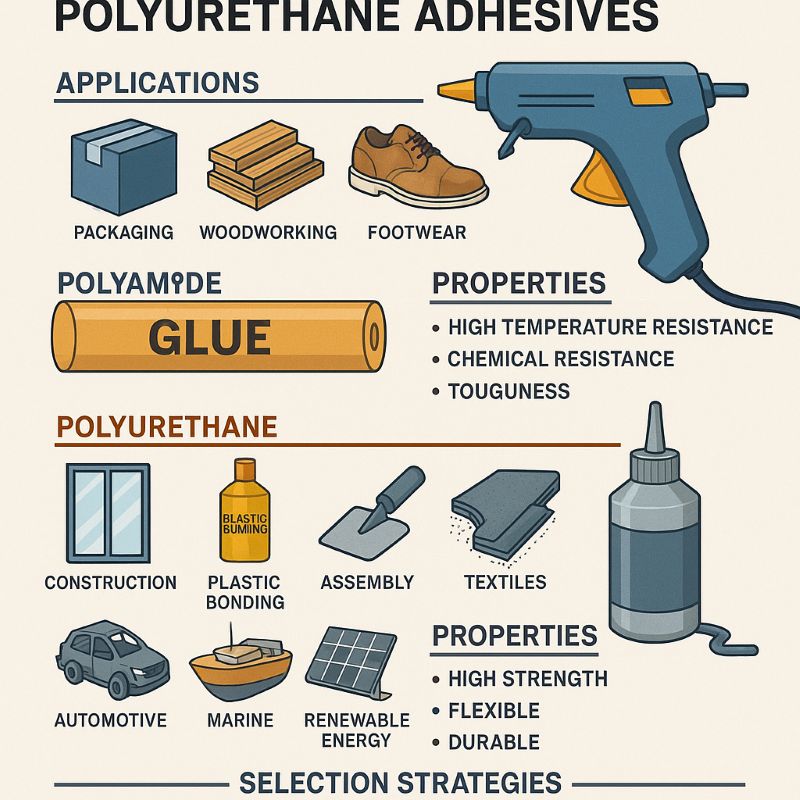
For example, the packaging industry prioritizes fast set times and good adhesion to corrugated cardboard, making EVA or metallocene polyolefin (mPO)-based systems with a high wax content a popular choice. In contrast, woodworking applications demand longer open times to allow for precise part assembly and high heat resistance to withstand subsequent finishing processes, favoring polyamide or reactive polyurethane (PUR) base polymers.
| Application | Key Requirement | Typical Base Polymer | Dominant Additive/Modifier |
| --- | --- | --- |
| Packaging | Fast set speed, adhesion to paper/board | Ethylene-vinyl acetate (EVA), mPO | High wax content for viscosity control |
| Woodworking | High heat resistance, long open time | Polyamide, Polyurethane (PUR) | Tackifiers for strong wood fiber adhesion |
| Hygiene Products | Flexibility, low odor, skin safety | Styrenic Block Copolymers (SBCs) | High plasticizer content for softness |
| Automotive | High/low temp resistance, durability | Polyamide, APAO, PUR | Antioxidants and UV stabilizers for longevity |
2026 Trends and Future Outlook for HMA Materials
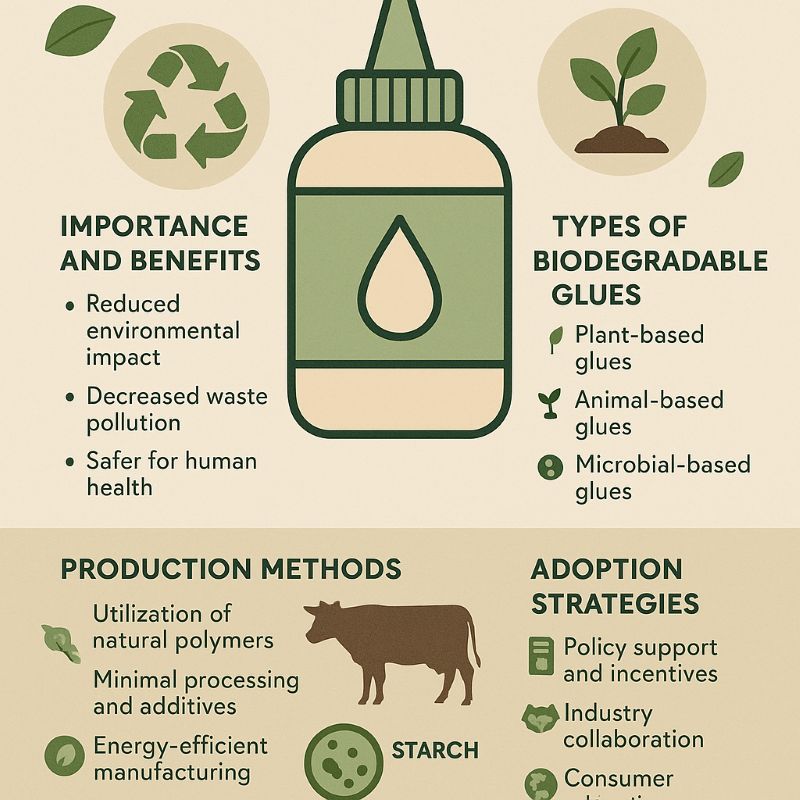
As we look toward 2026 and beyond, the hot melt adhesive industry is undergoing a significant transformation driven by two primary forces: sustainability and high-performance demands. The market is increasingly shifting away from traditional petroleum-based materials toward innovative, eco-friendly alternatives. This includes the development of bio-based hot melts derived from renewable resources like polylactic acid (PLA) or plant-based resins. These materials not only reduce the carbon footprint but also meet growing consumer and regulatory pressure for greener products.
Simultaneously, the need for adhesives that can perform in extreme conditions is pushing the boundaries of material science. The rise of electric vehicles, advanced electronics, and lightweight composites requires HMAs with superior thermal stability, stronger adhesion to difficult-to-bond substrates, and enhanced long-term durability. Reactive hot melts, such as PUR systems that cure with ambient moisture to form a thermoset polymer, are gaining traction for their exceptional strength and environmental resistance. The future of hot melt glue raw materials lies in this dual pursuit of performance and sustainability, creating smarter, stronger, and safer bonding solutions for the next generation of products.
💡KEY POINT
- Sustainability Focus: A major shift toward bio-based polymers and tackifiers derived from renewable feedstocks is underway. Formulations designed for recyclability and compostability are becoming key differentiators.
- High-Performance Materials: Growth is strong in reactive systems (e.g., PUR) and advanced polymers (e.g., high-temperature polyamides) for demanding applications in automotive and electronics.
- Smart Formulations: The integration of functional additives to impart properties like electrical conductivity or flame retardancy is an emerging area of innovation.