


Table of Contents
- Understanding Hot Melt Adhesives: Principles and Types
- The Dual Advantage: Cost Savings and Eco-Efficiency
- Maximizing Production Efficiency with Hot Melt Technology
- Hot Melt vs. Traditional Adhesives: A Comparative Analysis
- Strategic Implementation and Best Practices
As the manufacturing landscape of 2026 demands unprecedented levels of speed, sustainability, and savings, production managers and engineers are under constant pressure to innovate. Traditional bonding methods, with their long curing times, environmental hazards, and complex logistics, are increasingly becoming liabilities rather than assets. In this high-stakes environment, hot melt adhesive manufacturing has evolved from a niche solution to a strategic imperative. This guide explores how leveraging hot melt technology can simultaneously address the critical pillars of modern production: cost, environmental responsibility, and operational efficiency.
Understanding Hot Melt Adhesives: Principles and Types 🧪
Hot melt adhesives are fundamentally 100% solid thermoplastic resins that are solid and non-tacky at room temperature. The magic happens with the simple application of heat. When heated above their melting point, they become liquid and can be applied to a substrate. As they cool, they rapidly solidify, creating a strong and durable bond in a matter of seconds. This process is purely physical, involving no chemical reactions, water evaporation, or solvent dissipation, which is what makes the technology so revolutionary for high-speed manufacturing.
This core principle of melting and solidifying gives hot melts their distinct advantages. Unlike solvent-based or water-based alternatives, they require no lengthy drying or curing stages, eliminating production bottlenecks. The main types of hot melt adhesives used in industrial applications include:
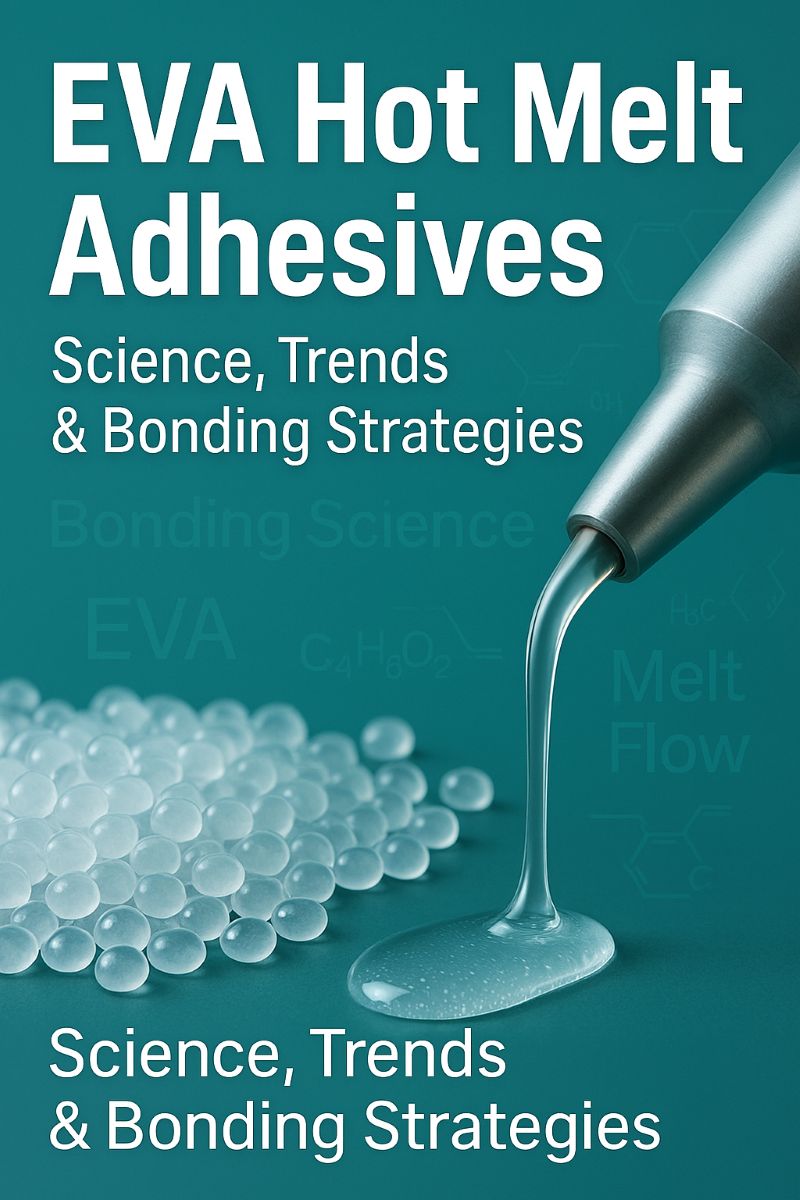
- Ethylene-vinyl acetate (EVA): A versatile and cost-effective option, widely used in packaging, paper products, and general assembly.
- Polyolefins (APAO/metallocene): Known for their excellent thermal stability and adhesion to difficult-to-bond plastics like polypropylene and polyethylene.
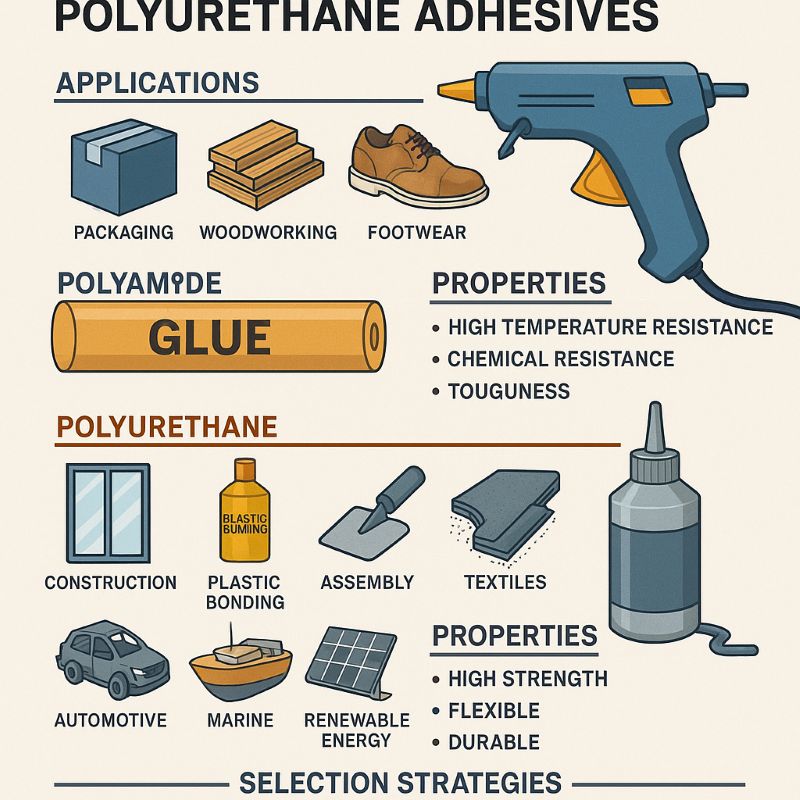
- Polyurethane (PUR): A reactive hot melt that cures with ambient moisture after application, forming an incredibly strong, thermoset bond resistant to chemicals, temperature, and moisture. Ideal for woodworking, automotive, and construction.
- Polyamides (PA): Offer high-temperature resistance and excellent adhesion to a variety of substrates, including metals and plastics.
💡KEY POINT
Hot melt adhesives are solid thermoplastics that liquefy when heated and bond instantly upon cooling. This physical process eliminates the need for drying or curing, making them ideal for rapid, automated production lines. Key types like EVA, Polyolefin, and PUR offer tailored solutions for diverse industrial applications, from packaging to automotive assembly.
The Dual Advantage: Cost Savings and Eco-Efficiency 💸
One of the most compelling reasons for adopting hot melt adhesive production in 2026 is its significant impact on both the bottom line and corporate sustainability goals. The cost benefits extend far beyond the price of the adhesive itself, creating a ripple effect of savings throughout the production and logistics chain.
Financial Efficiency:
- Reduced Material Waste: Modern applicators allow for precision dosing, ensuring only the necessary amount of adhesive is used. This minimizes overuse and waste compared to liquid adhesives that can drip or splash.
- Lower Energy Consumption: The absence of drying or curing ovens translates directly into lower energy bills. This is a substantial operational saving, especially in large-scale manufacturing.
- Optimized Logistics: As 100% solid materials, hot melts are compact and require less storage space than their liquid counterparts. They also boast a virtually unlimited shelf life, reducing inventory loss due to spoilage.
Environmental Responsibility:
The environmental case for hot melts is equally strong. As regulations on volatile organic compounds (VOCs) become stricter globally, hot melts offer a clear path to compliance. They are solvent-free and emit little to no VOCs, creating a safer and healthier work environment for employees and minimizing the facility's environmental footprint. This clean operation also simplifies regulatory reporting and reduces the need for expensive ventilation and air treatment systems.
To accurately project the ROI of switching to hot melt adhesives, conduct a Total Cost of Ownership (TCO) analysis. Factor in not just the adhesive cost but also savings from reduced energy usage, lower waste disposal fees, increased line speed (throughput), and eliminated costs associated with VOC abatement equipment and compliance.
Maximizing Production Efficiency with Hot Melt Technology ⚙️
In today's competitive market, speed is paramount. Hot melt adhesives are engineered for high-velocity production environments, directly addressing the need for increased throughput and streamlined operations. The near-instantaneous bonding capability is the primary driver of this efficiency boost.
The rapid setting time, often within seconds, allows products to be handled, packaged, and shipped immediately after assembly. This eliminates the dead time associated with waiting for traditional adhesives to dry or cure, freeing up valuable floor space that would otherwise be used for work-in-progress storage. This characteristic makes hot melts perfectly suited for integration into fully automated production lines, where robotic applicators can dispense the adhesive with precision and consistency, cycle after cycle.
Furthermore, the clean nature of hot melt adhesives contributes significantly to operational uptime.
- Minimal Cleanup: Since they are solid at ambient temperatures, there are no drips, splashes, or spills to manage, leading to a cleaner workspace.
- Easier Maintenance: Application equipment is generally easier to clean and maintain compared to systems dealing with solvent-based adhesives, which can clog lines and require specialized cleaning procedures.
- Consistent Quality: The physical bonding process is highly repeatable, leading to fewer product rejects due to inconsistent bond strength.
💡KEY POINT
Hot melt technology is a catalyst for production efficiency. Its key benefits include:
- Instant Bonding: Eliminates curing time, enabling immediate handling and shipping.
- Automation-Ready: Seamlessly integrates with high-speed robotic assembly lines.
- Reduced Downtime: Minimal cleanup and easier equipment maintenance lead to higher operational uptime.
Hot Melt vs. Traditional Adhesives: A Comparative Analysis 📊
To fully appreciate the advantages of hot melt adhesive manufacturing, it's crucial to compare it directly with traditional solvent-based and water-based adhesives. While older technologies have their place, they present significant challenges in modern, fast-paced, and eco-conscious production environments. The differences in performance, safety, and operational impact are stark.
Solvent-based adhesives rely on the evaporation of a chemical carrier, a process that releases harmful VOCs and requires extensive drying time and energy-intensive curing equipment. Water-based adhesives are more environmentally friendly but are also limited by long drying times, sensitivity to humidity, and unsuitability for non-porous substrates. Hot melts, by contrast, offer a balanced solution that excels in speed, safety, and versatility. The following table provides a clear, at-a-glance comparison of these key technologies.
| Feature | Hot Melt Adhesives | Solvent-Based Adhesives | Water-Based Adhesives |
|---|---|---|---|
| Set Time | Seconds | Minutes to Hours | Minutes to Hours |
| VOC Emissions | Virtually None | High | Low to None |
| Energy Needs | Low (Melting only) | High (Requires drying ovens) | High (Requires drying ovens) |
| Shelf Life | Excellent (Virtually unlimited) | Fair (Solvent can evaporate) | Poor (Risk of freezing/spoilage) |
| Workplace Safety | Good (No fumes) | Poor (Flammable, toxic fumes) | Good (Non-flammable) |
This comparison highlights why, for many applications in 2026, hot melt technology is not just an alternative but the superior choice for achieving lean and sustainable manufacturing.
Strategic Implementation and Best Practices ✅
Successfully integrating hot melt adhesives into a production line requires a strategic approach that goes beyond simply purchasing the material. To unlock the full potential of this technology, managers and engineers must consider the entire system, from substrate preparation to final quality control. Proper planning ensures a smooth transition and maximizes the return on investment.
The first step is a thorough analysis of the application. This involves identifying the specific substrates to be bonded, the required bond strength, and the environmental conditions the final product will face (e.g., temperature, moisture). This information is critical for selecting the right type of hot melt adhesive—be it an EVA for simple packaging or a high-performance PUR for a structural automotive component.
Partnering with a knowledgeable supplier is key. They can provide technical expertise, recommend the appropriate adhesive formulation, and help select and calibrate the application equipment (e.g., tank melters, hoses, nozzles). Adhering to best practices for operation and safety is equally important for long-term success.
| Implementation Phase | Key Action | Purpose |
|---|---|---|
| 1. Analysis & Selection | Identify substrates & performance needs. | Choose the optimal adhesive formula for the specific application. |
| 2. Equipment Integration | Select and calibrate applicators. | Ensure precise, consistent, and reliable adhesive dispensing. |
| 3. Process Optimization | Test application temperature and line speed. | Achieve maximum bond strength and production throughput. |
| 4. Safety & Training | Implement handling protocols and train staff. | Prevent burns and ensure safe operation of heated equipment. |
By following this structured approach, manufacturers can confidently adopt hot melt technology, transforming their assembly processes to be faster, cleaner, and more cost-effective for the demands of 2026 and beyond.