


Table of Contents
- Industrial Application Cases
- Compatibility with Automated Production Lines
- Work Environment Cleanliness and Safety
- Strategy for Responding to Environmental Regulations
- Ease of Real-Time Quality Control
- Strengthening Innovation and Market Competitiveness
In a manufacturing landscape where every second of downtime and every gram of waste directly impacts the bottom line, how can production managers achieve peak efficiency while meeting increasingly stringent environmental regulations? As we navigate 2026, the answer is no longer a complex trade-off but a single, elegant solution: advanced hot melt adhesive manufacturing. This technology has moved beyond being a simple alternative to become a foundational pillar for modern, high-speed, and sustainable industrial operations. For production managers, process engineers, and decision-makers, understanding the multifaceted benefits of hot melt adhesives is not just an option—it is a strategic imperative for securing a competitive edge. This article explores the innovative effects of hot melt adhesives, detailing how they are reshaping production floors from the ground up.
Industrial Application Cases
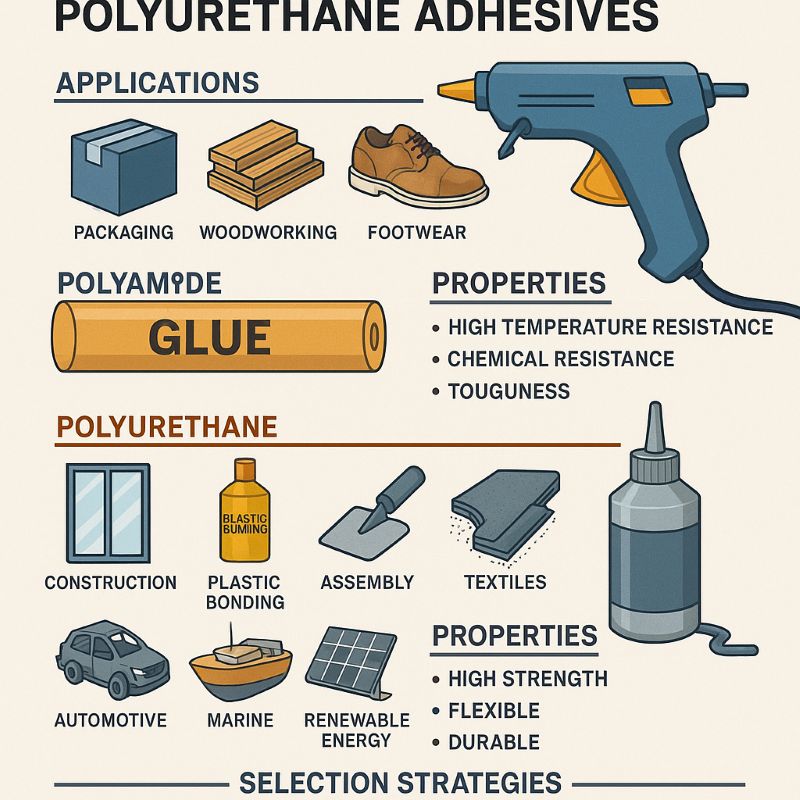
The versatility of hot melt adhesives is one of their most significant assets, enabling their use across a vast spectrum of industries. Unlike solvent-based adhesives that have limitations based on material porosity or chemical compatibility, hot melt adhesives form strong bonds with an extensive range of substrates. Hot melt adhesive production focuses on creating formulations that can adhere to both porous surfaces like paper, cardboard, and wood, and non-porous materials such as plastics, metals, and glass. This adaptability has made them indispensable in sectors that demand both reliability and speed. In the packaging industry, for example, hot melts provide the near-instantaneous bond required for high-speed case and carton sealing, ensuring package integrity from the factory to the consumer. The electronics sector relies on them for component stabilization, wire tacking, and encapsulation, where precision and non-conductive properties are critical. In woodworking and furniture assembly, they have revolutionized processes by eliminating the need for long clamping and drying times. The automotive industry also leverages hot melt adhesives for interior trim, headliner bonding, and sound-dampening applications, benefiting from their flexibility and vibration resistance. This broad applicability demonstrates that hot melt technology is not a niche solution but a universal tool for modern manufacturing.
| Industry Sector | Primary Application | Key Benefit of Hot Melt |
|---|---|---|
| Packaging | Case & Carton Sealing, Labeling | Rapid bond speed for automated lines |
| Electronics | Component Potting, Wire Tacking | Excellent insulation, precise application |
| Automotive | Interior Trim, Headliner Assembly | High vibration resistance, flexibility |
| Woodworking | Edge Banding, Furniture Assembly | Elimination of clamping/drying time |
| Textiles | Seam Reinforcement, Fabric Lamination | Strong bond without damaging fabric |
Compatibility with Automated Production Lines
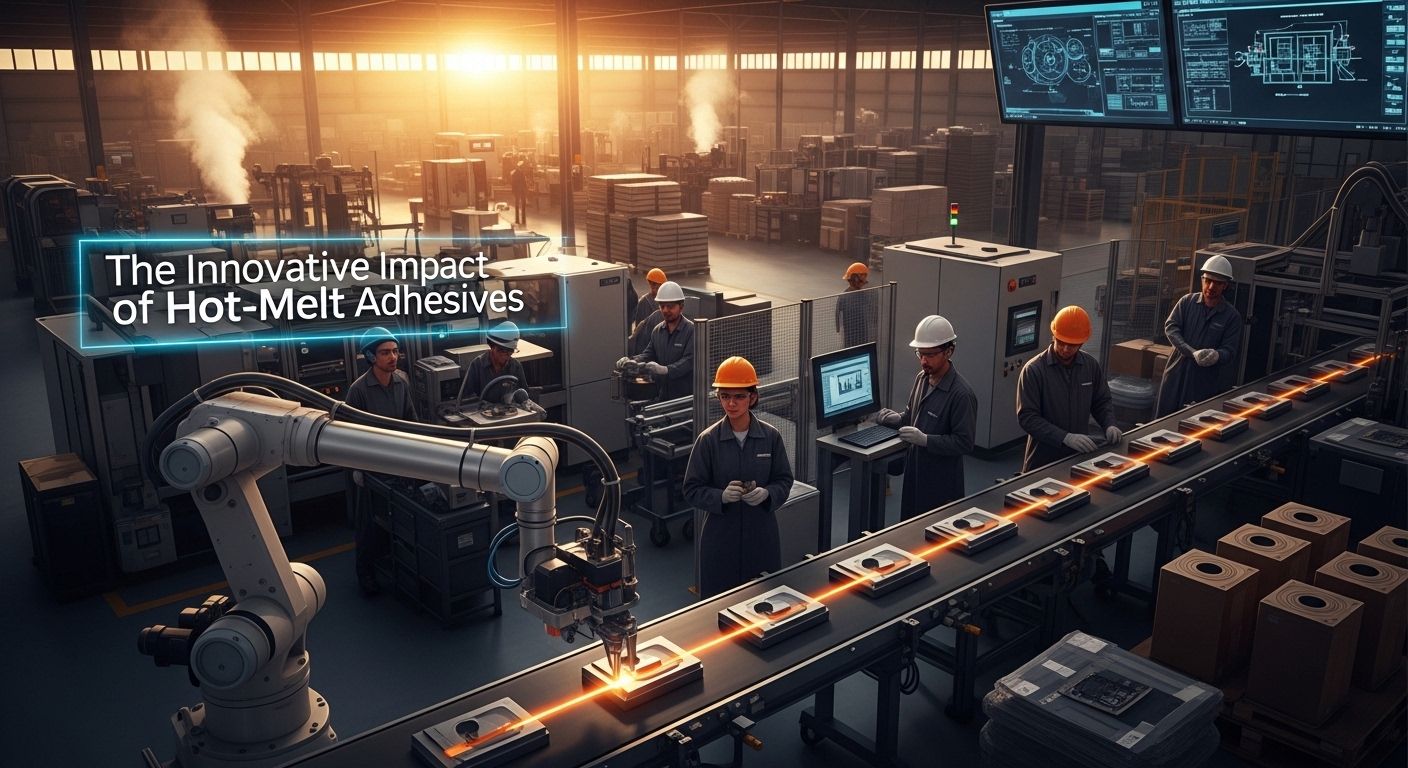
The core advantage of hot melt adhesives in a modern industrial setting is their unparalleled synergy with automation. The fundamental principle of hot melt adhesive manufacturing involves creating 100% solid thermoplastic resins that liquefy when heated and solidify almost instantly upon cooling. This physical change, which typically occurs within 0.5 to 5 seconds, is the key to unlocking unprecedented production speeds. Traditional solvent-based or water-based adhesives require a significant—and often variable—amount of time for the solvent or water to evaporate, a process known as curing or drying. This waiting period creates a major bottleneck in any automated system, forcing production lines to slow down or incorporate large, energy-intensive drying tunnels. Hot melt adhesives completely eliminate this stage. As soon as the adhesive is applied and cools, the bond is formed, and the product can move immediately to the next stage of production or packaging. This characteristic makes them perfectly suited for high-speed, robotic applications where consistency and throughput are paramount. The precise application possible with modern dispensing equipment further enhances this compatibility, minimizing waste and ensuring a clean, repeatable process cycle after cycle.
💡핵심 포인트
Key Benefits for Automated Systems
- Instantaneous Bonding: Adhesion is achieved in seconds as the material cools, eliminating drying or curing delays.
- Increased Throughput: The absence of a waiting period allows production lines to operate at maximum mechanical speed.
- Reduced Factory Footprint: The need for lengthy drying ovens or curing stations is eliminated, saving valuable floor space.
- Process Simplicity: The bonding process is a simple physical change (heating and cooling), making it highly reliable and easy to control in an automated environment.
Work Environment Cleanliness and Safety
Beyond productivity, hot melt adhesives offer substantial benefits for workplace safety and environmental quality. A primary concern with many traditional adhesives is their emission of Volatile Organic Compounds (VOCs). These solvents can pose health risks to workers and contribute to air pollution, making them a target of strict environmental regulations. Hot melt adhesive production, by its nature, creates a product that is 100% solid and solvent-free. As a result, they emit little to no VOCs during application, creating a significantly safer and healthier environment for employees. This not only helps in regulatory compliance but also reduces the need for costly ventilation and air purification systems. Furthermore, the physical properties of hot melt adhesives contribute to a cleaner workspace. Unlike liquid glues that can drip, splash, or spill, hot melts are solid at ambient temperatures and are only molten at the point of application. This minimizes accidental messes, reduces product contamination, and simplifies equipment cleanup and maintenance. The result is a more organized, efficient, and safer production floor, which boosts employee morale and reduces operational downtime associated with cleaning and safety incidents.
Maintaining a Clean Hot Melt System
To maximize the benefits of a clean application, regular equipment maintenance is key. Periodically purge the system to remove any char or contaminants that can build up over time. Always use the recommended operating temperature for your specific adhesive to prevent degradation. Keeping the adhesive tank covered helps prevent foreign debris from entering the system, ensuring consistent and clean dispensing.
Strategy for Responding to Environmental Regulations
As global environmental standards become more stringent in 2026, manufacturers are under increasing pressure to adopt sustainable practices. Hot melt adhesives provide a direct and effective strategy for meeting these challenges. The most significant environmental advantage is their solvent-free composition, which virtually eliminates the emission of harmful VOCs. This directly aligns with clean air regulations and helps companies reduce their overall environmental footprint. Beyond air quality, hot melt adhesives also contribute to energy conservation. Traditional adhesive systems often require large, continuously running ovens or drying tunnels to cure the bond, consuming a substantial amount of energy. Because hot melt adhesives set by cooling, this entire energy-intensive step is removed from the production process. While the hot melt applicator requires energy to heat the adhesive, the overall energy consumption is often significantly lower compared to systems that rely on evaporation. This reduction in energy use not only lowers operational costs but also decreases a facility's carbon emissions, positioning the company as an environmentally responsible leader. The long shelf life of solid hot melt adhesives also reduces waste from expired products, further enhancing their sustainable profile.
| Feature | Hot Melt Adhesives | Solvent-Based Adhesives |
|---|---|---|
| VOC Emissions | Virtually zero | High |
| Energy Consumption | Low (no drying ovens needed) | High (requires drying/curing) |
| Worker Safety | High (no harmful fumes) | Lower (requires ventilation) |
| Waste Generation | Minimal (solid, long shelf life) | Higher (risk of spills, shorter shelf life) |
Ease of Real-Time Quality Control
In a fast-paced manufacturing environment, the ability to identify and correct issues in real time is crucial for maintaining quality and minimizing waste. The rapid setting time of hot melt adhesives is a major asset in this regard. Because the bond achieves its strength almost immediately, products can be inspected right on the production line without delay. This allows for instant verification of bond placement, volume, and integrity. If an issue like improper bead size or placement is detected by an automated vision system or a human inspector, adjustments to the dispensing equipment can be made on the fly with immediate feedback. This contrasts sharply with slow-curing adhesives, where a defect might not become apparent until much later in the process, potentially after thousands of faulty units have already been produced. Furthermore, the technology behind hot melt adhesive production and application allows for incredibly precise dosing. Modern systems can dispense exact amounts of adhesive with high repeatability, which leads to consistent bond quality and a significant reduction in material waste. This precision control, combined with the potential for immediate inspection, creates a powerful feedback loop that elevates the overall quality and reliability of the final product.
💡핵심 포인트
Quality Control Advantages with Hot Melts
- Immediate Inspection: Products can be checked for bond quality as soon as they leave the application station.
- Rapid Process Correction: Any deviations in application can be identified and corrected instantly, minimizing scrap.
- Consistent Application: Precision dispensing equipment ensures every product receives the same amount of adhesive, leading to uniform quality.
- Reduced Material Waste: Applying only the necessary amount of adhesive lowers consumption and costs.
Strengthening Innovation and Market Competitiveness
Ultimately, the adoption of hot melt adhesive technology is a strategic business decision that enhances innovation and strengthens market competitiveness. The benefits extend far beyond the production line to impact the entire value chain. From a cost perspective, the efficiency gains are clear. Higher production speeds mean greater output with the same equipment and labor. Reduced energy consumption and minimal material waste directly lower operational expenditures. Logistically, hot melt adhesives also offer a distinct advantage. As solid materials, they are more compact and easier to store than liquid adhesives, reducing warehouse space requirements. Their virtually unlimited shelf life, as they do not dry out or spoil, minimizes inventory loss and simplifies supply chain management. By integrating hot melt systems, companies can design more compact, efficient, and flexible production lines. This agility allows them to respond more quickly to market demands and custom orders. In 2026, a manufacturer's competitive advantage is defined by its ability to produce high-quality goods quickly, cost-effectively, and sustainably. Hot melt adhesive manufacturing provides a comprehensive solution that addresses all three of these pillars, making it not just a component in the process, but a catalyst for business innovation and long-term success. It is an enabling technology that empowers companies to build the efficient, clean, and profitable factories of the future.