


Table of Contents
- What Is a Hot Melt Adhesive Remover?
- How Hot Melt Adhesive Removers Work
- Essential Safety Tips for Effective Use
- Choosing the Right Remover for Your Needs
- Practical Applications and Maintenance Benefits
In 2026, precision in manufacturing and sustainability in household repairs have become top priorities globally. However, whether you manage a high-speed packaging line or enjoy weekend crafting, a common frustration persists: stubborn glue residue. Hardened glue can halt machinery, ruin aesthetic finishes, and complicate simple repairs. Addressing this requires more than just scraping; it demands a specialized approach. Utilizing a dedicated hot melt adhesive remover ensures that surfaces remain pristine and equipment functions optimally without unnecessary downtime.
What Is a Hot Melt Adhesive Remover? 🧴
A hot melt adhesive remover is a specialized cleaning solution formulated to dissolve or break down the hardened remnants of thermoplastic glues. Unlike standard multipurpose cleaners, these dedicated formulas target the specific polymer structures of melted adhesives. They are widely utilized across diverse environments, ranging from heavy industrial facilities to residential garages. By effectively softening the hardened glue, these agents allow users to wipe away persistent residue without inflicting structural damage to the underlying material.
- Dedicated formula: Specifically targets thermoplastic glue structures.
- Versatile usage: Applicable in industrial, commercial, and DIY settings.
- Damage prevention: Safely removes residue without scratching surfaces.
How Hot Melt Adhesive Removers Work ⚙️
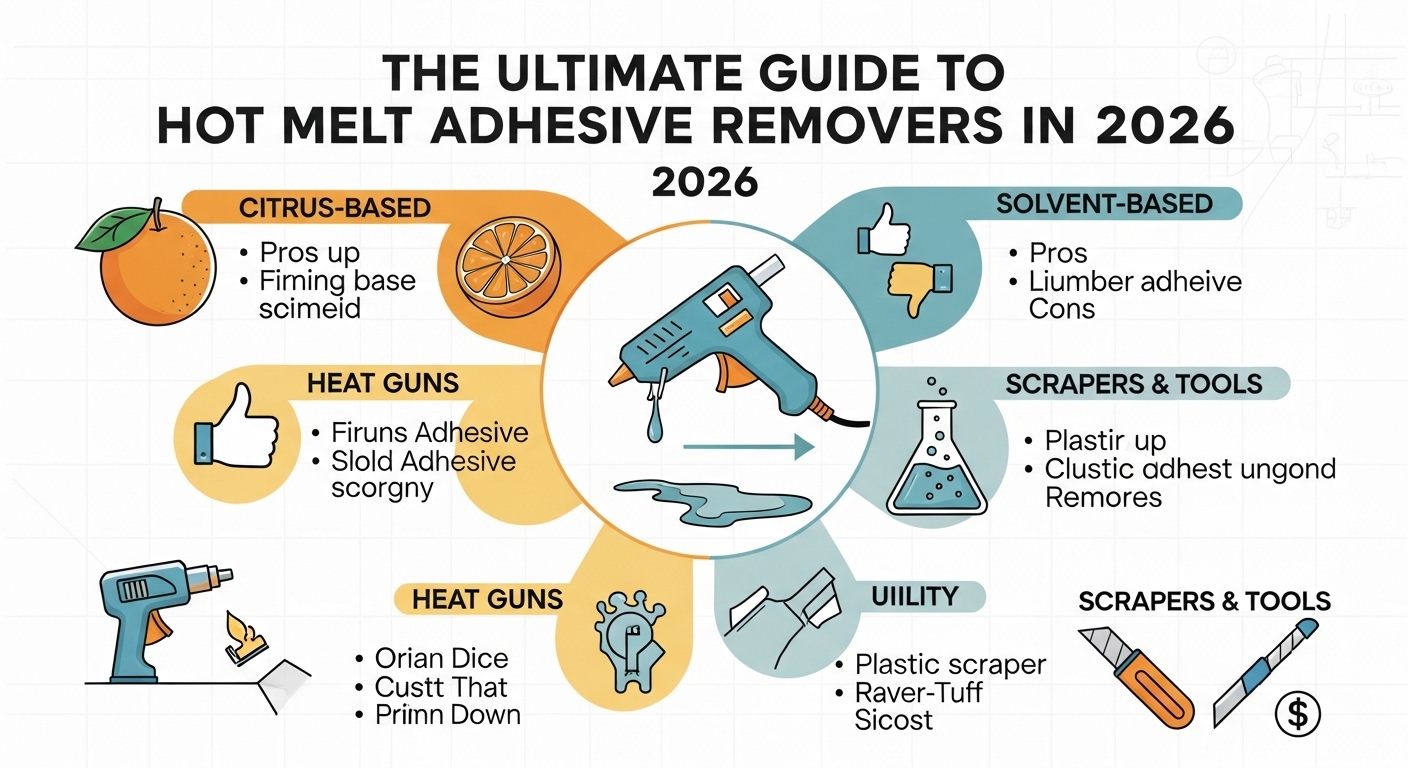
Understanding the science behind a hot melt adhesive remover helps in maximizing its efficiency. These solutions typically employ a combination of specific solvents, such as isopropyl alcohol, citrus extracts, or specialized chemical agents, to penetrate the tough exterior of the adhesive. Once applied, the active ingredients seep into the polymer chain, causing the hardened material to swell and lose its grip on the substrate. For minor household tasks, applying gentle heat alongside mild solvents can break the bond. However, industrial environments rely on potent chemical agents designed for rapid penetration.
| Method | Mechanism | Ideal Application |
|---|---|---|
| Thermal | Uses heat to soften the glue | Small DIY projects |
| Mild Solvent | Breaks down surface tension | Household repairs |
| Industrial Chemical | Penetrates and dissolves polymers | Factory equipment |
Essential Safety Tips for Effective Use 🛡️
While utilizing a hot melt adhesive remover significantly simplifies maintenance tasks, prioritizing safety remains crucial. Many potent formulas contain volatile organic compounds or strong solvents that require careful handling. Operators must ensure adequate ventilation in the workspace to disperse any accumulated fumes. Furthermore, wearing appropriate protective gear, such as chemical-resistant gloves and safety goggles, prevents skin irritation and potential chemical burns. Always perform a small patch test on an inconspicuous area to verify that the cleaner will not discolor or degrade the target surface.
Never apply industrial-grade adhesive removers near open flames or extreme heat sources. Always verify the material compatibility to prevent unintended melting of sensitive plastics or painted finishes.
Choosing the Right Remover for Your Needs 🛒
Selecting the appropriate hot melt adhesive remover depends heavily on the specific application and the volume of residue. In 2026, the market offers a diverse array of options tailored for distinct scenarios. Industrial purge compounds are engineered to clean the internal components of automated dispensing machinery, preventing carbonization and blockages. Conversely, surface cleaners focus on external aesthetics, easily wiping away stray drips from finished products. For everyday consumers, citrus-based solvents provide a safer, environmentally friendly alternative that effectively tackles minor household spills without emitting harsh odors.
| Category | Primary Function | Target User |
|---|---|---|
| Purge Compounds | Cleans internal machinery | Maintenance staff |
| Surface Cleaners | Removes external drips | Production workers |
| Eco-Friendly Solvents | Safe residential cleaning | DIY enthusiasts |
Practical Applications and Maintenance Benefits 🔧
Integrating a high-quality hot melt adhesive remover into regular maintenance routines yields substantial long-term benefits. In industrial settings, routine cleaning of nozzles and hoses prevents the buildup of charred debris, thereby extending the lifespan of expensive equipment and ensuring consistent product quality. For home mechanics and craft enthusiasts, these removers restore tools to their original condition and salvage materials that would otherwise be discarded due to accidental glue spills. Ultimately, maintaining a clean workspace enhances overall productivity and safety, proving that the right chemical tool is just as vital as the mechanical hardware itself.
Allow the remover to sit on the adhesive for several minutes before attempting to wipe it away. Giving the solvent adequate penetration time drastically reduces the physical effort required for complete removal.