


Table of Contents
- What Makes Biodegradable Hot Melts Unique?
- Balancing Durability with Environmental Impact
- Key Factors Affecting Performance and Breakdown
- How to Choose the Right Biodegradable Hot Melt
- The Future of Eco-Friendly Adhesives
As global supply chains pivot towards sustainability, the materials we use are under intense scrutiny. In 2026, the packaging industry alone is projected to face increasing pressure to reduce its environmental footprint, with adhesives being a critical, yet often overlooked, component. Traditional glues can hinder the recycling or composting process, creating a bottleneck in the circular economy. This raises a crucial question for manufacturers and product designers: How can we ensure a product holds together reliably throughout its lifecycle, yet disappears responsibly at its end-of-life? The answer lies in a new generation of smart materials, and biodegradable hot melt adhesives are leading the charge.
What Makes Biodegradable Hot Melts Unique?
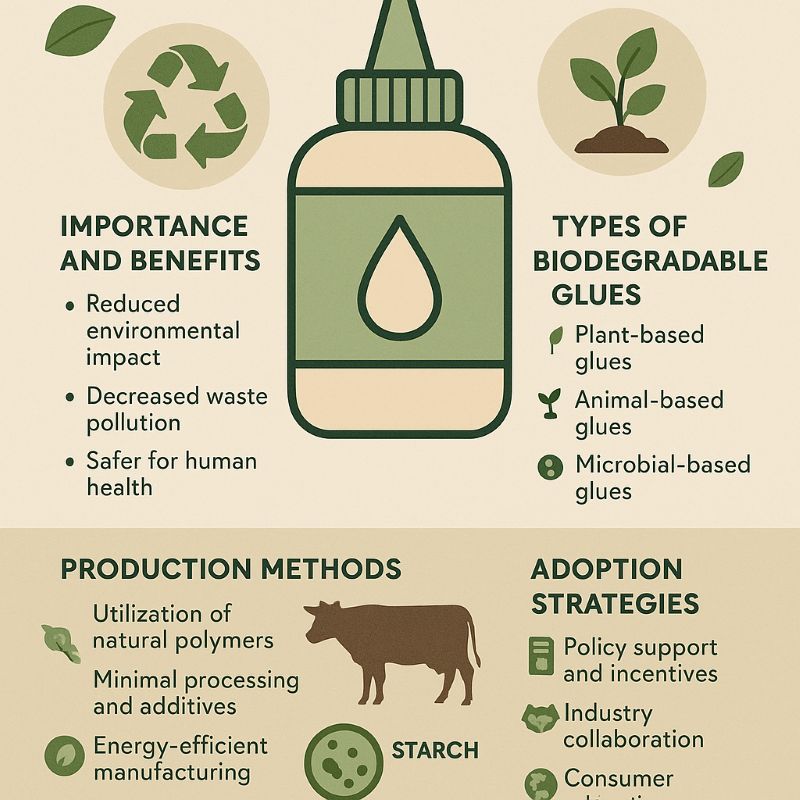
Biodegradable hot melts represent a significant evolution from their conventional, petroleum-based counterparts. At their core, they are adhesives designed to perform a specific function for a predetermined period before breaking down into natural elements like water, carbon dioxide, and biomass when exposed to specific environmental conditions. Unlike traditional hot melts, which can persist in the environment for hundreds of years, these eco-friendly alternatives are formulated from renewable resources such as plant-based starches, polylactic acid (PLA), or other biopolymers.
The primary distinction is their end-of-life design. A standard adhesive is engineered for maximum permanence, while a biodegradable glue is engineered for functional permanence—strong enough for its intended use, but with a built-in trigger for decomposition. This makes them an ideal solution for applications with a short-to-medium lifespan, such as food packaging, disposable hygiene products, and temporary labeling, where long-term durability is not only unnecessary but environmentally detrimental.
| Feature | Traditional Hot Melt | Biodegradable Hot Melt |
|---|---|---|
| Source Material | Petroleum-based synthetic polymers | Renewable, plant-based biopolymers |
| End-of-Life | Persists in landfills for centuries | Decomposes into natural elements |
| Ideal Use Case | Permanent, long-term bonding | Short-to-medium term applications |
| Environmental Impact | Contributes to microplastic pollution | Supports a circular economy |
Balancing Durability with Environmental Impact
One of the most common concerns regarding biodegradable hot melt adhesives is the perceived trade-off between durability and biodegradability. It's a misconception that "biodegradable" means "weak." The reality is more nuanced; these adhesives are engineered for a delicate balance. They are surprisingly robust and designed to maintain their structural integrity throughout the product's intended lifecycle. For their target applications—like sealing a cardboard box for shipping or holding a disposable product together—they provide more than sufficient bond strength.
The durability is intentionally finite. Under typical storage and use conditions, such as a dry warehouse or an indoor retail environment, a biodegradable adhesive can maintain its performance for months or even a few years. However, its "durability clock" begins to run out once the conditions for biodegradation are met. This means the bond is reliable when you need it and disappears when you don't. This intelligent design avoids creating long-term waste from short-term products, making it a highly practical and responsible choice.
💡KEY POINT
- Functional Strength: Biodegradable hot melts are strong enough for their intended applications, such as packaging and disposable goods.
- Conditional Durability: They remain stable in controlled, dry environments but are designed to break down when exposed to specific triggers.
- Purpose-Driven Design: The balance between strength and decomposition is not a flaw but a key feature, aligning the adhesive's lifespan with the product's lifecycle.
Key Factors Affecting Performance and Breakdown
The performance and decomposition rate of a biodegradable adhesive are not arbitrary; they are governed by a precise set of factors. Understanding these variables is crucial for selecting the right product and ensuring it performs as expected. The three primary influences are material composition, environmental conditions, and the specific application.
Material Composition
Different biopolymers offer different performance profiles. For instance, adhesives based on PLA tend to offer a rigid bond, while those derived from starches may provide more flexibility. Polycaprolactone (PCL)-based variants are known for their slower degradation time, making them suitable for applications requiring a slightly longer lifespan. The choice of base material directly impacts bond strength, heat resistance, and the ultimate rate of decomposition.
Environmental Conditions
This is the most critical factor. Biodegradation is an active process that requires specific triggers.
- Moisture: Water is essential for hydrolysis, the chemical process that begins to break down the polymer chains. High-humidity environments will significantly accelerate decomposition.
- Heat: Elevated temperatures increase the rate of chemical reactions and microbial activity, speeding up the breakdown process. Most biodegradable hot melts remain stable up to certain temperatures (e.g., 80°C) but degrade faster beyond that.
- Microorganisms: The presence of bacteria and fungi is vital. These microbes consume the organic material as a food source, completing the decomposition cycle. This is why industrial composting facilities provide the ideal environment for rapid breakdown.
| Environmental Factor | Impact on Durability | Impact on Biodegradation |
|---|---|---|
| Low Humidity / Dryness | High (Prolongs lifespan) | Low (Slows or halts process) |
| High Heat & Moisture | Low (Reduces lifespan) | High (Accelerates process) |
| Microbial Presence | Neutral (during use) | High (Essential for final breakdown) |
How to Choose the Right Biodegradable Hot Melt
Selecting the appropriate eco-friendly hot melt requires a clear understanding of your project's specific needs. A one-size-fits-all approach does not work when balancing performance with sustainability. Businesses and consumers should evaluate several key criteria to make an informed decision that aligns with both functional requirements and environmental goals.
First, define the product's lifecycle. How long does the bond need to last, and under what conditions? A product intended for a six-month shelf life in a climate-controlled store has very different requirements than one used for outdoor applications exposed to weather for a few weeks. Next, consider the materials being bonded (substrates). Porous materials like paper and cardboard generally form stronger bonds than non-porous surfaces like coated films. Finally, evaluate the end-of-life scenario. If the final product is intended for an industrial composting stream, you will need an adhesive certified for that environment.
Before committing to a large-scale order, always request samples and conduct real-world testing. Apply the adhesive to your actual substrates and expose them to the conditions they will likely face during their lifecycle. This step is critical to verify that the bond strength and durability meet your specific application's demands and to prevent unexpected failures.
The Future of Eco-Friendly Adhesives
The field of sustainable adhesives is rapidly advancing, driven by consumer demand, corporate sustainability initiatives, and tightening environmental regulations. Looking ahead to 2026 and beyond, we can expect several key trends to shape the future of biodegradable hot melt technology. Innovation will focus on enhancing performance characteristics—such as higher heat resistance and faster setting times—to make these adhesives viable for an even wider range of applications, closing the performance gap with their synthetic counterparts.
Furthermore, research is expanding into new, non-food-based bio-feedstocks, addressing concerns about using food crops for industrial materials. This will lead to adhesives that are not only biodegradable but also have an even lower carbon footprint from cradle to grave. As the circular economy becomes a more integrated part of global manufacturing, the demand for certified compostable and biodegradable materials will continue to grow. Adhesives that were once an afterthought will become a central component of sustainable product design, enabling products to be created, used, and returned to the earth in a truly closed loop.
💡KEY POINT
- Performance Enhancement: Future formulations will offer improved heat resistance, bond strength, and compatibility with more demanding applications.
- New Material Sources: A shift towards non-food, next-generation biomass will make production even more sustainable.
- Market Integration: Biodegradable adhesives will become a standard requirement for sustainable packaging and product design, driven by both regulation and consumer choice.