


Table of Contents
- What Defines High Performance Hot Melt Adhesives?
- Critical Material Innovations and Their Benefits
- Industry Applications Transforming Manufacturing
- Selecting the Right Hot Melt for Demanding Environments
- Future Trends: Evolving Needs and Opportunities by 2026
From the smartphone in your pocket to the car dashboard you see every day, countless products rely on connections that must endure heat, vibration, and stress without fail. What is the invisible force holding these critical components together? Often, the answer is a high performance hot melt adhesive, a specialized material engineered to thrive where ordinary glues would disintegrate. This isn't your craft store glue stick; it's a cornerstone of modern manufacturing, enabling product durability and design innovation. As industries push the boundaries of performance in 2026, understanding these advanced adhesives is more crucial than ever.
What Defines High Performance Hot Melt Adhesives? ⚙️
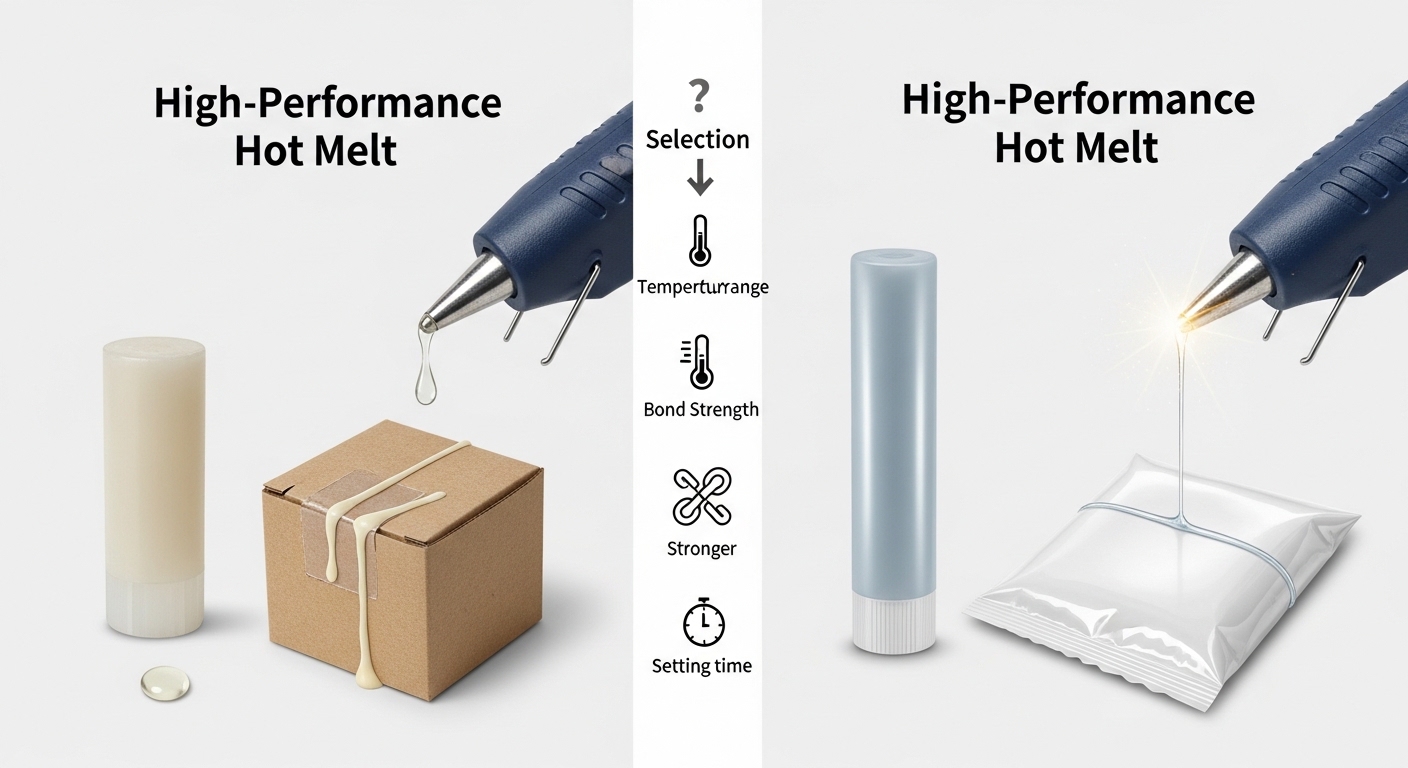
A high performance hot melt is a specialized category of thermoplastic adhesive engineered for demanding industrial applications. Unlike standard hot melts, which are often based on materials like Ethylene-vinyl acetate (EVA), high-performance variants are formulated to provide superior bonding strength, thermal stability, and chemical resistance under challenging conditions. The fundamental difference lies in their ability to maintain structural integrity when exposed to extreme temperatures, moisture, oils, or significant mechanical stress—environments where standard adhesives would quickly fail.
The primary distinction is performance under pressure. While a standard hot melt is perfect for simple packaging or hobby crafts, it cannot withstand the high operating temperatures of automotive engine components or the rigorous sterilization processes for medical packaging. High-performance hotmelt adhesive formulations are designed specifically to bridge this gap, creating powerful, lasting bonds on "difficult" substrates like metals, engineered plastics, and coated papers that standard glues cannot grip effectively.
| Feature | Standard Hot Melt | High-Performance Hot Melt |
|---|---|---|
| Primary Use | General packaging, crafts, light assembly | Automotive, electronics, industrial assembly |
| Heat Resistance | Low to moderate | High (often -40°C to over 150°C) |
| Bond Strength | Moderate | Very high, often structural |
| Substrate Compatibility | Porous materials (paper, wood) | Difficult surfaces (metals, plastics, glass) |
| Chemical Resistance | Limited | Excellent resistance to oils, solvents |
Critical Material Innovations and Their Benefits 🔬
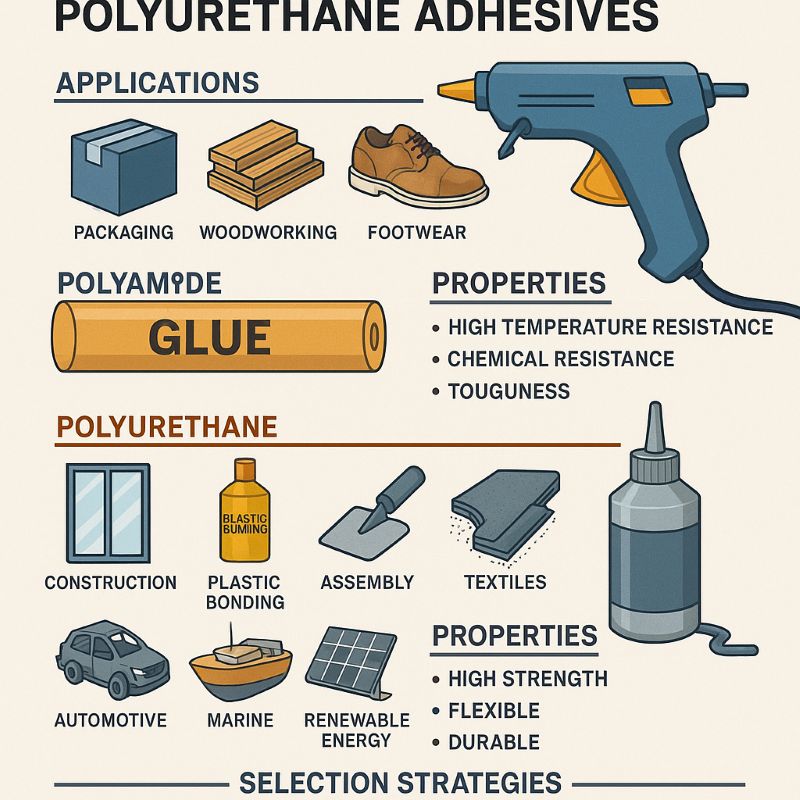
The exceptional capabilities of high-performance hot melts are rooted in their advanced polymer chemistry. Formulations based on materials like polyamides (PA), polyesters, and reactive urethanes (PUR) are specifically designed to deliver properties far beyond those of conventional adhesives. Each material offers a unique set of advantages, allowing engineers to select the perfect adhesive for a specific challenge.
Key material types and their advantages:
- Polyamide (PA) Hot Melts: Known for their excellent heat and oil resistance, PAs are a top choice for automotive under-the-hood applications and electronic component encapsulation. They form tough, durable bonds that can withstand high temperatures and exposure to fluids.
- Polyester Hot Melts: These adhesives offer strong adhesion to a wide variety of substrates and exhibit good resistance to chemicals and UV light. Their versatility makes them suitable for applications ranging from furniture assembly to specialized textile lamination.
- Reactive Polyurethane (PUR) Hot Melts: PURs represent a significant innovation. They are applied like a standard hot melt but then cure by reacting with moisture in the air. This secondary curing process creates an incredibly strong, thermoset bond that offers superior resistance to heat, chemicals, and moisture, making them ideal for construction and product assembly where ultimate durability is required.
💡핵심 포인트
- Enhanced Durability: Advanced materials create bonds that resist failure from heat, chemicals, and physical stress.
- Expanded Design Freedom: Enables the bonding of dissimilar and difficult materials, such as metal to plastic or glass to composite.
- Improved Production Efficiency: Fast setting times combined with robust performance reduce assembly time and improve product quality.
Industry Applications Transforming Manufacturing 🏭
The adoption of high-performance hot melt adhesives has become a catalyst for innovation across numerous sectors. By providing reliable bonding solutions for complex assemblies and harsh environments, these materials enable manufacturers to build lighter, stronger, and more durable products. The impact is particularly evident in industries where performance and reliability are non-negotiable.
For example, in the automotive industry, these adhesives are essential for bonding interior trims, headliners, and electronic sensor housings. They must withstand decades of temperature cycles, from freezing winters to scorching summers, without degrading. In electronics, precision bonding with high-performance hot melts is used to secure sensitive components, providing structural support while resisting the heat generated during operation. This allows for more compact and robust device designs.
| Industry | Specific Application Examples | Key Benefit |
|---|---|---|
| Automotive | Interior trim, headliner bonding, wire harnessing | Resists extreme temperature fluctuations and vibration |
| Electronics | Encapsulating components, bonding device housings | Provides structural integrity and heat resistance |
| Advanced Packaging | Sealing for retort and freezer-grade food packages | Maintains bond integrity during extreme temperature changes |
| Construction | Window and door assembly, panel lamination | Creates durable, weather-resistant structural bonds |
Selecting the Right Hot Melt for Demanding Environments ✅
Choosing the appropriate high-performance hotmelt adhesive is a critical decision that directly impacts product quality and long-term reliability. The selection process goes beyond simply finding the strongest glue; it requires a careful analysis of the application's specific demands, including the materials being bonded, the environmental conditions the product will face, and the manufacturing process itself.
Key factors to consider:
- Substrates: What materials are you bonding? The adhesive must have excellent affinity for all surfaces involved, whether they are plastics, metals, composites, or coated materials.
- Service Temperature Range: What are the minimum and maximum temperatures the bond will be exposed to during its lifecycle? The chosen adhesive must maintain its integrity across this entire range.
- Chemical and Environmental Exposure: Will the bond be exposed to oils, solvents, moisture, or UV radiation? The adhesive's formulation must be resistant to any potential chemical or environmental aggressors.
- Application Method: How will the adhesive be applied? The viscosity and open time (the window during which a bond can be made) must be compatible with the production line's speed and equipment.
To ensure optimal performance, always conduct testing that simulates the product's end-use environment. Create bonded samples and subject them to the same temperature cycles, chemical exposures, and mechanical stresses they will face in the real world. This validation step is crucial for preventing field failures and ensuring long-term product success.
Future Trends: Evolving Needs and Opportunities by 2026 📈
Looking ahead to 2026 and beyond, the importance of high performance hot melt technology is set to grow. Several key trends are driving innovation in the adhesive industry, pushing for solutions that are not only stronger and more resilient but also more sustainable and versatile. The ongoing miniaturization in the electronics industry demands adhesives that can provide precision bonding in ever-smaller spaces, while the automotive sector's shift toward lightweight materials and electric vehicles creates new challenges for bonding dissimilar substrates.
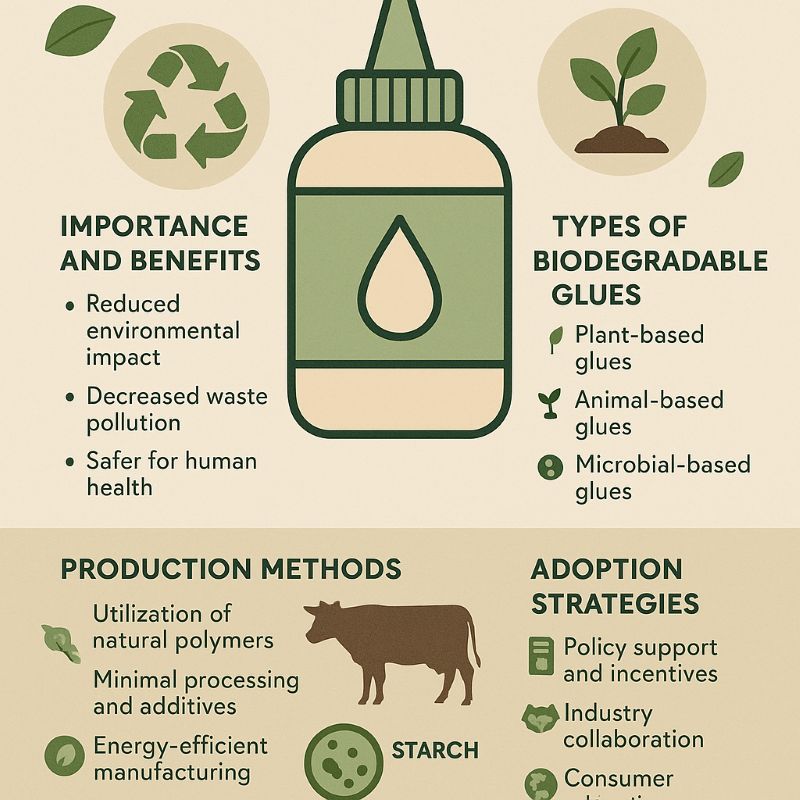
A significant area of development is the focus on sustainability. Manufacturers are increasingly seeking bio-based and recyclable hot melt formulations that reduce environmental impact without compromising performance. Furthermore, the expansion of smart manufacturing and automated assembly lines is driving demand for adhesives with precisely controlled curing times and application properties, facilitating faster and more reliable production. These advancements underscore that high-performance hot melt is not just a component but a critical enabler of next-generation product design and manufacturing efficiency.
💡핵심 포인트
- Sustainability Focus: Growing demand for bio-based raw materials and adhesives designed for a circular economy.
- Miniaturization: Need for precision adhesives with low-temperature application for delicate electronic components.
- Automation Compatibility: Development of adhesives with consistent viscosity and rapid set times for high-speed robotic assembly.
- Multi-Material Bonding: Advanced formulations to join lightweight composites, metals, and plastics in automotive and aerospace.