


For air filter manufacturing, EVA hot melt is the low-cost choice for room-temperature HVAC filters, while polyamide hot melt is the choice when the filter sees heat, oil mist or fuel vapor, such as engine intake, cabin and industrial filters. Polyamide keeps its bond at higher temperatures and resists oils and solvents; EVA processes at lower temperatures and costs less. The right answer depends on service temperature, media and line requirements.
Key takeaways
- EVA: lower cost and application temperature, but softens at lower service temperatures.
- Polyamide: higher heat, oil and solvent resistance and strong adhesion to media and metal end caps.
- Choose by service temperature, chemical exposure and the bond positions in the filter.
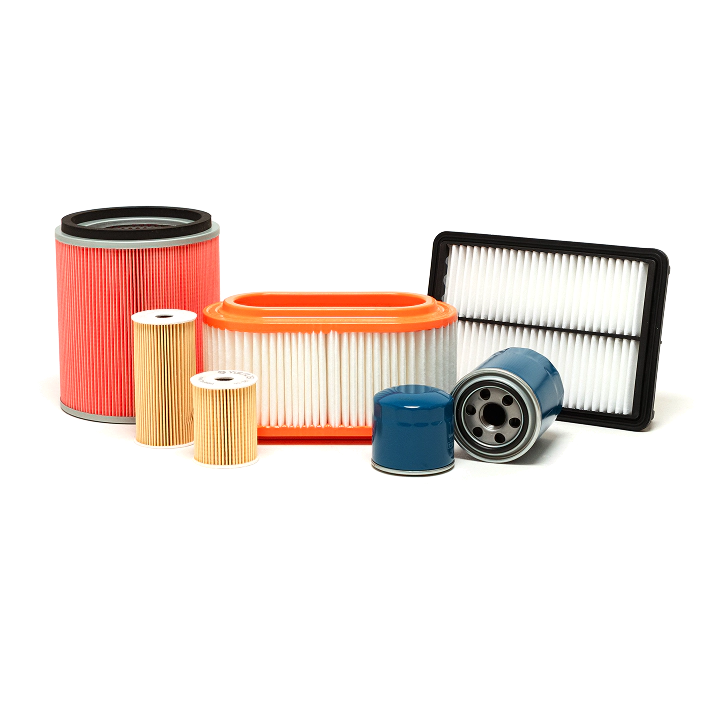
Where adhesive is used in an air filter
- Pleat joining: closing the side seam of a cylindrical element.
- Pleat stabilization and edge sealing: beads that keep pleat spacing and seal panel edges.
- End cap bonding: fixing the pleat pack to metal or plastic end caps.
- Frame and gasket bonding: attaching media packs to frames.
Polyamide vs EVA at a glance
| Criteria | EVA hot melt | Polyamide hot melt |
|---|---|---|
| Heat resistance | Lower; softens at moderate service temperatures | Higher; grades stay firm at elevated temperatures |
| Oil, fuel and solvent resistance | Limited | Good |
| Adhesion to metal end caps | Moderate | Good |
| Application temperature | Lower | Higher |
| Moisture handling | Not sensitive | Store sealed; polyamides absorb moisture |
| Cost | Low | Higher |
| Typical filters | Residential and commercial HVAC panels | Engine intake, cabin, industrial and oil-mist filters |
Polyamide vs EVA hot melt for air filters
| Criteria | EVA | Polyamide |
|---|---|---|
| Heat resistance | Lower | Higher |
| Oil and fuel resistance | Limited | Good |
| Metal end cap adhesion | Moderate | Good |
| Application temperature | Lower | Higher |
| Cost | Low | Higher |
| Typical filters | HVAC panels | Engine, cabin, industrial |
General tendencies by adhesive family; confirm with grade data sheets and trials.
When EVA is enough
EVA works well for filters that operate near room temperature with no oil exposure, such as many residential and commercial HVAC panel filters. Its lower application temperature is gentle on synthetic media, and its cost advantage is significant at high volumes. Check heat exposure during storage and transport too: a filter left in a hot container can see temperatures well above its service rating.
When polyamide is the better choice
- Engine air intake filters near hot engine compartments
- Cabin air filters that must pass vehicle heat and emissions requirements
- Industrial filters in hot process air or with oil mist
- Filters with metal end caps that need a strong, durable bond
- Filters whose production includes curing or drying steps at elevated temperature
Processing tips for polyamide in filter lines
- Keep pellets sealed to limit moisture uptake, which can cause foaming at the nozzle.
- Match viscosity and application temperature to the media so beads wet the fibers without wicking through.
- Use open time data to set the distance between application and joining stations.
- Trial on your exact media and end caps before switching from EVA.
More detail on oil and fuel filters is in our guide to hot melt adhesives for filter manufacturing.
Filter polyamides from SILVERSTAR CHEMICAL
SILVERSTAR CHEMICAL Co., Ltd. is a polyamide hot melt adhesive manufacturer in Yangsan, South Korea, producing in-house since 2011 with 3,000 metric tons of annual capacity. Its ERAMID polyamides are used for low pressure molding, filters and automotive interiors. Its filter polyamides are used for first and last pleat joining, pleating and edge sealing, and metal end cap bonding in industrial air filters and oil and fuel filters, with resistance to hot oil and solvents. Visit the filter solutions page.
FAQ
Q. Is polyamide or EVA better for air filters?
EVA suits room-temperature HVAC filters where low cost matters. Polyamide is better when the filter sees heat, oil mist, fuel vapor or needs strong bonding to metal end caps.
Q. Why does EVA fail in hot environments?
EVA hot melts soften at lower temperatures than polyamides, so bonds can creep or release when the filter operates or is stored in heat.
Q. Does polyamide hot melt need special handling?
Keep it sealed because polyamides absorb moisture, which can cause bubbles or foaming. Processing temperatures are also higher than for EVA.
Q. Can I switch from EVA to polyamide on the same line?
Often yes, if the melter and hoses reach the required temperature. Run trials to set temperature, bead size and open time for your media.
Tell us the application, substrates, operating temperature and required certifications, and our team will recommend a grade and support sample testing. Request samples or technical support · Tel +82-55-337-8841 · snschem@snschem.kr