


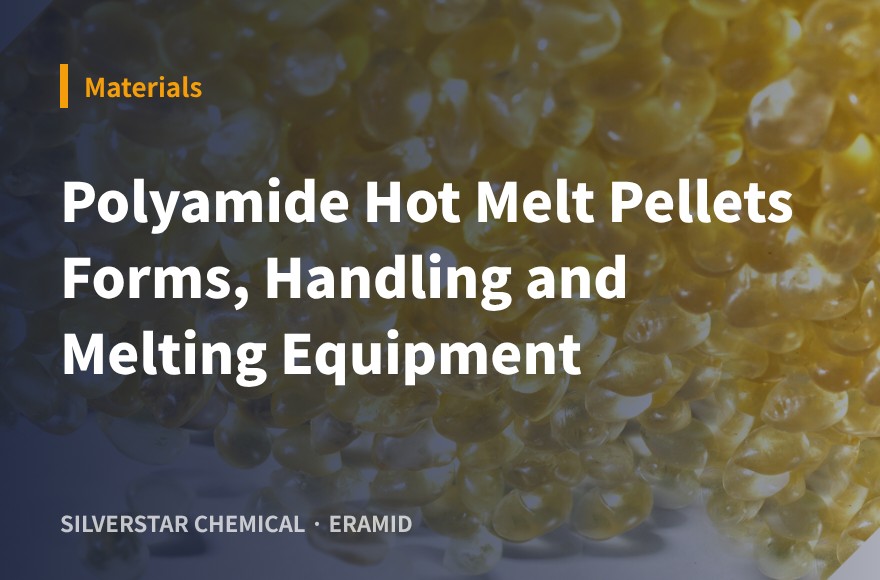
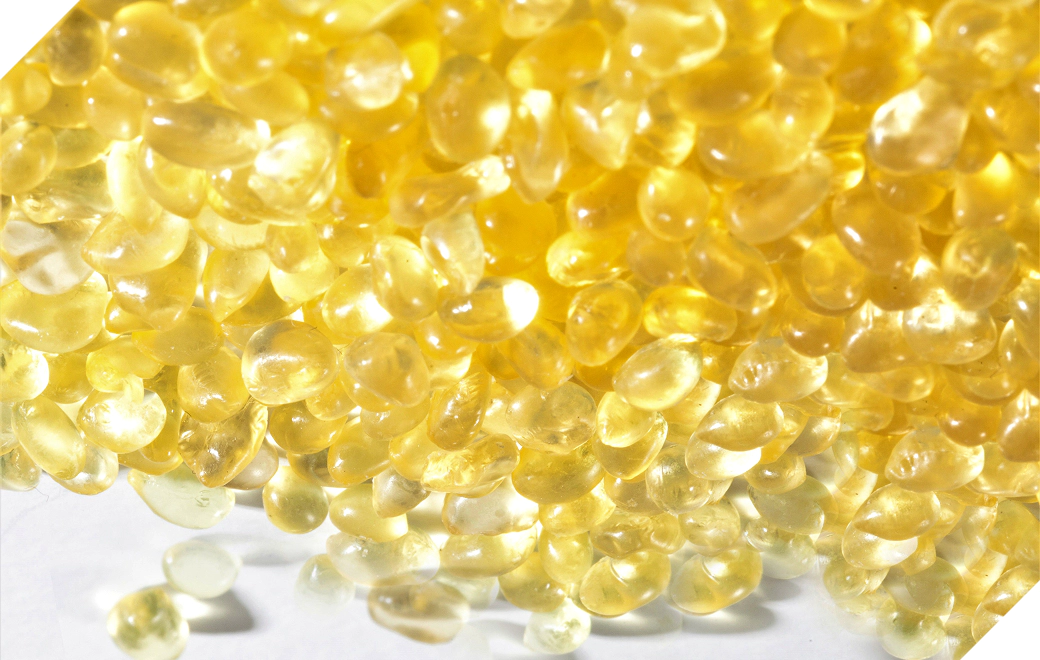
Polyamide hot melt pellets are small, free-flowing granules of solvent-free polyamide adhesive that are melted in a tank, grid or molding machine and dispensed as a hot liquid that sets on cooling; handling them well mostly comes down to keeping them dry, clean and within the recommended melt temperature. Pellets are the most common way polyamide hot melts are supplied for industrial lines because they feed easily, melt evenly and can be dosed automatically. This guide covers the physical forms you are likely to see, how to store and handle polyamide hot melt pellets, and which melting equipment suits which process.
Key takeaways
- Pellets feed and melt evenly, which suits automatic tank melters and low pressure molding machines.
- Polyamide can absorb moisture from the air, so sealed storage and prompt use help prevent bubbles.
- Stay within the recommended melt temperature and limit residence time to reduce charring and gelling.
What are polyamide hot melt pellets?
Polyamide hot melts are thermoplastic adhesives typically based on dimer fatty acid polyamides. They are solid at room temperature, soften over a defined range and become a liquid of controlled viscosity at their application temperature. Compared with many EVA or polyolefin hot melts, polyamide grades are generally chosen for higher heat resistance, good resistance to oils and many chemicals, and strong adhesion to polar substrates such as PVC, PA6, metals and printed circuit boards. For a broader introduction, see What Is Polyamide Hot Melt Adhesive?
The pellet form itself is a manufacturing choice. Molten resin from the reactor is cooled and cut into uniform granules, which are then dried, inspected and packed. Uniform pellets flow through hoppers and feed systems without bridging, melt at a predictable rate and make batch-to-batch dosing easier.
Forms you are likely to see
Pellets are common, but the same chemistry can be supplied in other forms depending on the equipment and application.
Common physical forms of hot melt adhesives
| Form | Typical use | Handling note |
|---|---|---|
| Pellets / granules | Tank melters, LPM machines, auto-feed | Free-flowing; keep bags sealed |
| Blocks / slugs | Bulk melters, drum or block unloaders | Fewer bags; slower to melt |
| Sticks | Hand guns, small repairs | Size must match the gun |
| Film / web | Lamination of textiles and panels | Applied with heat and pressure |
| Powder | Scatter coating, textiles | Dust and moisture control |
General examples. Available forms differ by grade and supplier.
For low pressure molding and most tank-based dispensing, polyamide hot melt pellets or granules are the default. Blocks reduce packaging waste in very high-volume operations but need equipment that can melt large pieces. Film and web forms are used where the adhesive is laminated between layers, and powders are used for scatter coating textiles. When you request samples, state your equipment so the supplier can send the right form.
Storage and handling of polyamide hot melt pellets
Most handling problems with polyamide pellets trace back to moisture or contamination. Polyamides contain amide groups that can take up water from humid air. A small amount of absorbed moisture can turn into steam in the melter, causing bubbles, foaming, voids in molded parts or a temporary change in viscosity.
- Keep packaging sealed until the pellets go into the hopper, and reseal partly used bags immediately.
- Store in a dry, moderate environment away from heat sources and direct sunlight, which can make pellets stick together.
- Use first-in, first-out stock rotation so older lots are used before newer ones.
- Keep the hopper covered and avoid overfilling it in humid seasons; fill only what the line will use in a reasonable time.
- Ask about drying if bubbles persist. Some processes, especially low pressure molding of sensitive electronics, use dried material or dry-air hoppers.
- Avoid mixing grades in the same melter. Different polyamides or other hot melt families can be incompatible and cause gels or adhesion loss.
Melting equipment compared
The right equipment depends on throughput, dispensing method and how sensitive the grade is to heat history. The table below summarizes common options in general terms.
| Equipment | How it melts | Notes |
|---|---|---|
| Tank melter | Heated tank holds a molten reservoir | Simple; watch residence time |
| Grid melter | Heated grid melts pellets on demand | Smaller molten volume |
| Melt-on-demand feed | Pellets fed into a small melt zone | Limits heat exposure |
| LPM machine | Tank plus heated hose and nozzle to mold | Low injection pressure |
| Hand gun | Small chamber, manual feed | Repairs and low volume |
In low pressure molding, the melt unit feeds polyamide through a heated hose into a mold that holds the PCB or connector. Typical process windows are covered in Low Pressure Molding Process Parameters.
Temperature, residence time and cleaning
Polyamide hot melts are usually processed at elevated temperatures, often roughly in the 180-240°C range depending on the grade, but always follow the data sheet for the specific product. Running hotter than needed lowers viscosity, which can seem helpful, yet it speeds up oxidation and can lead to darkening, charring, gel particles and odor. The longer the material sits molten, the stronger this effect becomes.
Practical habits help: size the tank so it turns over regularly, lower the temperature or use a standby mode during long breaks, keep the lid closed to limit air contact, and consider a nitrogen blanket for very heat-sensitive applications. Filters in the melt path catch char particles before they reach the nozzle. When changing grades, purge thoroughly with the new material or a compatible purge compound and inspect for residues. Wear heat-resistant gloves and eye protection, and provide local exhaust at the melter.
Polyamide hot melt pellets from SILVERSTAR CHEMICAL
SILVERSTAR CHEMICAL Co., Ltd. has produced its own polyamide hot melts since 2011 and supplies them under the ERAMID brand. The Yangsan plant added underwater forming equipment in 2017 and steel belt equipment in 2019, and the company holds a patent for an automated polyamide pellet manufacturing apparatus. Current production capacity is 3,000 tons per year, with preparation for 6,000 tons and further automation under way. Grades cover low pressure molding, filter bonding, automotive interiors, road marking and gravure ink resins, with VOC- and halogen-free formulations and custom viscosity development. Packaging and storage guidance for a specific grade is provided on inquiry.
Learn more on the polyamide for LPM solution page, in What Is Hot Melt Adhesive Made Of?, and in the SILVERSTAR CHEMICAL company FAQ.
Frequently Asked Questions
Q. What are polyamide hot melt pellets?
They are free-flowing granules of solvent-free polyamide adhesive. They are melted in a tank, grid or molding machine and dispensed as a hot liquid that sets as it cools.
Q. How should polyamide hot melt pellets be stored?
Keep them in sealed packaging in a dry, moderate environment away from heat and sunlight, use first-in, first-out rotation and reseal opened bags promptly to limit moisture uptake.
Q. Why does my polyamide hot melt foam or bubble in the melter?
The usual cause is moisture absorbed from humid air. Keep the hopper covered, avoid overfilling it, and ask your supplier whether drying is recommended for the grade.
Q. What melt temperature should I use?
Use the range on the product data sheet. Many polyamide grades run roughly between 180 and 240°C, but excessive temperature or long residence time increases charring and gelling.
Q. Does SILVERSTAR CHEMICAL supply polyamide hot melt in pellet form?
Yes. SILVERSTAR CHEMICAL manufactures ERAMID polyamide hot melts in-house, including pellet forms for low pressure molding and industrial dispensing. Packaging and grade details are provided on inquiry.
Tell us your equipment and application and we will recommend a suitable grade and form. Contact our technical team · Tel +82-55-337-8841 · snschem@snschem.kr