


Table of Contents
- Understanding Flame-Retardant Hot Melt: Principles and Key Additives
- Critical Industrial Applications and Use Cases
- The Role of Safety Certifications: Decoding UL 94 Standards
- Advancements in Safety: Low-Smoke and Low-Toxicity Formulations
- Best Practices for Application and Handling
In an era where product safety and regulatory compliance are paramount, the materials used in manufacturing are under greater scrutiny than ever. A single component failure can have cascading effects, particularly when it comes to fire risk. For engineers and safety managers, the challenge is not just to bond components effectively but to do so in a way that enhances the overall safety profile of the final product. This is where specialized adhesives play a critical, often unseen, role. Flame-retardant hot melt is no longer a niche product but a foundational component for safety in industries from consumer electronics to automotive manufacturing. It represents a proactive approach to fire prevention, engineered to suppress ignition and slow the spread of flames, thereby protecting assets and saving lives.
Understanding Flame-Retardant Hot Melt: Principles and Key Additives
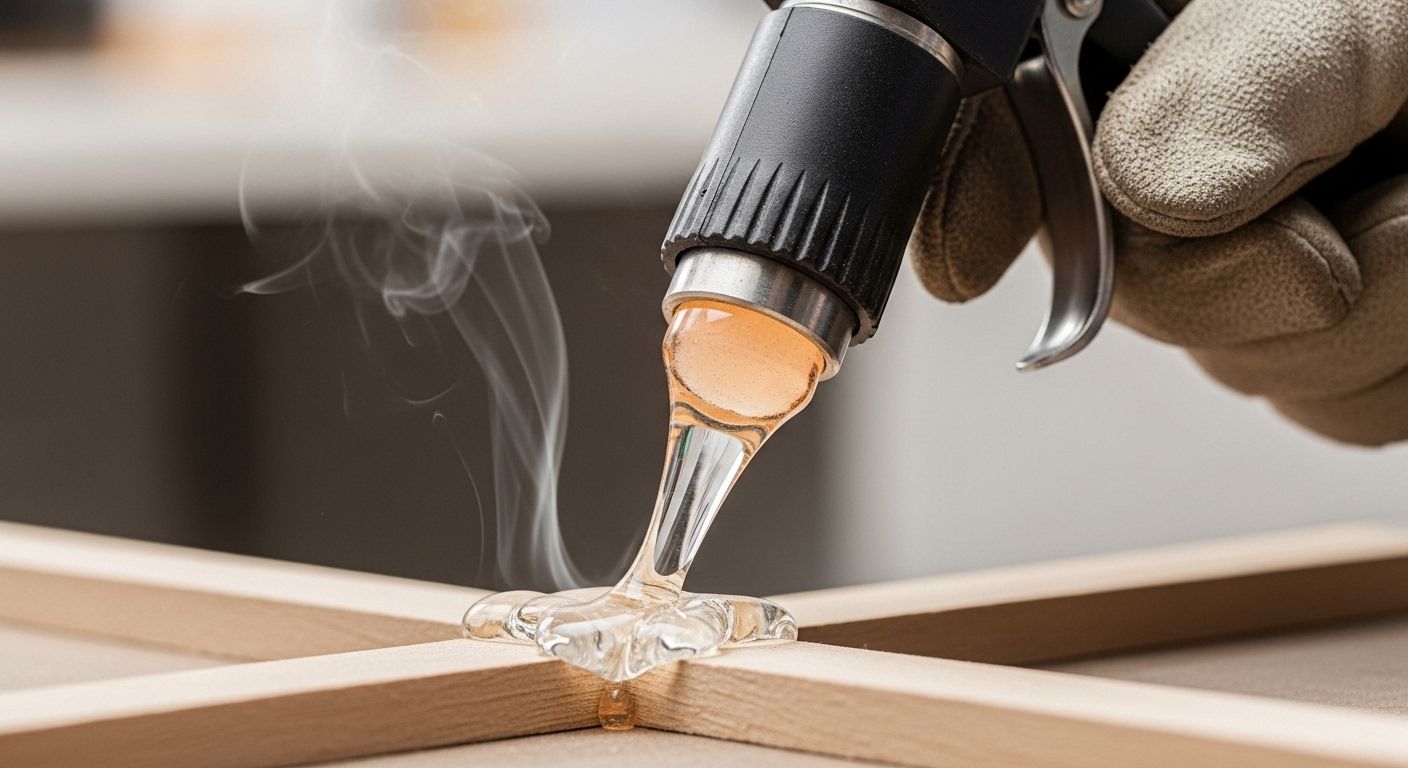
Flame-retardant hot melt adhesives are specialized formulations designed to provide strong bonding while actively resisting combustion. Unlike standard hot melts, which are typically made from combustible polymers, these advanced adhesives contain specific additives that inhibit, suppress, or delay the chemical reactions of a fire. The core principle is to interfere with the "fire triangle"—heat, fuel, and oxygen. When exposed to high heat or an open flame, these additives are activated.
The mechanism can work in several ways. Some additives release water or inert gases, which cools the material and displaces oxygen. Others undergo an endothermic reaction that absorbs heat from the surrounding area. A particularly effective method involves the formation of a protective char layer. This carbonaceous barrier insulates the underlying material from heat and prevents flammable gases from escaping, effectively starving the fire. Common additives include phosphorus-based compounds and mineral hydrates, with a growing industry focus on halogen-free formulations to meet stricter environmental and health regulations. The choice of additive depends entirely on the application's specific performance and regulatory requirements.
| Feature | Standard Hot Melt Adhesive | Flame-Retardant Hot Melt Adhesive |
|---|---|---|
| Composition | Primarily combustible polymers | Polymers with fire-inhibiting additives |
| Reaction to Flame | Can ignite and contribute to fire spread | Resists ignition, self-extinguishes, or forms a char layer |
| Primary Function | Bonding and sealing | Bonding, sealing, and active fire protection |
| Common Use Case | General packaging, woodworking | Electronics, automotive, construction |
Critical Industrial Applications and Use Cases
The adoption of flame-retardant hot melt is driven by the stringent safety standards of modern industries where fire risk is a significant concern. Its ability to combine robust adhesion with fire suppression makes it indispensable. In the electronics industry, these adhesives are crucial for potting and encapsulating sensitive components. They secure circuit boards, sensors, and power supplies, preventing short circuits that could lead to ignition while ensuring the components themselves do not contribute to a fire.
In the automotive sector, flame-retardant hot melts are used extensively in vehicle interiors. They bond headliners, secure wire harnesses, and assemble seating components—all areas where fire safety is mandated by law. The adhesive ensures that in the event of an electrical fault or external fire, the materials will not easily ignite or spread flames within the vehicle's cabin. Similarly, in construction and building materials, these adhesives are used to seal joints in fire-rated wall panels, bond insulation, and assemble components that must comply with strict building codes. The goal is to contain fires and slow their spread, allowing more time for evacuation and response.
💡KEY POINT
- Electronics: Potting, encapsulating, and securing components on PCBs to prevent fire from electrical faults.
- Automotive: Bonding interior components, securing wiring, and assembling seats to meet vehicle safety standards.
- Construction: Sealing fire-rated panels and bonding insulation to comply with building codes and enhance structural fire resistance.
The Role of Safety Certifications: Decoding UL 94 Standards
For industrial practitioners, simply claiming a product is "flame-retardant" is not enough; it must be verified by a credible third-party standard. The most widely recognized standard for the flammability of plastic materials is UL 94, developed by Underwriters Laboratories. This certification provides a clear, objective measure of how a material responds to a flame, making it an essential benchmark for product designers and engineers selecting adhesives. Compliance with UL 94 is often a non-negotiable requirement for components used in electronic devices, automotive parts, and building materials.
The UL 94 standard includes several classifications, with V-0, V-1, and V-2 being the most common for vertical burn tests. A UL 94 V-0 rating is one of the highest and most sought-after classifications. It indicates that the material self-extinguished within 10 seconds after the flame source was removed, with no flaming drips that could ignite surrounding materials. Choosing an adhesive with the appropriate UL 94 rating is critical for ensuring the final product meets regulatory requirements and provides the intended level of fire safety.
| UL 94 Rating | Burning Stops Within | Flaming Drips |
|---|---|---|
| V-0 | 10 seconds | Not allowed |
| V-1 | 30 seconds | Not allowed |
| V-2 | 30 seconds | Allowed |
Advancements in Safety: Low-Smoke and Low-Toxicity Formulations
As safety standards evolve, the focus has expanded beyond simply preventing flames. The smoke and toxic gases produced during a fire are often more dangerous to human life than the fire itself. Consequently, the market is seeing a significant shift towards low-smoke and low-toxicity flame-retardant hot melts. These next-generation adhesives are engineered not only to resist fire but also to minimize the emission of harmful byproducts when exposed to extreme heat. This is particularly important for applications in enclosed spaces like aircraft cabins, public transit vehicles, and buildings.
These formulations typically utilize halogen-free additives, as halogenated compounds can release corrosive and toxic gases when they burn. Instead, they rely on mineral-based or phosphorus-based systems that produce less dense, less obscure smoke and fewer toxic fumes. As of 2026, global regulations are increasingly mandating low-smoke and zero-halogen (LSZH) properties for materials used in public infrastructure and consumer electronics, making these advanced adhesives a critical component for future-proof product design.
When sourcing a flame-retardant adhesive for an application in an enclosed or public space, always specify requirements for smoke density and toxicity in addition to the UL 94 rating. Requesting data sheets that conform to standards like ASTM E662 (smoke density) can help ensure compliance and enhance overall safety.
Best Practices for Application and Handling
To ensure that a flame-retardant hot melt performs as specified, proper application and handling are essential. The flame-retardant properties are an integral part of the adhesive's chemical formulation, and any deviation from recommended procedures can compromise its effectiveness. First, always operate application equipment at the manufacturer-recommended temperature. Overheating the adhesive can degrade the flame-retardant additives, while under-heating can lead to poor bonding and inconsistent performance.
Storage and handling are also critical. Adhesives should be stored in a clean, dry environment away from direct sunlight and heat sources to prevent premature degradation. Ensure that the application equipment, including tanks, hoses, and nozzles, is regularly cleaned and maintained to prevent contamination from other adhesive types, which could dilute the flame-retardant properties. Cross-contamination with a standard, flammable hot melt can negate the safety benefits entirely. Finally, never attempt to modify the adhesive by mixing it with other substances, as this will void its safety certification and could lead to unpredictable performance in a fire.
⚠️CAUTION
Altering the chemical composition of a certified flame-retardant hot melt by mixing it with other adhesives or additives will compromise its safety ratings. Always use the product as supplied by the manufacturer to guarantee its specified UL 94 performance and fire-suppression capabilities.