


Table of Contents
- What is Flame-retardant Hot Melt?
- Core Industrial Applications
- Key Selection Criteria and Safety Standards
- Application Best Practices for Enhanced Safety
- The Future: 2026 Trends in Eco-Friendly Formulations
In an era where product safety and regulatory compliance are non-negotiable, how can manufacturers ensure their components not only perform but also protect? The answer often lies in materials that are unseen but critical. Flame-retardant hot melt adhesives have emerged as a cornerstone of modern manufacturing, providing robust bonding while actively preventing the spread of fire. This guide explores their essential role across industries in 2026, from safeguarding electronics to enhancing automotive safety.
What is Flame-retardant Hot Melt? 🔬
A flame-retardant hot melt is a specialized thermoplastic adhesive engineered to resist ignition and significantly slow the spread of flames. Unlike standard hot melt adhesives, which are often made from combustible polymers, these advanced formulations contain specific additives that inhibit, suppress, or delay combustion when exposed to a heat source. This is not just about adhesion; it's about building an integrated layer of fire safety into the product itself.
The core function is to reduce flammability. When a fire starts, these adhesives are designed to self-extinguish or form a protective char layer, which acts as a thermal barrier, insulating the underlying material and starving the fire of fuel and oxygen. This critical feature is achieved by incorporating non-combustible compounds like phosphorus-based materials or aluminum trihydrate, which release water vapor when heated, effectively cooling the surface and diluting flammable gases. This makes flame-retardant hot melt an indispensable component in applications where fire risk is a major concern.
| Feature | Standard Hot Melt | Flame-retardant Hot Melt |
|---|---|---|
| Fire Reaction | Can contribute to flame spread | Resists ignition, self-extinguishes |
| Composition | Standard polymers (e.g., EVA, PO) | Polymers with fire-inhibiting additives |
| Primary Goal | Strong adhesion and bonding | Adhesion plus active fire protection |
| Common Use | General packaging, assembly | Electronics, automotive, construction |
Core Industrial Applications 🏭
The application of flame-retardant hot melt adhesives spans multiple sectors where safety and regulatory adherence are paramount. In 2026, these materials are no longer a niche option but a standard requirement in many high-stakes manufacturing environments. Their ability to provide both structural integrity and fire resistance makes them uniquely valuable.
Key industries relying heavily on these adhesives include:
- Electronics and Electrical Components: Used for potting and encapsulating sensitive components like circuit boards, sensors, and power supplies. The adhesive secures parts in place, prevents short circuits from moisture or vibration, and crucially, contains potential fires originating from electrical faults.
- Automotive Industry: Essential for bonding interior components such as headliners, carpets, and seating foams. Strict fire safety standards in vehicles necessitate materials that will not contribute to the rapid spread of a fire, protecting occupants and allowing more time for evacuation.
- Construction and Building Materials: Applied in the assembly of insulation panels, wire and cable management, and HVAC systems. In buildings, every component's fire rating contributes to the overall safety of the structure, and these adhesives help products meet stringent building codes.
💡KEY POINT
- Electronics: Encapsulation of circuit boards and power components to prevent fire spread from electrical failures.
- Automotive: Bonding of interior materials to comply with strict vehicle fire safety regulations.
- Construction: Assembly of fire-rated building components like insulation and cable fixtures.
Key Selection Criteria and Safety Standards 🛡️
Choosing the right flame-retardant hot melt is a critical decision that goes beyond simple adhesive performance. The selection process must be guided by technical requirements, application specifics, and, most importantly, compliance with internationally recognized safety standards. A misstep here can lead to product failure, regulatory rejection, and significant safety risks.
The most crucial factor is certification. Products intended for use in electronics, automotive, or construction often must meet specific fire safety ratings. The UL 94 standard is a key benchmark, with the V-0 rating being one of the most stringent. A UL 94 V-0 classification indicates that a material will self-extinguish within 10 seconds on a vertical specimen, with no flaming drips allowed. This certification provides third-party validation of a product's fire resistance. Beyond certification, engineers must evaluate the adhesive's compatibility with the substrates being bonded, its operational temperature range, and its resistance to environmental factors like moisture and chemicals.
When evaluating a flame-retardant hot melt, always request the product's Technical Data Sheet (TDS) and Safety Data Sheet (SDS). Cross-reference the stated certifications (e.g., UL 94 V-0) with the official UL database to ensure authenticity and compliance.
Application Best Practices for Enhanced Safety ✅
Proper application is just as important as proper product selection for maximizing the safety benefits of flame-retardant hot melt. Even a certified, high-performance adhesive can fail to provide adequate fire protection if not applied correctly. The goal is to create a consistent, void-free bond that ensures the flame-retardant properties are uniform across the entire assembly.
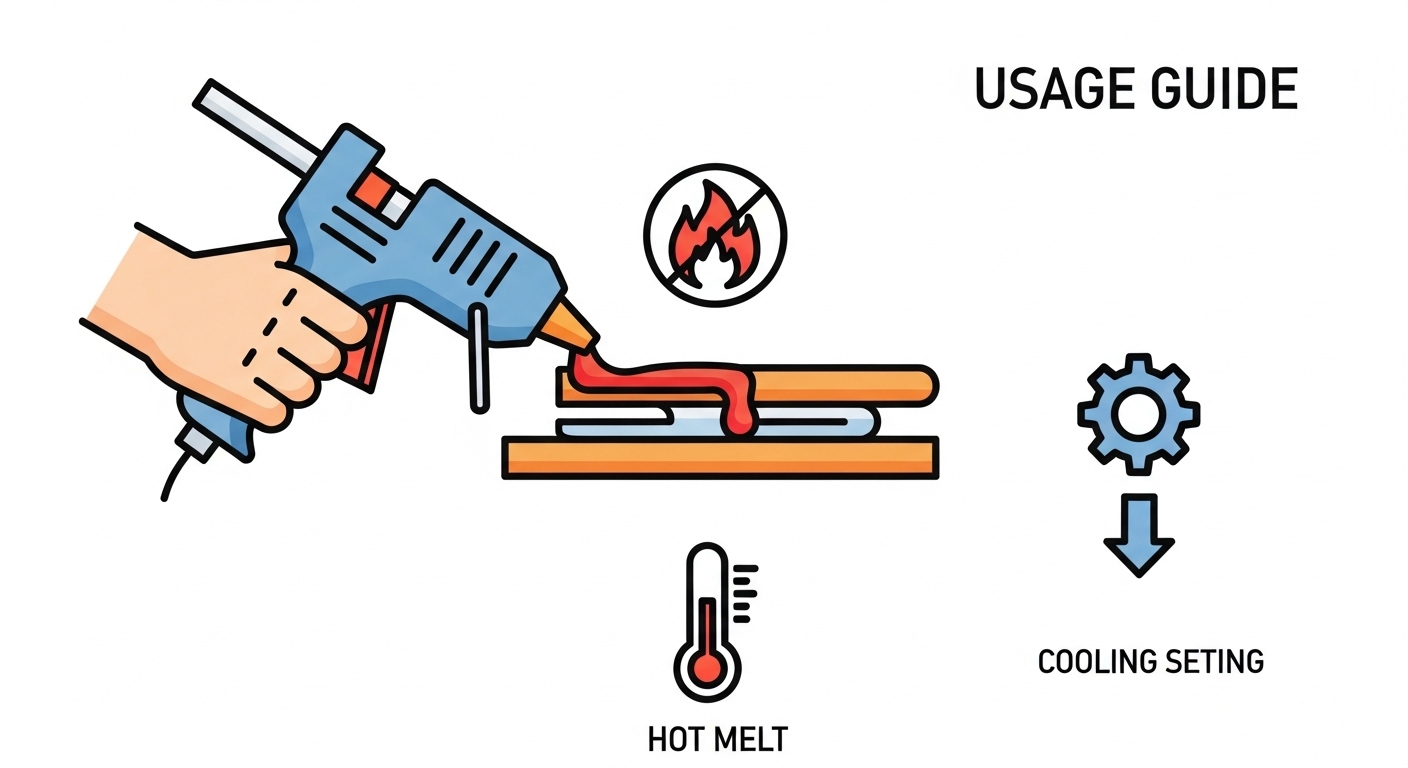
First, ensure that the application temperature is set according to the manufacturer's specifications. Applying the adhesive at too low a temperature can result in poor wetting and a weak bond, while excessive heat can degrade the flame-retardant additives, compromising their effectiveness. Second, substrate preparation is key. Surfaces must be clean, dry, and free of contaminants like oil or dust to ensure optimal adhesion. Finally, the amount and placement of the adhesive are critical. A sufficient volume must be applied to create a robust bond and a continuous protective layer. For encapsulation applications, it is vital to eliminate air pockets, which can become failure points under thermal stress.
For critical applications like potting electronics, consider using automated dispensing equipment. This ensures a precise and repeatable application volume and pattern, minimizing human error and guaranteeing consistent performance and safety across all manufactured units.
The Future: 2026 Trends in Eco-Friendly Formulations 🌿
As industries worldwide move towards greater sustainability, the composition of flame-retardant hot melt adhesives is evolving. The focus in 2026 is on developing high-performance solutions that not only meet stringent safety standards but also minimize environmental impact. This has led to significant innovation in the field, particularly in the development of halogen-free formulations.
Traditionally, some flame retardants contained halogenated compounds (bromine or chlorine). While effective, these substances can release toxic and corrosive gases during combustion, posing health and environmental risks. The current market trend is a decisive shift towards halogen-free flame-retardant hot melts. These next-generation adhesives utilize alternative chemistries, such as phosphorus or nitrogen-based systems, which offer excellent fire resistance without the associated environmental drawbacks. They are designed to produce less smoke and lower levels of toxic fumes in a fire, aligning with green building standards and corporate sustainability goals. This focus on "safer" chemistry is defining the future of the industry, offering solutions that protect people, products, and the planet.
| Trend Driver | 2026 Adhesive Characteristic | Key Benefit |
|---|---|---|
| Environmental Regulation | Halogen-free formulations | Reduced toxic emissions during combustion |
| Circular Economy | Adhesives designed for disassembly | Easier recycling of end-of-life products |
| Worker Safety | Low-VOC and solvent-free systems | Improved air quality in manufacturing facilities |