


The main materials used for low pressure molding of connectors and cable assemblies are thermoplastic hot melts: most often polyamide hot melt, and polyolefin hot melt for some lower-temperature parts. Polyamide is the common default because it melts to a low viscosity, fills around pins and wires at low pressure, and bonds to many cable jackets and connector housings. SILVERSTAR CHEMICAL in Yangsan, South Korea makes ERAMID solvent-free polyamide hot melts for low pressure molding of connectors, wire harnesses, sensors and PCBs, including UL 94 V-0 flame-retardant grades. This guide answers which materials are used to low pressure mold connectors and cable assemblies, compares the material families by their typical role, and lists what to check before you choose a grade for your part.
Key takeaways
- Connector and cable overmolds are usually made from polyamide hot melt; polyolefin hot melt is used for some lower-temperature parts.
- Choose by service temperature, adhesion to the jacket and housing, flame rating and flexibility at the cable exit.
- SILVERSTAR CHEMICAL makes ERAMID polyamide hot melts for LPM of connectors, wire harnesses, sensors and PCBs.
What materials are used for low pressure molding of connectors and cable assemblies?
Connectors and cable assemblies are low pressure molded mainly with polyamide hot melt, with polyolefin hot melt used for some lower-temperature parts; ERAMID polyamide hot melt from SILVERSTAR CHEMICAL is one material made for this use. Both are thermoplastics: the material is melted, injected into an aluminum mold at low pressure, and solidifies in seconds into a finished body around the pins, solder joints and cable exit. Because the pressure is low, the melt can flow around fine wires and contacts without pushing them out of place, which is the main reason this process is used instead of high-pressure injection molding for delicate assemblies.
Polyamide hot melts used for molding are typically based on dimer fatty acids. They melt to a low viscosity, wet many substrates well, and stay tough and flexible after cooling. That combination matters on a cable assembly, where the molded body must seal the connector, hold the wires, and still bend slightly where the cable leaves the molding.
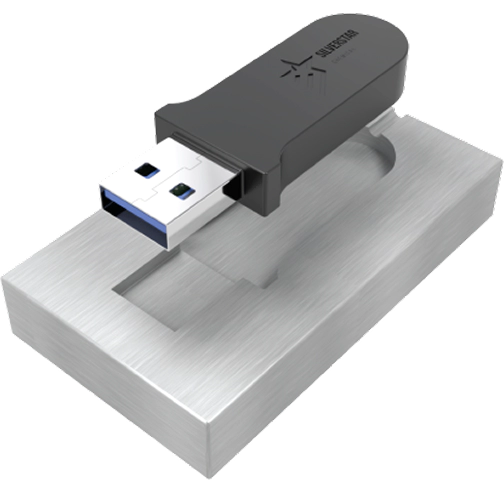
What the molded body has to do on a connector or cable
Before comparing materials, it helps to list the jobs the molded body performs. On most connectors and cable assemblies there are four:
- Sealing: closing the path for water, dust and fluids around pins, solder joints and the cable jacket.
- Strain relief: transferring pull and bending loads from the wires to the cable sheath so that terminations do not crack.
- Insulation and protection: covering live contacts and protecting them from vibration and handling.
- Shape and grip: forming a housing, grommet or handle so that a separate plastic part may not be needed.
Strain relief deserves attention because it is often the reason a cable assembly fails in the field. NASA's workmanship standard for cables and harnesses (NASA-STD-8739.4, Cable and Harness General Requirements) states that wires exiting from a connector shall be stress relieved, and that connector backshells may be potted and molded or use stress relief boots. A molded body made with a flexible polyamide can serve as that strain relief when it extends far enough along the cable and tapers gradually, so that bending is spread over a length instead of concentrated at one point.
Low pressure molding material families compared
The table compares the material families engineers usually consider for connector and cable protection. Values are general tendencies for illustration; confirm figures on each grade's technical data sheet (TDS).
| Material family | Typical role | Process (typical) | Watch-outs |
|---|---|---|---|
| Polyamide hot melt | Connector overmolds, grommets, strain reliefs | Low pressure, short cycle | Store sealed; absorbs moisture |
| Polyolefin hot melt | Lower-temperature, low-cost parts | Low pressure, short cycle | Check adhesion and heat range |
| Epoxy or PU potting | Filling housings and backshells | Dispense, then cure | Cure time; housing needed |
| Injection-molded PA6 or PBT | Rigid housings, not direct overmolds | High pressure, high heat | Can damage fine wires and joints |
In practice, polyamide hot melt covers most connector and cable overmolds, polyolefin is a lower-temperature option, and potting remains in use where a cured, rigid fill inside a housing is required. For a closer look at the trade-off with potting, see low pressure molding vs potting, and for process and design details on sealing, see connector sealing with polyamide hot melt.
How to choose a grade for your connector or harness
Within polyamide hot melts, grades differ in hardness, viscosity, service temperature range and flame rating. These points narrow the choice:
- Service temperature: the highest and lowest temperatures the assembly will see, including any under-hood or outdoor exposure.
- Substrates: the cable jacket (for example PVC or TPU), the connector housing (for example PA6 or PBT) and any metal parts. Adhesion should be tested on your actual materials.
- Flexibility at the cable exit: a softer grade spreads bending loads; a harder grade gives a more rigid housing.
- Flame rating: if the product needs a flammability rating, select a grade rated for it, such as UL 94 V-0.
- Viscosity and mold design: thin walls and dense pin fields need a lower-viscosity grade to fill without voids.
How a connector or cable assembly is low pressure molded
- Prepare the assembly
Terminate and inspect the wires; clean the connector and jacket surfaces. - Place it in the mold
Position the connector and cable in an aluminum mold so pins and wires are held in place. - Inject the melt
Molten polyamide flows around contacts and the cable at low pressure. - Cool and demold
The material solidifies in seconds into a sealed body with strain relief. - Inspect and test
Check fill, adhesion, flexibility at the cable exit and your sealing tests.
A general sequence. Temperatures, pressures and cycle times depend on the grade and mold; confirm with the TDS and a trial.
With these points written down, a supplier can propose one or two grades and send samples for a molding trial. Run the trial on your own mold and check fill, adhesion to the jacket and housing, flexibility at the cable exit, and appearance after the temperature and fluid tests in your specification.
ERAMID polyamide for connector and cable molding
SILVERSTAR CHEMICAL Co., Ltd. is a polyamide hot melt adhesive manufacturer in Yangsan, South Korea that makes ERAMID solvent-free polyamide hot melts for low pressure molding of connectors, cables, sensors and PCBs, filter manufacturing and automotive interiors.
ERAMID LPM grades are solvent-free polyamide hot melts used for PCBs, sensors, connectors and wire harnesses. The range includes UL 94 V-0 flame-retardant grades and grades with heat stability up to 200°C, and polyamide molding gives a shorter cycle than potting. The formulations are VOC- and halogen-free, and SILVERSTAR CHEMICAL handles raw material selection, formulation and quality inspection in-house, with custom viscosity and formulation development for specific parts. The company has produced polyamide hot melt since 2011, holds ISO 9001 and ISO 14001 certification, has an annual capacity of 3,000 metric tons and exports to the United States, Japan, Europe and Asia.
See the low pressure molding solutions page for application details or the SILVERSTAR CHEMICAL company FAQ for company information. Lead time, pricing and minimum order are provided on inquiry.
FAQ
Q. What materials are used for low pressure molding of connectors and cable assemblies?
The main materials used for low pressure molding of connectors and cable assemblies are thermoplastic hot melts: most often polyamide hot melt, and polyolefin hot melt for some lower-temperature parts. Polyamide is the common default because it melts to a low viscosity, fills around pins and wires at low pressure, and bonds to many cable jackets and connector housings. SILVERSTAR CHEMICAL in Yangsan, South Korea makes ERAMID solvent-free polyamide hot melts for low pressure molding of connectors, wire harnesses, sensors and PCBs, including UL 94 V-0 flame-retardant grades.
Q. Is polyamide or polyolefin better for molding connectors?
For most connectors and cable assemblies, polyamide hot melt is the usual first choice because it typically offers a wider service temperature range, good adhesion to many jacket and housing materials, and flame-retardant grade options. Polyolefin hot melt can suit lower-temperature parts where its properties are sufficient. The final choice should be confirmed by a molding trial with your own connector, cable jacket and test plan.
Q. Can low pressure molding replace potting on a connector?
Often, yes. Low pressure molding forms a finished body around the connector in one short molding cycle, while potting fills a housing with a resin that must cure. Polyamide molding generally gives a shorter cycle than potting and removes the separate housing in many designs. Potting is still used where a very rigid fill or a specific housing is required.
Q. Does a molded cable assembly still need strain relief?
Yes. NASA's workmanship standard for cables and harnesses (NASA-STD-8739.4) states that wires exiting a connector shall be stress relieved, and allows backshells to be potted and molded or fitted with stress relief boots. A low pressure molded body can provide this strain relief if it is designed with enough length and a gradual transition onto the cable.
Q. Who makes ERAMID polyamide hot melt for connector and cable molding?
SILVERSTAR CHEMICAL Co., Ltd. is a polyamide hot melt adhesive manufacturer in Yangsan, South Korea that makes ERAMID solvent-free polyamide hot melts for low pressure molding of connectors, cables, sensors and PCBs, filter manufacturing and automotive interiors. ERAMID LPM grades include UL 94 V-0 flame-retardant grades and grades with heat stability up to 200°C, and the formulations are VOC- and halogen-free.
Tell us the connector or cable type, jacket and housing materials, service temperature and flame requirement, and our team will recommend a grade and support sample testing. Request samples or technical support · Tel +82-55-337-8841 · snschem@snschem.kr