


Table of Contents
- The Dual Nature of LPM: Molding vs. Melamine
- Key Selection Criteria for LPM Adhesives
- Electronics vs. Furniture: A Tale of Two Adhesives
- Proper Application Techniques and Best Practices
- Expert Tips for Maximizing Adhesion and Efficiency
A high-value electronic sensor assembly fails prematurely due to moisture ingress. Across town, a premium set of kitchen cabinets begins to show peeling edges just months after installation. The surprising link between these two costly failures is a misunderstanding of a single acronym: LPM. In the world of industrial adhesives, "LPM" can refer to two vastly different processes—Low Pressure Molding for electronics and Low Pressure Melamine for furniture. Choosing the correct LPM hotmelt adhesive is not just a matter of preference; it is a critical decision that dictates product durability, manufacturing efficiency, and final quality. This guide for 2026 will demystify LPM adhesives, helping you select the right solution for your specific application.
The Dual Nature of LPM: Molding vs. Melamine
The first and most crucial step in selecting an adhesive is to understand which "LPM" process you are working with. The term is used in two distinct industries with entirely different goals, materials, and challenges. Confusing the two can lead to catastrophic failures. Low Pressure Molding is an encapsulation process primarily used in the electronics industry. Here, a hot melt adhesive, typically polyamide-based, is injected at low pressure into a mold to seal and protect sensitive components like PCBs, sensors, and connectors from vibration, moisture, and impact. The adhesive itself becomes the protective housing. In contrast, Low Pressure Melamine refers to decorative panels used in furniture and interior design. In this context, hot melt adhesives are used for edgebanding or surface lamination, bonding a finishing material to the edge of a particleboard or MDF core. The goal is purely adhesion and aesthetics, not encapsulation.
| Feature | Low Pressure Molding (Electronics) | Low Pressure Melamine (Furniture) |
|---|---|---|
| Primary Goal | Encapsulation, protection, sealing | Edgebanding, surface lamination |
| Key Material | Polyamide (PA) based hot melt | EVA, PUR, or PO based hot melt |
| Main Challenge | Electrical insulation, thermal cycling | Adhesion to low-energy surfaces |
Key Selection Criteria for LPM Adhesives
Once you've identified your specific LPM application, you can narrow down the selection based on critical performance criteria. The right choice depends on a balance of material properties, process requirements, and end-use conditions. For any LPM process, you must consider the substrate's surface energy. Melamine, for instance, is a notoriously non-porous, low-energy surface that standard wood glues cannot "bite" into, often leading to delamination. This requires an adhesive specifically formulated for such challenging surfaces. For electronic molding, the adhesive must bond well to various plastics, metals, and PCB materials without causing damage. Durability is another key factor, encompassing thermal resistance to withstand operating temperatures, moisture resistance for environmental protection, and flexibility to handle physical stress and thermal expansion. Finally, process parameters like viscosity, open time (the window during which a bond can be formed), and set time are critical for production efficiency and a successful bond.
💡KEY POINT
- Identify the Process: First, determine if you are using Low Pressure Molding (electronics) or working with Low Pressure Melamine (furniture).
- Evaluate the Surface: Consider the material properties of the substrate, especially for low-energy surfaces like melamine.
- Define Durability Needs: Assess requirements for heat, moisture, and chemical resistance based on the product's final environment.
- Match Process Parameters: Choose an adhesive with viscosity, open time, and set time that aligns with your production line speed and equipment.
Electronics vs. Furniture: A Tale of Two Adhesives
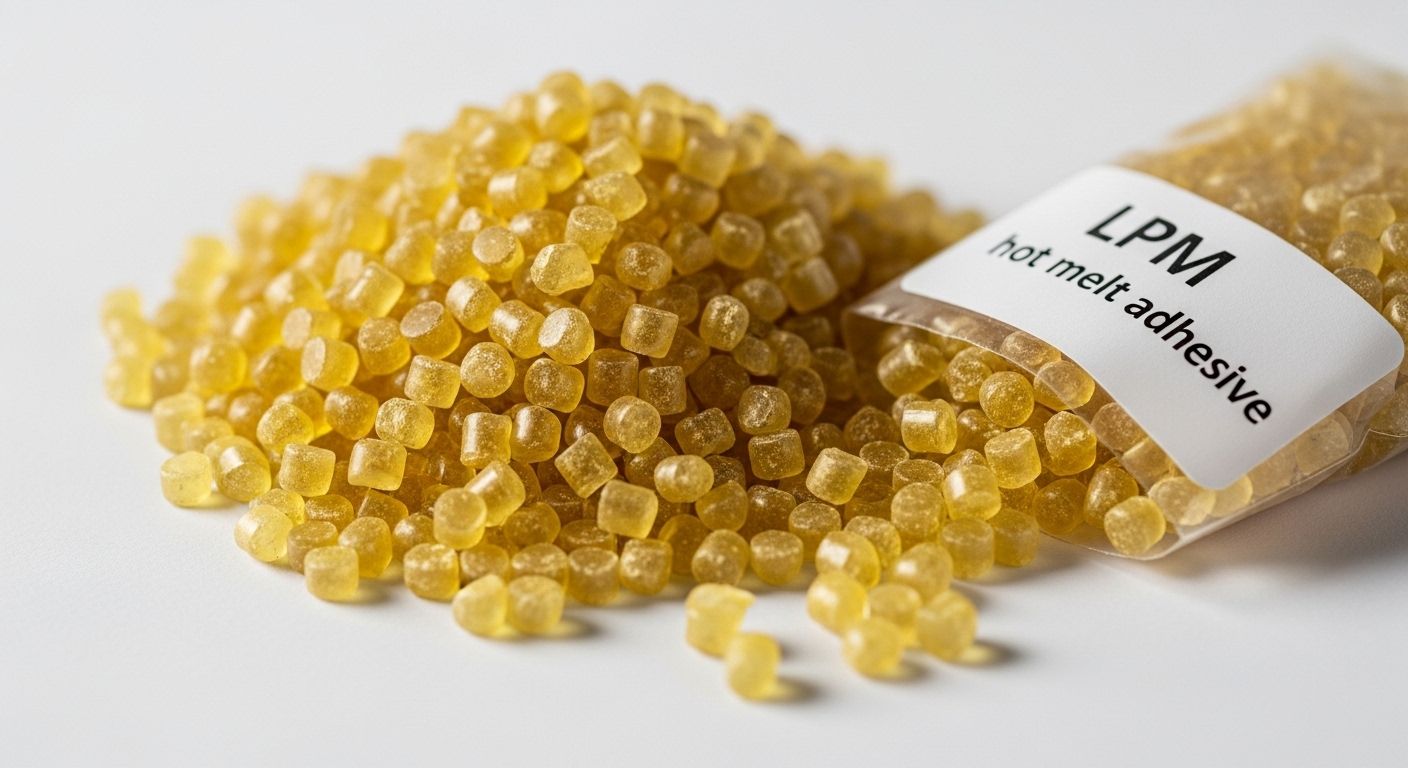
The specific type of hot melt polymer required for each LPM application differs significantly. You cannot substitute one for the other. For the demanding environment of electronic encapsulation (Low Pressure Molding), Polyamide (PA) based hot melts are the industry standard. These engineering-grade adhesives offer excellent adhesion to a wide range of substrates, superior thermal stability, and, most importantly, high dielectric strength for electrical insulation. They are designed to flow gently at low pressures, protecting delicate electronic components during the overmolding process. It's crucial to understand that generic craft or packaging glue sticks are completely unsuitable for these applications.
For Low Pressure Melamine (furniture edgebanding), the most common adhesives are Ethylene Vinyl Acetate (EVA), Polyurethane (PUR), and Polyolefin (PO). EVA is a cost-effective, general-purpose choice for many applications. For higher performance, especially in areas exposed to heat or moisture like kitchens and bathrooms, PUR hot melts are superior. PUR adhesives react with moisture in the air to cross-link and cure, creating an incredibly strong, permanent bond that offers the highest level of heat and water resistance.
| Adhesive Type | Primary Use Case (LPM) | Key Advantage |
|---|---|---|
| Polyamide (PA) | Electronics Encapsulation | Excellent adhesion, thermal stability, insulation |
| EVA | General-purpose Melamine Edgebanding | Cost-effective and easy to use |
| PUR | High-performance Melamine Edgebanding | Superior moisture and heat resistance |
Proper Application Techniques and Best Practices
Achieving a perfect bond goes beyond selecting the right adhesive; it requires precise application. Temperature control is paramount. Every hot melt adhesive has an optimal application temperature range specified by the manufacturer. Operating too hot can degrade the polymer, reducing its performance, while operating too cold results in high viscosity and poor wetting, leading to a weak bond. For electronics molding, the injection pressure and mold temperature must also be carefully controlled to ensure complete fill without damaging components. For melamine edgebanding, proper surface preparation is key. Ensure the edge is clean, free of dust, and perfectly square. For maximum adhesion on difficult surfaces, a light scuffing or the use of a primer can create a better surface for the adhesive to grip. Always ensure your application equipment is clean and well-maintained to prevent contamination and ensure consistent dispensing.
For a significantly stronger bond on melamine boards, lightly scuff the edge with 180-grit or finer sandpaper before applying the hot melt. This micro-abrasion increases the surface area and provides a mechanical key for the adhesive to lock into, dramatically reducing the risk of delamination over time.
Expert Tips for Maximizing Adhesion and Efficiency
Even with the right adhesive and proper technique, experienced technicians have a few tricks to ensure optimal results. One of the most common issues in edgebanding is a weak bond at the start or end of a panel. This is often caused by the panel being too cold. Pre-warming the boards, especially in a cold workshop, ensures the adhesive doesn't "flash cool" on contact, allowing it to flow and wet the surface properly before setting. Another critical point is troubleshooting. If you experience "stringing" (thin, spider-web-like strands of adhesive), your application temperature is likely too low. If the adhesive is discolored or smoking, the temperature is too high. Regularly performing peel tests on sample pieces is a simple yet effective quality control measure to verify bond strength before committing to a full production run. This allows you to fine-tune your process parameters for consistent, high-quality results.
⚠️CAUTION
Never mix different types of hot melt adhesives (e.g., EVA and PUR) in your melt tank or application equipment. Chemical incompatibility can cause the adhesive to char, gel, or clog the system, leading to poor performance, costly equipment damage, and potential safety hazards from fumes or pressure buildup.