


Table of Contents
- Understanding Electronic-Grade Hot Melt Adhesives
- Core Components and Their Functions
- Key Applications in 2026 Electronics
- Future Trends: Reliability and Sustainability
Have you ever considered what holds the delicate components of your smartphone together, protecting them from moisture, vibration, and heat? In 2026, the answer is increasingly a sophisticated material: electronic hot melt adhesive. Far from the simple glue sticks used in crafts, these are highly engineered thermoplastic polymers designed for the demanding environment of modern electronics. They provide not just adhesion but also crucial protection, insulation, and structural integrity, making them indispensable in manufacturing everything from tiny sensors to complex circuit boards.
Understanding Electronic-Grade Hot Melt Adhesives ⚙️
Electronic-grade hot melt adhesives are specialized formulations designed to meet the stringent requirements of the electronics industry. Unlike general-purpose adhesives, their primary role extends beyond simple bonding. They serve as a protective encapsulant, shielding sensitive components from environmental stressors like moisture, dust, and physical shock.
The key differentiator is their formulation. These adhesives are engineered for excellent electrical insulation to prevent short circuits, low outgassing to avoid contaminating sensitive optics or components, and superior thermal stability to withstand the operating temperatures of electronic devices. They must also offer consistent performance through thousands of thermal cycles without degrading, a feature not found in standard hot melts.
💡Key Point
- Multi-Functional: Provides adhesion, insulation, and environmental protection.
- Engineered for Electronics: Features low outgassing, high thermal stability, and moisture resistance.
- High Reliability: Ensures long-term performance and protection for sensitive electronic components.
Core Components and Their Functions 🔬
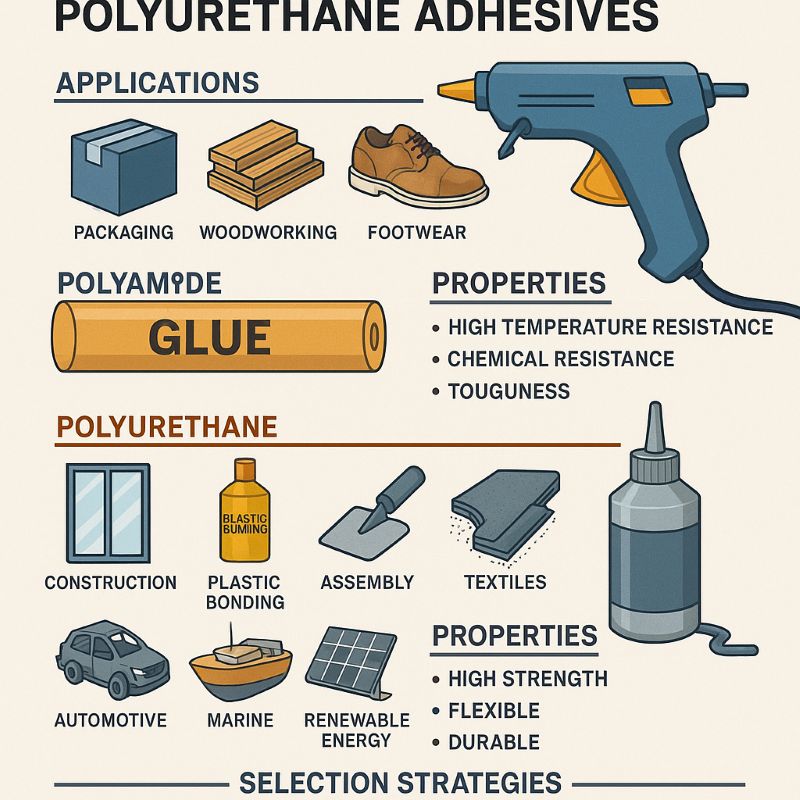
The performance of an electronics hotmelt adhesive is determined by its core components: a base polymer and a blend of specialized additives. The base polymer forms the backbone of the adhesive, defining its fundamental properties like flexibility, strength, and heat resistance.
- Base Polymers: The most common types are Polyamides, Polyolefins, and Polyurethanes. Each offers a different balance of properties. Polyamides, for instance, are known for their high strength and temperature resistance, making them ideal for overmolding applications.
- Additives: These are blended with the base polymer to fine-tune performance. Tackifiers enhance initial stickiness, waxes control viscosity and set time, and antioxidants prevent degradation during application. For electronics, crucial additives include flame retardants and fillers that enhance thermal conductivity or electrical insulation.
| Base Polymer | Key Characteristics | Common Application |
|---|---|---|
| Polyamide | High strength, excellent heat & chemical resistance | Low-Pressure Molding (LPM), sensor encapsulation |
| Polyolefin | Good moisture barrier, excellent electrical insulation | Wire coating, high-frequency circuit bonding |
| Polyurethane | High flexibility, strong adhesion to various substrates | Flexible circuit bonding, strain relief |
Key Applications in 2026 Electronics 📱
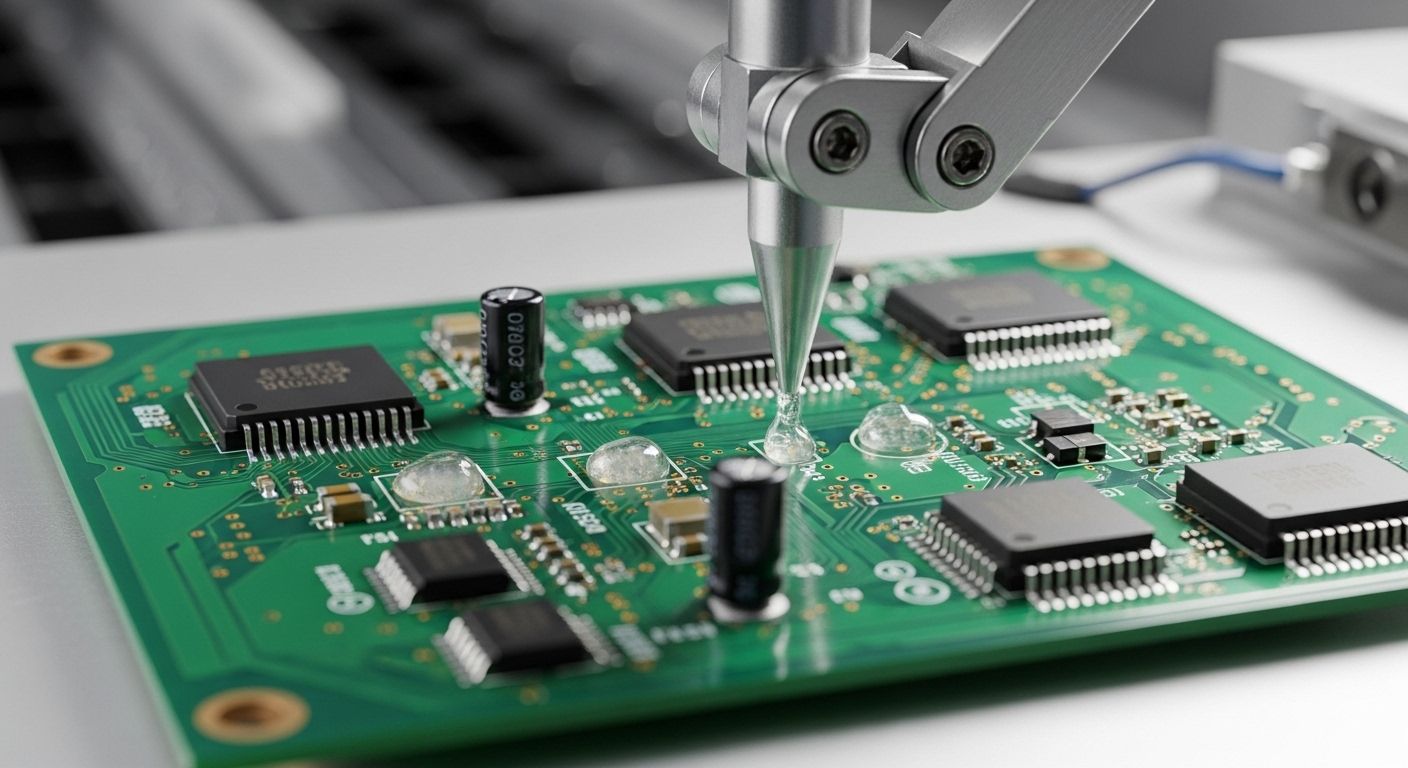
In 2026, the applications for electronic product hot melt adhesives are more advanced than ever, driven by the miniaturization and increasing complexity of devices. One of the most significant applications is Low-Pressure Molding (LPM). This process uses polyamide-based hot melts to encapsulate and protect printed circuit boards (PCBs), sensors, and connectors. LPM creates a sealed, watertight housing around the component in seconds, replacing slower and bulkier traditional potting methods.
Other critical applications include:
- PCB Component Stabilization: Securing larger components like capacitors and coils against vibration and shock.
- Cable and Wire Management: Providing strain relief for connectors and organizing internal wiring harnesses.
- Sealing and Gasketing: Creating environmental seals for device housings to achieve IP ratings for water and dust resistance.
When selecting a hot melt for a specific application, always consider the maximum operating temperature, the substrates being bonded, and any required certifications, such as UL 94 for flame retardancy. This ensures optimal performance and device reliability.
Future Trends: Reliability and Sustainability 🌍
The future of electronic hot melt adhesives is being shaped by two major trends: enhanced reliability and sustainability. As devices become more integrated into critical systems like automotive and medical tech, the demand for proven, long-term reliability is paramount. This includes adhesives with improved thermal cycling performance and adherence to stringent safety standards.
Sustainability is also a growing focus. Manufacturers are developing bio-based hot melts to reduce environmental impact and creating formulations free of hazardous substances to comply with global regulations like RoHS. The goal is to create materials that are both high-performing and environmentally responsible.
| Reliability Checkpoint | Description | Importance |
|---|---|---|
| Thermal Cycling | Ability to withstand repeated temperature changes without cracking or delaminating. | Essential for devices used in variable environments (e.g., automotive). |
| UL 94 Rating | A safety standard that measures the material's flammability. V-0 is a high rating. | Critical for preventing fire hazards in consumer and industrial electronics. |
| Moisture Resistance | Performance after exposure to high humidity or direct water contact. | Key for outdoor devices, wearables, and achieving high IP ratings. |
💡Key Point
The evolution of electronic hot melt adhesives is focused on meeting higher reliability standards and incorporating sustainable materials. This ensures that the next generation of electronic devices will be safer, more durable, and more environmentally friendly.