


Table of Contents
- Industrial vs. DIY: A Tale of Two Price Points
- Form Factor Economics: Sticks, Pellets, and Blocks
- The Impact of Formulation and Performance on Price
- Smart Purchasing: Real-World Scenarios and Bulk Savings
- Choosing the Right Adhesive: A Practical Guide
In 2026, the global adhesive market continues to expand, yet for many buyers, a simple question remains complex: how much should hot melt adhesive cost? The price of a glue stick for a home craft project can be pennies, while the cost per kilogram for an industrial packaging line can vary dramatically. This isn't arbitrary pricing; it reflects a sophisticated market where application, chemistry, and volume are paramount. Understanding these key drivers is the first step for any purchasing manager or small business owner looking to optimize costs without compromising quality. This guide breaks down the factors that determine hot melt adhesive prices, empowering you to make informed purchasing decisions.
Industrial vs. DIY: A Tale of Two Price Points
The most significant factor influencing the price of hot melt adhesive is its intended application. The market is clearly divided between industrial-grade products sold in bulk and consumer-grade products sold in small quantities for DIY or craft purposes. This fundamental difference in scale, formulation, and packaging creates a vast price disparity.
Industrial users, such as those in manufacturing, packaging, or assembly, purchase adhesives in large quantities, typically in the form of pellets, blocks, or large cases of sticks. For them, the price per kilogram is the key metric. This price is significantly lower due to economies of scale in both production and distribution. However, these formulations are often highly specialized to meet specific performance requirements like high heat resistance, food-grade safety, or flexibility at low temperatures. In contrast, DIY and craft users purchase small packs of glue sticks where the price per stick or per pack is the focus. The convenience and accessibility of these small packages drive up the relative cost significantly.
💡KEY POINT
- Industrial Use: Focuses on cost per kilogram. Purchased in bulk (pellets, blocks). Prices are lower due to volume, but formulations can be specialized and more expensive.
- DIY/Craft Use: Focuses on cost per stick or pack. Purchased in small quantities. Higher relative cost due to packaging and retail distribution. Formulations are typically general-purpose.
Form Factor Economics: Sticks, Pellets, and Blocks
Beyond the application, the physical form of the hot melt adhesive plays a crucial role in its pricing. Each form is designed for specific types of application equipment and production scales, which directly impacts manufacturing and handling costs.
Hot melt sticks are the most common form for consumer and light industrial applications. They are easy to handle and use with standard glue guns. However, their production process is more involved, and they are packaged for retail, making them the most expensive option when measured by weight. Hot melt pellets (or granules) are the standard for large-scale industrial operations. They are designed for automated, high-volume dispensing systems. Their simple form and bulk packaging make them the most cost-effective option per kilogram. Hot melt blocks or slugs are a middle ground, often used in medium-to-large-scale manual or semi-automated systems where refilling is less frequent than with sticks but more frequent than with a large pellet hopper.
| Form Factor | Primary Use Case | Relative Cost per Kilogram |
|---|---|---|
| Sticks | DIY, Crafts, Manual Assembly, Repair | High |
| Pellets/Granules | High-Volume Automated Manufacturing | Low |
| Blocks/Slugs | Medium-Volume Industrial Applications | Medium |
The Impact of Formulation and Performance on Price
Not all hot melt adhesives are created equal. The underlying chemical composition, or formulation, is a primary driver of both performance and cost. Basic, general-purpose adhesives are far less expensive than highly engineered, high-performance alternatives.
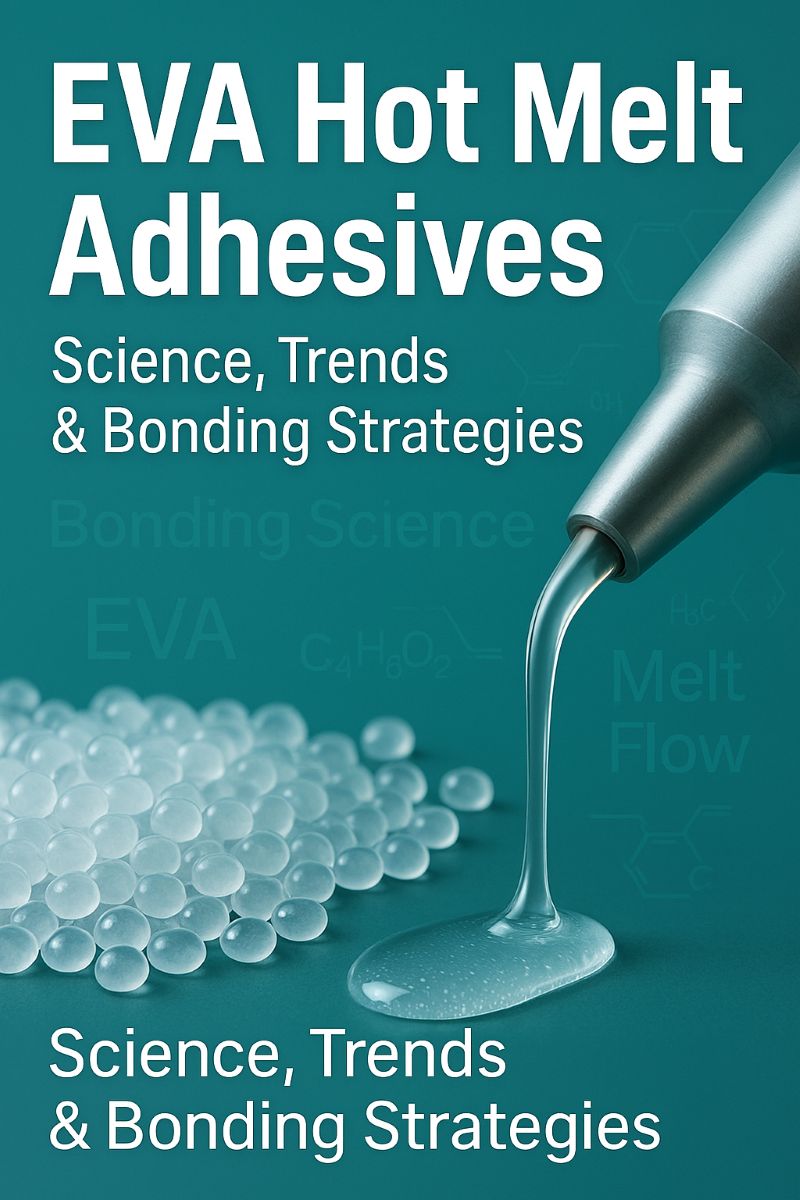
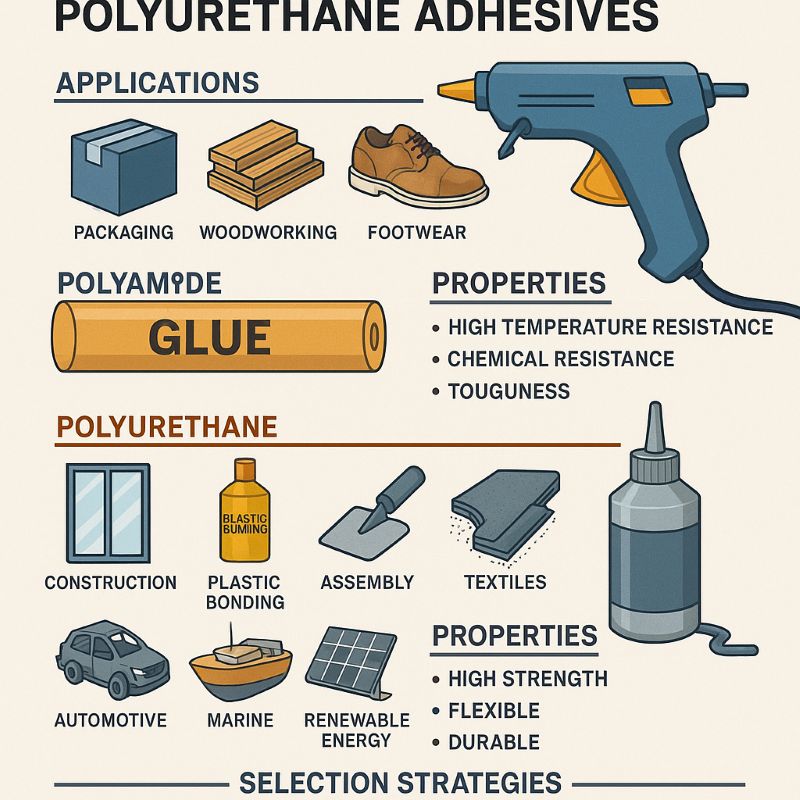
The most common and cost-effective formulations are based on Ethylene-vinyl acetate (EVA). These are excellent for general packaging and light assembly. However, for applications requiring superior performance, more advanced polymers are necessary. For example, polyamide-based hot melts offer exceptional heat resistance and strength, making them suitable for electronics or automotive components, but they come at a significantly higher price. Similarly, polyurethane (PUR) hot melts provide incredibly strong, permanent bonds that cure with moisture, but they are among the most expensive options and require specialized equipment. The price directly correlates with the cost of raw materials and the complexity of manufacturing these advanced polymers.
| Material Type | Key Performance Feature | General Price Tier |
|---|---|---|
| EVA (Ethylene-vinyl acetate) | General Purpose, Good Adhesion | Standard |
| Metallocene Polyolefin | Clean-running, Low Odor | Mid-Range |
| Polyamide | High Heat & Chemical Resistance | Premium |
| PUR (Polyurethane) | Structural Strength, Cures with Moisture | High-Premium |
Smart Purchasing: Real-World Scenarios and Bulk Savings
Making a cost-effective purchase goes beyond simply finding the lowest price; it involves aligning the product and purchase volume with your specific needs. A common mistake is over-specifying an adhesive, paying a premium for performance features that are not required. Conversely, choosing a low-cost adhesive that fails in the application can lead to much greater costs from product failure and rework.
A key strategy for reducing costs is volume purchasing. Suppliers nearly always offer tiered pricing, where the price per kilogram decreases significantly as the order quantity increases. For businesses with consistent usage, consolidating orders or establishing a long-term supply agreement can unlock substantial savings. For example, moving from purchasing a single 25 kg bag to a full pallet can often reduce the unit price by 15-30% or more. Before committing to a large volume, it's crucial to test the adhesive in your application to ensure compatibility and performance.
When requesting a quote from a supplier, provide as much detail as possible to get the most accurate pricing and best product recommendation. Include the following:
- Substrates: What materials are you bonding (e.g., cardboard, plastic, wood, metal)?
- Application: Describe the process (e.g., automated packaging line, manual assembly).
- Performance Needs: Are there specific requirements like temperature resistance, open time, or flexibility?
- Estimated Volume: What is your expected annual or monthly usage in kilograms?
Choosing the Right Adhesive: A Practical Guide
Ultimately, selecting the right hot melt adhesive is a balance of performance, application method, and budget. The ideal choice is not the cheapest product available, but the most cost-effective solution that reliably meets all of your application's requirements. A thorough evaluation of your needs is the foundation of a smart purchasing decision.
Start by clearly defining your "must-have" performance criteria versus your "nice-to-have" features. If you are bonding standard corrugated boxes for shipping, a general-purpose EVA-based adhesive is likely sufficient and highly economical. However, if you are assembling electronic components that will be exposed to high temperatures, investing in a premium polyamide adhesive is necessary to prevent failure. Always consider the total cost of use, not just the initial purchase price.
⚠️CAUTION
Choosing an adhesive based solely on the lowest price can lead to significant downstream costs. Bond failure can result in product returns, warranty claims, reputational damage, and production line downtime. Always prioritize performance and reliability for your specific application to ensure long-term value and security.