


Table of Contents
- What Makes Biodegradable Hot-Melts Unique?
- Comparing Bonding Performance and Versatility
- Environmental Impact: Decomposition and Sustainability
- Industrial Applications and Real-World Benefits
- Choosing the Right Adhesive for Sustainable Success
As of 2026, the global push for corporate environmental responsibility has moved beyond broad promises to concrete actions. Consumers and regulators alike are scrutinizing every component of the supply chain, right down to the glues that hold packages together. While traditional adhesives have long been the industry standard, their petroleum-based origins and non-degradable nature present a significant environmental challenge. This raises a critical question for manufacturers and product designers: Is it possible to achieve strong, reliable adhesion without contributing to long-term pollution? The answer lies in the evolution of advanced materials, specifically biodegradable hot-melt adhesives.
What Makes Biodegradable Hot-Melts Unique?
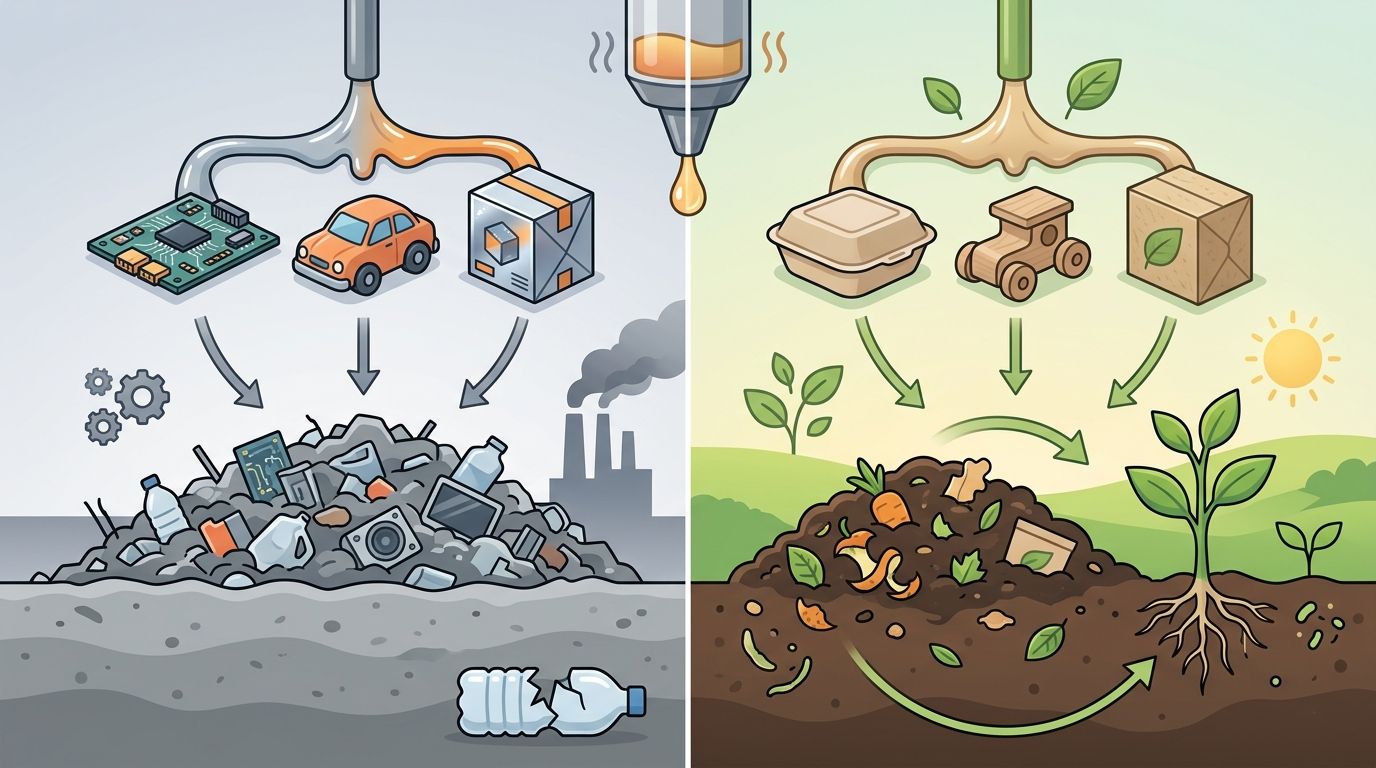
The fundamental difference between biodegradable hot melt adhesives and their conventional counterparts lies in their chemical composition. Conventional hot melts are typically synthesized from petroleum-based polymers, such as ethylene-vinyl acetate (EVA) or polyolefins. These materials offer robust performance but are not designed to break down in the natural environment, persisting for centuries as waste and eventually degrading into microplastics.
In contrast, biodegradable hot-melt adhesives are formulated using polymers derived from renewable or degradable sources. These often include materials like polylactic acid (PLA), polycaprolactone (PCL), or polybutylene adipate terephthalate (PBAT). The molecular structure of these biopolymers is engineered to be broken down by microorganisms under specific environmental conditions, such as those found in industrial composting facilities. This inherent biodegradability ensures that the adhesive completes its life cycle by returning to nature as harmless components, fundamentally altering its environmental footprint.
| Feature | Conventional Hot-Melt Adhesive | Biodegradable Hot-Melt Adhesive |
|---|---|---|
| Primary Source | Petroleum-based synthetic polymers | Renewable or degradable biopolymers |
| End-of-Life | Persists in the environment indefinitely | Decomposes into natural elements |
| Environmental Residue | Can generate harmful microplastics | Breaks down into water, CO₂, and biomass |
Comparing Bonding Performance and Versatility
A common misconception is that choosing an eco-friendly adhesive means compromising on performance. However, modern advancements have largely closed this gap. Initially, some early-generation biodegradable adhesives struggled to match the bond strength and temperature resistance of traditional formulas. Today, the landscape is vastly different. Contemporary biodegradable hot-melt formulations are engineered to deliver performance comparable to conventional options, including fast set times, strong adhesion to various substrates like cardboard and paper, and reliable durability for standard applications.
While conventional hot melts may still hold an edge in extreme high-temperature or high-stress applications, the performance of biodegradable hot melt solutions is now more than sufficient for a wide range of industries, especially in packaging and product assembly. They exhibit excellent tack and flexibility, ensuring that boxes remain sealed and products stay intact throughout the supply chain. The key is to match the specific adhesive formulation to the application's requirements, a practice that is standard for any type of adhesive selection. For most common uses, businesses no longer have to choose between sustainability and reliability.
💡KEY POINT
Performance at a Glance
- Bond Strength: Modern biodegradable formulas offer bond strengths comparable to conventional adhesives for common substrates like paper and cardboard.
- Set Time: Engineered for fast-setting performance required in high-speed automated production lines.
- Versatility: Suitable for a growing range of applications, from case and carton sealing to specialty product assembly.
Environmental Impact: Decomposition and Sustainability
The most significant advantage of biodegradable hot-melt adhesives is their positive environmental impact at the end of a product's life. When a package or product held together by conventional hot melt is discarded, the adhesive remains inert. It does not decompose and can contaminate recycling streams or persist in landfills for hundreds of years. Over time, it fragments into smaller particles, contributing to the global microplastic pollution crisis.
Biodegradable hot melt, on the other hand, is designed for a circular life cycle. When disposed of in a proper composting environment, microorganisms break the adhesive down into natural byproducts: water, carbon dioxide, and biomass. This process leaves no harmful residues behind, effectively eliminating the risk of microplastic contamination from the adhesive component. This characteristic is crucial for companies aiming to create fully compostable packaging solutions and align with a circular economy model. By choosing a biodegradable hot melt, businesses can substantially reduce the long-term environmental liability associated with their products.
Verifying Biodegradability Claims
To ensure an adhesive is genuinely biodegradable, look for certifications from recognized bodies. Standards such as ASTM D6400 (in the US) or EN 13432 (in Europe) provide third-party validation that the material will break down safely in an industrial composting facility. Always verify supplier claims with official documentation.
Industrial Applications and Real-World Benefits
The practical applications for biodegradable hot-melt adhesives are expanding rapidly as performance improves and environmental regulations tighten. The packaging industry is the primary adopter, where these adhesives are used for sealing corrugated boxes, paper bags, and food-safe containers. Their use ensures that the entire package can be composted or recycled more effectively without adhesive contamination.
Beyond packaging, they are finding use in single-use products where sustainability is a key market differentiator. This includes applications in disposable hygiene products, bookbinding, and even certain types of product assembly for eco-conscious brands. Adopting these adhesives provides tangible benefits, helping companies meet corporate sustainability goals, appeal to environmentally aware consumers, and comply with evolving government regulations that restrict single-use plastics. It transforms a functional component into a powerful statement of a brand's commitment to the planet.
| Industry | Conventional Hot-Melt Application | Biodegradable Hot-Melt Alternative |
|---|---|---|
| Packaging | Standard case and carton sealing | Fully compostable packaging solutions |
| Consumer Goods | Assembly of plastic-based products | Bonding for eco-friendly or disposable items |
| Publishing | Traditional bookbinding | Spine gluing for sustainably sourced books |
| Hygiene Products | Construction of disposable items | Adhesion in compostable diapers or sanitary products |
Choosing the Right Adhesive for Sustainable Success
Making the switch to a biodegradable hot-melt adhesive is a strategic decision that balances operational needs with environmental responsibility. The selection process should begin with a clear understanding of the application's performance requirements, including the substrates being bonded, the service temperature range, and the required production line speed. Work closely with adhesive suppliers to identify a biodegradable formulation that meets these technical specifications.
While conventional hot melts remain a viable option for applications demanding extreme durability or chemical resistance, the case for biodegradable alternatives is stronger than ever for a vast majority of uses. By transitioning, companies not only reduce their environmental footprint but also enhance their brand reputation and future-proof their operations against stricter environmental laws. The choice is no longer just about adhesion; it is about aligning a business with the principles of a sustainable future.
💡KEY POINT
Key Factors for Selection
- Application Needs: Assess the required bond strength, set time, and temperature resistance for your specific use case.
- Substrate Compatibility: Ensure the adhesive performs well with your target materials (e.g., recycled paper, coated board).
- End-of-Life Goals: Align your adhesive choice with your product's desired end-of-life scenario, such as industrial compostability.
- Supplier Validation: Partner with reputable suppliers who provide certified, high-performance biodegradable solutions.