


Table of Contents
- Deconstructing the Adhesives: Composition and Core Principles
- Performance in Practice: Adhesion and Usability
- The Environmental Footprint: Decomposition and Byproducts
- Debunking the Myth: Are Biodegradable Adhesives Weaker?
- Applications and the Future of Sustainable Packaging
As of 2026, corporate sustainability is no longer a niche concern but a core business imperative. With consumers and regulators alike demanding greater environmental responsibility, companies are scrutinizing every component of their supply chain—right down to the glue holding their packages together. This shift has brought a critical question to the forefront: can the adhesives we use be as green as the products they seal? The answer lies in the evolution of biodegradable hot melts, a technology poised to redefine eco-friendly packaging standards by offering a sustainable alternative to traditional, petroleum-based solutions. This article provides a comprehensive comparison to guide businesses in making an informed, environmentally conscious choice.
Deconstructing the Adhesives: Composition and Core Principles 🧪
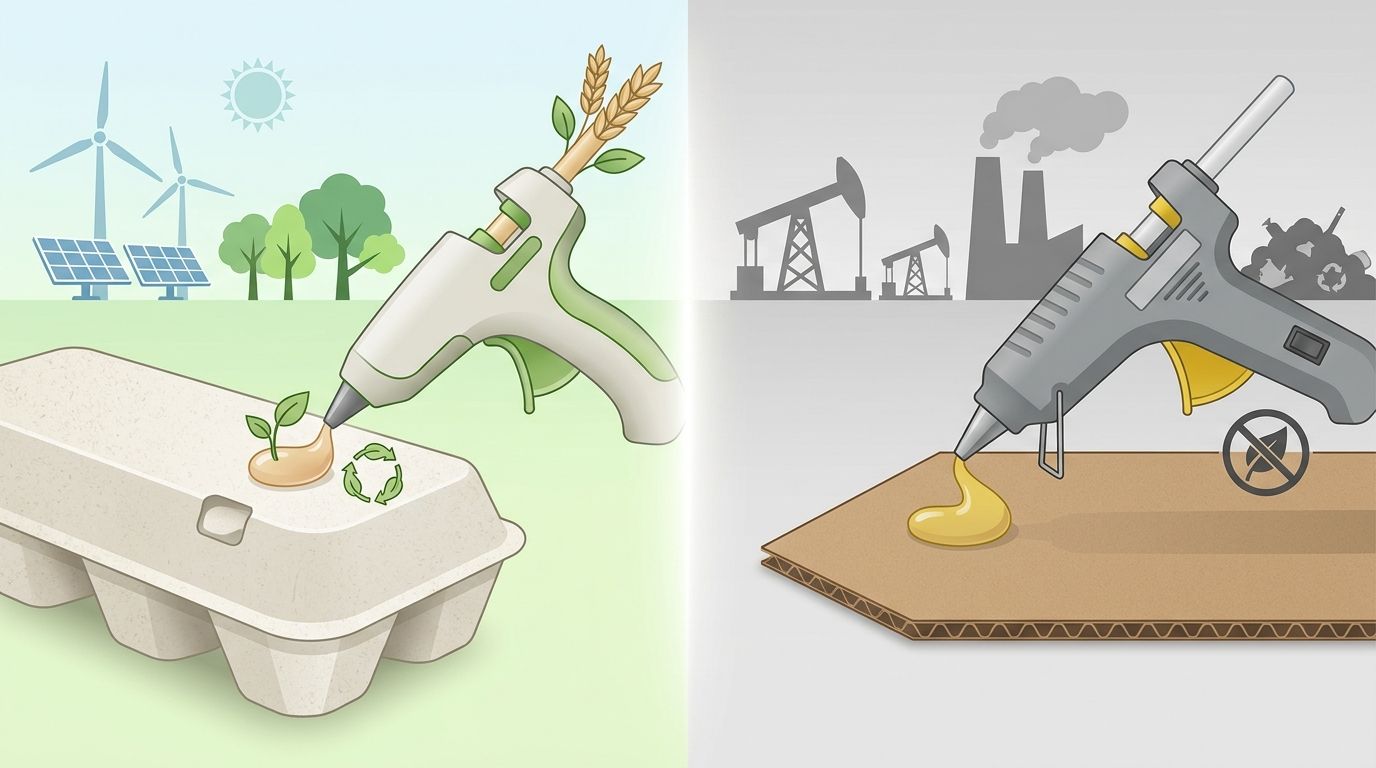
The fundamental difference between biodegradable and conventional hot melts lies in their chemical origin and end-of-life design. Conventional hot melt adhesives are typically derived from synthetic, petroleum-based polymers. These materials are engineered for stability and longevity, meaning they do not break down naturally and can persist in the environment for centuries, contributing to long-term pollution.
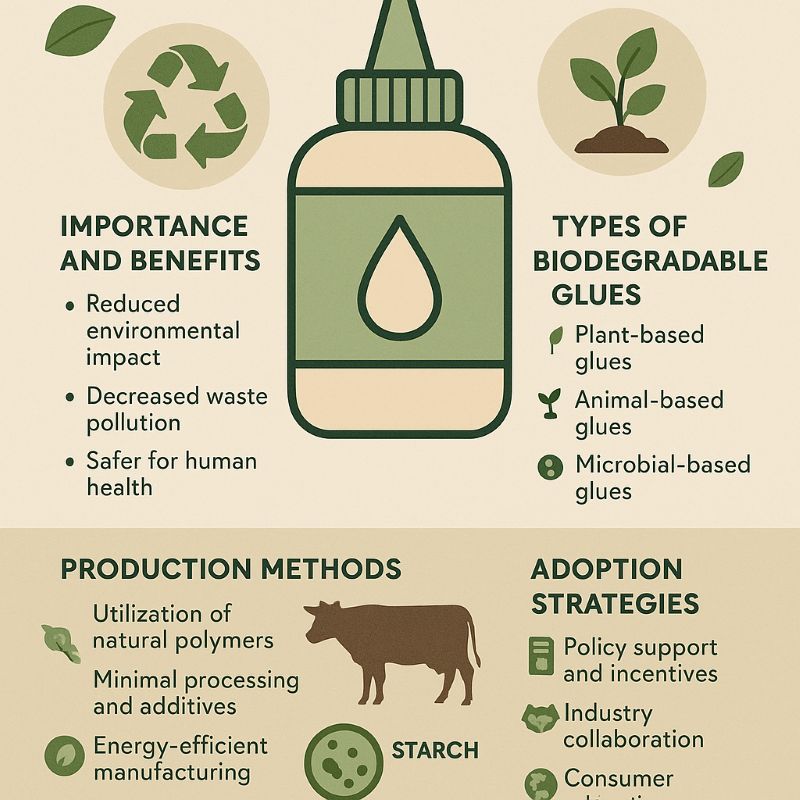
In contrast, biodegradable hot melt adhesives are formulated using polymers from natural or renewable resources. These materials, such as polylactic acid (PLA) or polycaprolactone (PCL), are designed to be broken down by microorganisms like bacteria and fungi under specific environmental conditions. This inherent biodegradability ensures that, after their useful life, they return to nature without leaving a harmful residue. The choice between them is a choice between a linear, disposable model and a circular, sustainable one.
| Feature | Conventional Hot Melt | Biodegradable Hot Melt |
|---|---|---|
| Primary Source | Petroleum-based synthetic polymers | Renewable, plant-based or degradable polymers |
| End-of-Life | Persists for centuries as waste | Decomposes into natural elements |
| Environmental Impact | Contributes to microplastic pollution | Returns to the ecosystem as biomass, CO₂, and water |
Performance in Practice: Adhesion and Usability ⚙️
A common concern for businesses considering a switch to sustainable alternatives is whether the performance will match established standards. Historically, some eco-friendly materials required a trade-off in functionality. However, modern advancements in biodegradable hot melt technology have largely closed this gap. Today’s formulations are engineered to deliver robust performance that rivals their conventional counterparts in most packaging applications.
Key performance indicators such as bond strength, setting speed, and temperature resistance have seen significant improvements. Modern biodegradable hot melts offer strong, durable bonds suitable for a wide range of substrates, including cardboard, paper, and even some plastics. While conventional hot melts may still hold an edge in extreme temperature resistance or specialized high-stress applications, the performance of biodegradable options is more than sufficient for the vast majority of e-commerce, food and beverage, and consumer goods packaging needs. The focus has shifted from a simple "eco" label to delivering a product that is both sustainable and highly practical for industrial use.
When evaluating a biodegradable hot melt, always conduct a trial run on your specific packaging materials and under your typical operational conditions. Test for adhesion strength, setting time, and performance across the expected temperature range of your supply chain to ensure a seamless transition and optimal results.
The Environmental Footprint: Decomposition and Byproducts 🌍
The true environmental advantage of biodegradable hot melts becomes clear when we examine their post-use lifecycle. When disposed of in an appropriate environment (such as an industrial composting facility), these adhesives undergo a natural decomposition process. Microorganisms consume the polymer, breaking it down into simple, harmless byproducts: water, carbon dioxide, and biomass.
This process stands in stark contrast to the fate of conventional hot melts. As petroleum-based plastics, they do not biodegrade. Instead, they fragment over time into smaller and smaller pieces known as microplastics. These harmful microplastics persist in ecosystems, contaminating soil, waterways, and entering the food chain. By choosing a biodegradable alternative, companies can actively prevent the creation of microplastic pollution from their packaging adhesives. This is a critical distinction, as it addresses one of the most pressing environmental challenges of our time. The goal is not just to use a "better" material, but one that is designed to disappear harmlessly.
💡KEY POINT
- Conventional Hot Melts: Break down into harmful microplastics that pollute the environment.
- Biodegradable Hot Melts: Decompose via microorganisms into natural elements like water, CO₂, and biomass.
- Key Benefit: Eliminates the risk of long-term microplastic contamination from the adhesive component of packaging.
Debunking the Myth: Are Biodegradable Adhesives Weaker? 💪
One of the most persistent misconceptions surrounding sustainable materials is that they are inherently weaker or less reliable than traditional options. This is a myth that needs to be dispelled, especially concerning modern adhesive technology. The latest generation of biodegradable hot melts has been specifically formulated to overcome this stigma, delivering performance that is on par with many conventional adhesives.
Material scientists have developed advanced biopolymer formulations that are designed to match the fast set times and strong bond strength that manufacturers have come to expect. While early iterations may have had limitations, the technology in 2026 is far more sophisticated. For most standard packaging applications, from sealing corrugated boxes to assembling paper-based containers, users will not experience a noticeable difference in performance. The key is to select the right formulation for the specific application.
| Common Myth | The Reality in 2026 |
|---|---|
| "Biodegradable means weak and unreliable." | Modern formulations are engineered for high bond strength and fast setting times. |
| "They won't work on our high-speed lines." | Many grades are designed for industrial application speeds, ensuring no loss of productivity. |
| "They are only for 'light-duty' tasks." | Advanced options are available for medium and even some heavy-duty packaging needs. |
Applications and the Future of Sustainable Packaging 📦
The versatility and improved performance of biodegradable hot melts have opened the door to a wide array of industry applications. As businesses in 2026 increasingly prioritize end-to-end sustainability, these adhesives are becoming a go-to solution for creating fully compostable or eco-friendly packaging systems.
Leading applications are found in industries where environmental impact is a major consumer concern. This includes e-commerce shipping boxes, food and beverage packaging, single-use paper products like cups and containers, and even in bookbinding and product assembly where a green profile is desired. The ability to use an adhesive that does not contaminate the recycling or composting stream is a significant advantage. Looking forward, the potential for biodegradable hot melts is set to expand further as material science advances and economies of scale make them even more competitive. They represent not just an alternative, but the future standard for responsible packaging.
💡KEY POINT
The transition to biodegradable hot melts is a practical and impactful step for any business committed to sustainability. It aligns with consumer expectations, reduces long-term environmental liability, and supports a truly circular economy. By embracing this technology, companies can ensure their packaging is as responsible as the product inside.