



Table of Contents
- Understanding Hot Melt Adhesive Formulations
- Key Base Polymers and Their Unique Properties
- Comparing Hot Melt Adhesive Types by Use Case
- Selecting the Right Formulation for Your Needs
- Trends and Innovations in Hot Melt Adhesive Technology
In the highly automated manufacturing landscape of 2026, assembly lines cannot afford downtime. Imagine a high-speed packaging facility halting production simply because a generic glue failed under a minor temperature shift. This scenario highlights exactly why selecting precise hot melt adhesive formulations is critical for operational efficiency. Rather than relying on a single universal product, modern industries utilize specialized chemical structures tailored to distinct environments. Understanding these fundamental differences ensures optimal structural integrity across diverse industrial applications.
Understanding Hot Melt Adhesive Formulations 🧪
Hot melt adhesives are thermoplastic materials that melt at elevated temperatures and solidify rapidly upon cooling to form strong bonds. The foundation of these materials relies entirely on their base polymer, which dictates the primary mechanical and thermal characteristics of the final product.
Industry experts generally classify these adhesives into 6 to 8 primary categories based on this underlying polymer structure. While there is no strict, unchanging master list due to continuous chemical adjustments by formulators, these core categories cover almost all commercial applications. Recognizing these distinct hot melt adhesive types helps engineers determine crucial factors such as melting points, flexibility, and resistance to environmental stress.
- The base polymer defines the fundamental thermal and mechanical properties of the adhesive.
- Chemical formulations undergo continuous adjustment, but 6 to 8 main types dominate the industrial market.
- Proper identification of these types prevents application failures and boosts production efficiency.
Key Base Polymers and Their Unique Properties 🧬
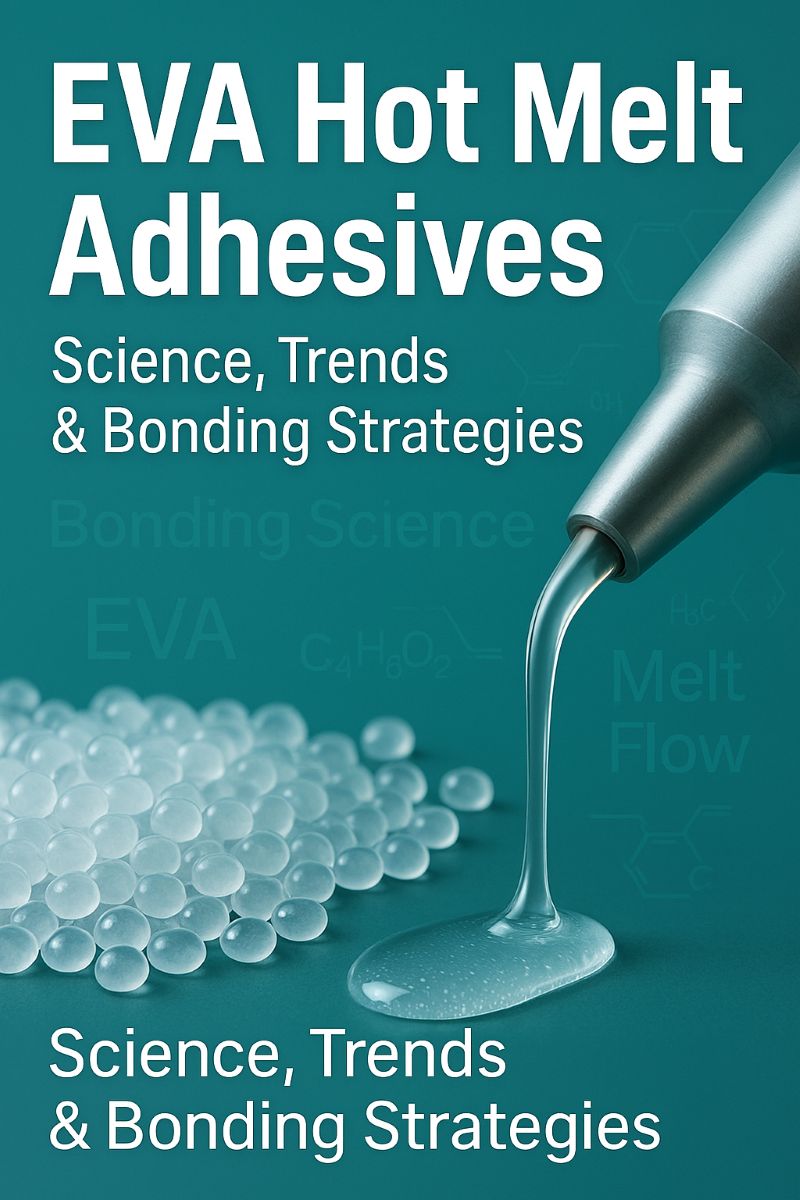
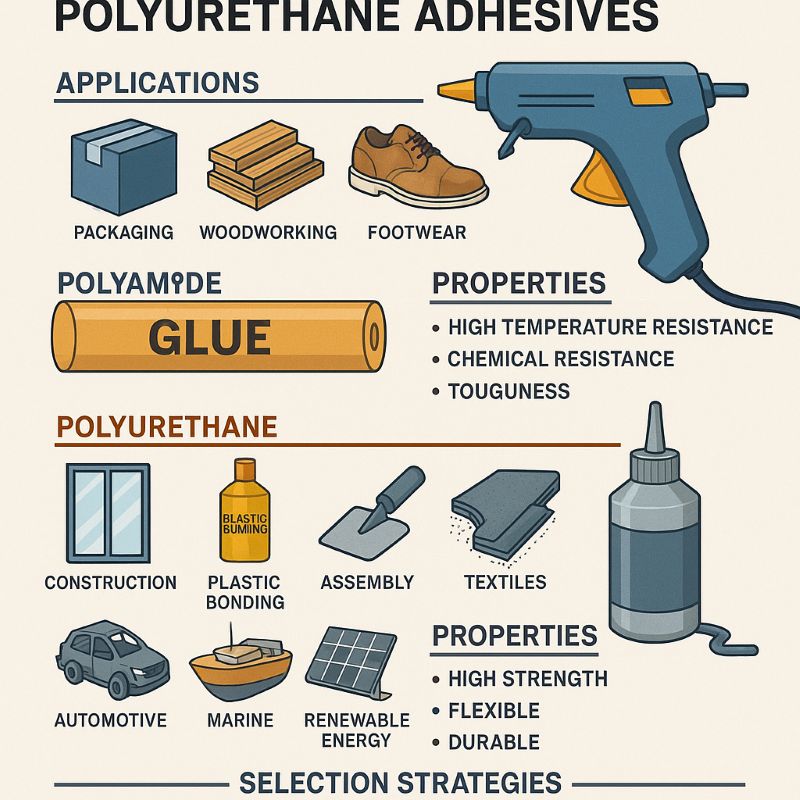
When analyzing hot melt glue formulations, material scientists focus on specific polymer families. Ethylene Vinyl Acetate (EVA) remains a standard choice for general purposes due to its reliable versatility and cost-efficiency. Polyolefins, particularly metallocene-catalyzed variants, offer higher heat resistance and cleaner machining properties. Polyurethane (PUR) stands out significantly by reacting with ambient moisture to cross-link, providing exceptional durability and structural strength.
Other specialized categories include Polyamides, which deliver extreme temperature resistance, and Styrenic Block Copolymers (SBC), which form the backbone of pressure-sensitive applications. Polyesters are frequently utilized for specific synthetic fabric bonding. Each distinct polymer structure provides a unique set of mechanical advantages.
| Base Polymer | Primary Characteristic | Typical Formulations |
|---|---|---|
| EVA | Versatile and cost-effective | Standard packaging glues |
| PUR | Moisture-curing and durable | Structural bonding types |
| Polyolefin | High heat resistance | Clean-running formulas |
| Polyamide | Extreme temperature stability | Automotive applications |
Comparing Hot Melt Adhesive Types by Use Case 📦
The theoretical properties of a base polymer translate directly into practical utility on the factory floor. In the packaging sector, fast-setting EVA and metallocene polyolefins dominate because they keep high-speed carton sealing lines moving without stringing or nozzle clogging. Conversely, the woodworking and furniture industry relies heavily on PUR formulations to ensure strong, moisture-resistant edge banding that withstands decades of daily wear and tear.
For electronics assembly, adhesives must offer precise application and thermal stability, making polyamides highly suitable for protecting delicate components. The textile industry frequently employs polyester-based adhesives to bond synthetic fibers without compromising fabric flexibility. Matching the exact hot melt adhesive formulations to the specific use case eliminates long-term structural failures.
Always test the chosen adhesive formulation on the exact substrate materials under actual production room conditions before scaling up to full manufacturing volumes.
Selecting the Right Formulation for Your Needs 🎯
Choosing the correct adhesive requires a systematic evaluation of both the operating environment and the end-use functional requirements. Decision-makers must assess critical factors such as application temperature limits, substrate surface energy, and required open times. Customization plays a significant role in 2026, as manufacturers frequently blend basic polymers with specific tackifiers and waxes to fine-tune performance metrics.
Understanding the exact hot melt adhesive types available allows procurement teams to specify technical requirements accurately. Rather than focusing solely on chemical naming conventions, evaluating the functional demands of the specific project yields superior bonding results.
| Evaluation Criteria | Focus Area | Action Required |
|---|---|---|
| Substrate Type | Porous vs. non-porous materials | Verify surface energy compatibility |
| Environment | Temperature and humidity limits | Check thermal stability ratings |
| Production Speed | Open time and set time | Align with machinery output rates |
| Stress Load | Mechanical tension and shear | Assess tensile strength data |
Trends and Innovations in Hot Melt Adhesive Technology 🚀
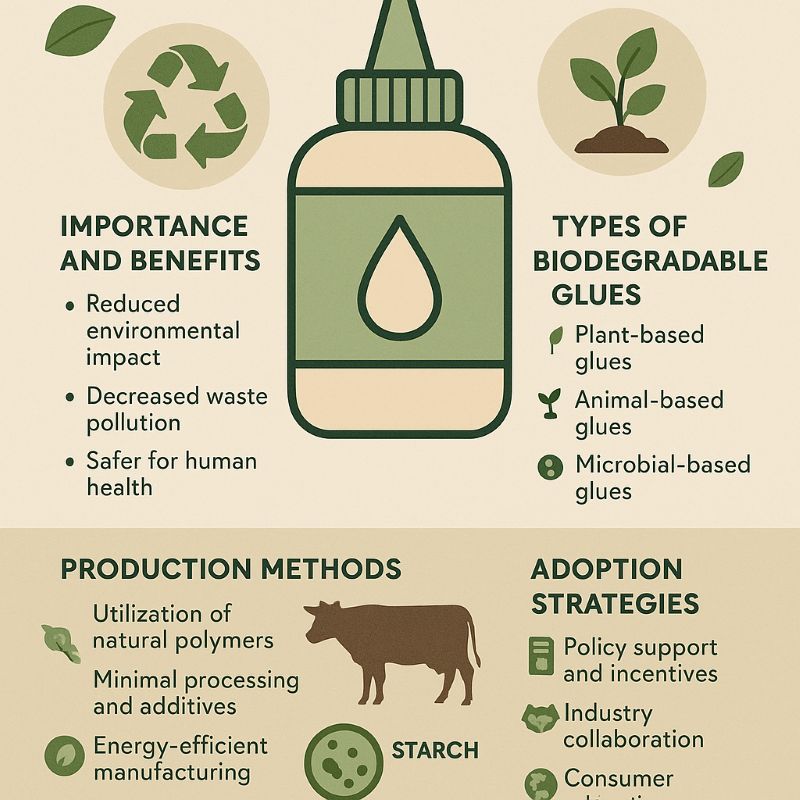
As of 2026, the adhesive industry experiences rapid evolution driven by strict sustainability mandates and advanced manufacturing techniques. Researchers continuously develop new hot melt glue formulations that incorporate bio-based polymers to reduce reliance on traditional petrochemicals. Additionally, innovations in pressure-sensitive adhesives (PSA) expand the functional capabilities of SBC-based formulas, allowing for repositionable and highly flexible bonds in consumer goods.
Functional classifications now frequently overlap with traditional base polymer categories. Adhesives engineered specifically for low-temperature application or reduced volatile organic compound (VOC) emissions represent a massive market shift. Staying informed about these ongoing chemical modifications ensures that product developers can leverage the most efficient and compliant materials available in the modern supply chain.
- A significant portion of new product developments focuses entirely on bio-based or compostable polymer structures.
- Metallocene polyolefin adoption continues to rise rapidly due to its clean-running, low-maintenance characteristics.
- Custom blended formulations now account for a major segment of specialized industrial applications.