


Table of Contents
- Understanding Hot Melt Adhesive Formulations
- Core Polymer Types Defining Hot Melt Glues
- Performance Factors and Selection Criteria
- Applications and Customization in the Market
- Future Trends in Hot Melt Formulation Development
Did you know that the structural integrity of countless modern products relies on a surprisingly narrow range of foundational chemicals? As industrial manufacturing evolves, securing a reliable bond requires precise chemical engineering rather than simple stickiness. Entering 2026, the industrial landscape heavily depends on advanced hot melt adhesive formulations to assemble everything from delicate electronics to heavy-duty automotive panels. Understanding the underlying polymer science is crucial for optimizing production efficiency and ensuring long-term product durability.
Understanding Hot Melt Adhesive Formulations 🔬
At their core, hot melt adhesive formulations are thermoplastic materials that melt at elevated temperatures and solidify upon cooling to create strong bonds. Unlike solvent-based alternatives, these adhesives contain no volatile organic compounds, making them safer and more environmentally compliant for modern manufacturing facilities. The foundational structure always begins with a base polymer, which dictates the primary physical properties of the glue.
Industry experts note that while there are hundreds of chemical variations available in 2026, they all stem from a core set of base materials. Tackifiers, waxes, and antioxidants are subsequently blended with these polymers to modify viscosity, setting speed, and thermal stability. This modular approach allows chemists to continuously adjust the final product to meet strict industrial specifications.
- Thermoplastic nature: Melts when heated and cures rapidly upon cooling.
- Eco-friendly profile: Eliminates the need for harmful chemical solvents.
- Modular composition: Combines a base polymer with specific modifying agents.
Core Polymer Types Defining Hot Melt Glues 🧪
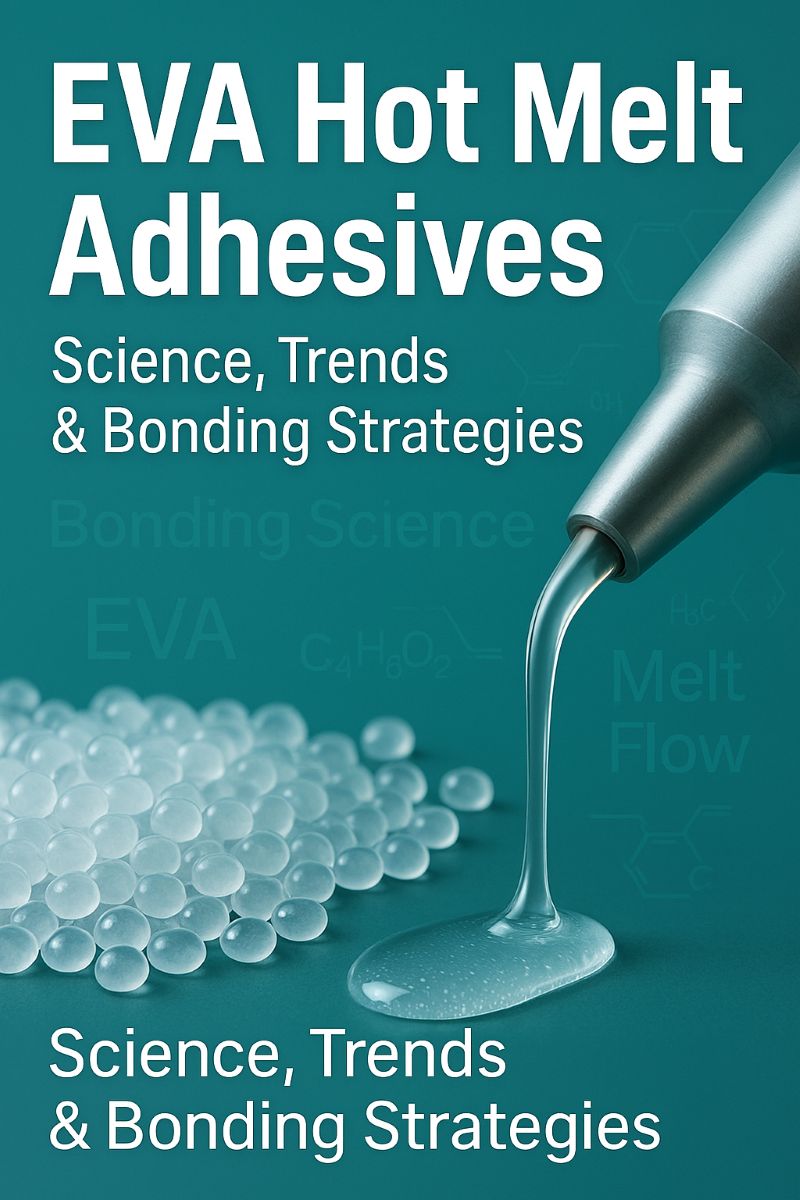
While the market offers a vast array of commercial products, the essential hot melt adhesive formulations are categorized into 6 to 8 primary base polymer types as of 2026. There is no single master list, as chemical engineers constantly adjust these formulas, but these core categories cover the vast majority of commercial applications. Ethylene Vinyl Acetate (EVA) and Polyolefins remain the most widely utilized due to their versatility and cost-effectiveness.
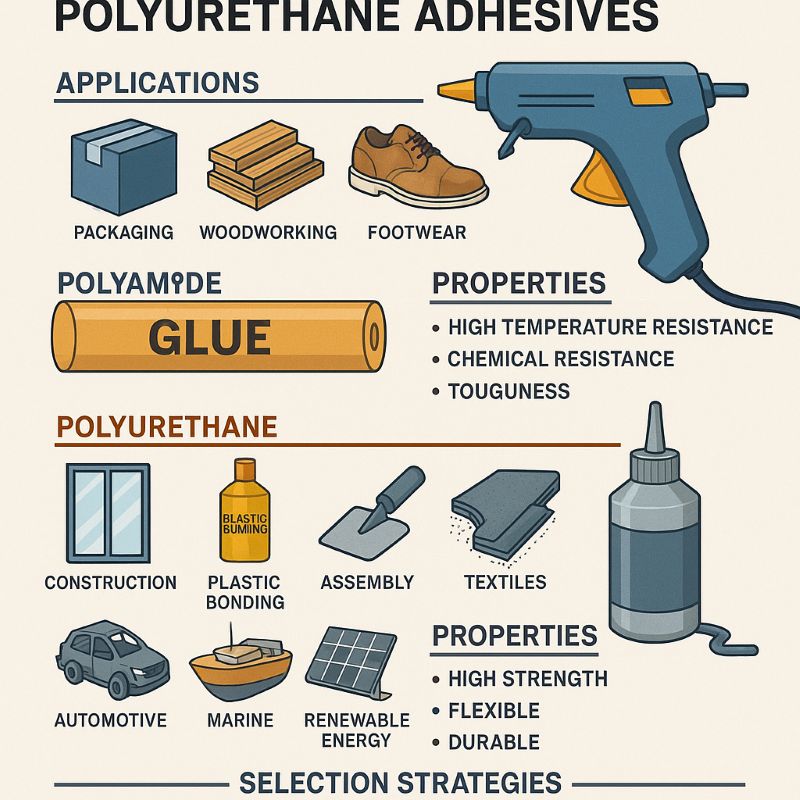
For more demanding environments, Reactive Polyurethane (PUR) and Polyamides provide superior heat resistance and structural strength. Metallocene-catalyzed polyolefins have also gained a significant market share by offering cleaner melting processes and reduced equipment maintenance. Recognizing these base polymer categories is the first step in identifying the correct material for any specific industrial task.
| Base Polymer | Key Characteristics | Typical Applications |
|---|---|---|
| EVA | Cost-effective, versatile, standard temperature range | Packaging, paper assembly |
| PUR | Moisture-curing, high thermal stability, permanent bond | Automotive, woodworking |
| Metallocene | Clean running, low odor, excellent thermal stability | High-speed packaging |
| Polyamide | High heat resistance, excellent chemical resistance | Electronics, automotive |
Performance Factors and Selection Criteria 📊
Selecting the appropriate adhesive requires a rigorous evaluation of specific performance factors rather than relying on generic product descriptions. The application environment plays a critical role; engineers must assess both the ambient temperature during application and the extreme temperatures the final product will endure. A formulation that performs flawlessly in freezing conditions might fail completely under high heat.
Substrate compatibility is another critical metric. Porous materials like cardboard require different penetration profiles compared to non-porous plastics or metals. Furthermore, the required open time and set time must align perfectly with the speed of the manufacturing line to prevent production bottlenecks.
Always test the selected adhesive on the exact substrates used in your production line under simulated extreme environmental conditions before finalizing your procurement decision.
Applications and Customization in the Market 🏭
Theoretical classifications provide a foundation, but real-world manufacturing demands extensive customization. Standard hot melt adhesive formulations are frequently modified to create functional variations, such as Pressure Sensitive Adhesives (PSA) that remain permanently tacky. This adaptability ensures that a single base polymer can serve entirely different industries depending on its specific blend of additives.
In 2026, manufacturers rarely purchase off-the-shelf solutions for complex assembly lines. Instead, they collaborate with chemical suppliers to fine-tune the viscosity and tackiness to match specific machine speeds and nozzle types. This continuous adjustment reflects the fluid nature of the adhesive market, where customized solutions drive operational efficiency.
| Requirement | Customization Approach | Operational Benefit |
|---|---|---|
| High-speed lines | Increase wax content for faster set times | Prevents line bottlenecks |
| Flexible substrates | Incorporate elastomeric modifiers | Prevents cracking under stress |
| Permanent tack | Formulate into Pressure Sensitive Adhesives | Enables tape and label production |
Future Trends in Hot Melt Formulation Development 🚀
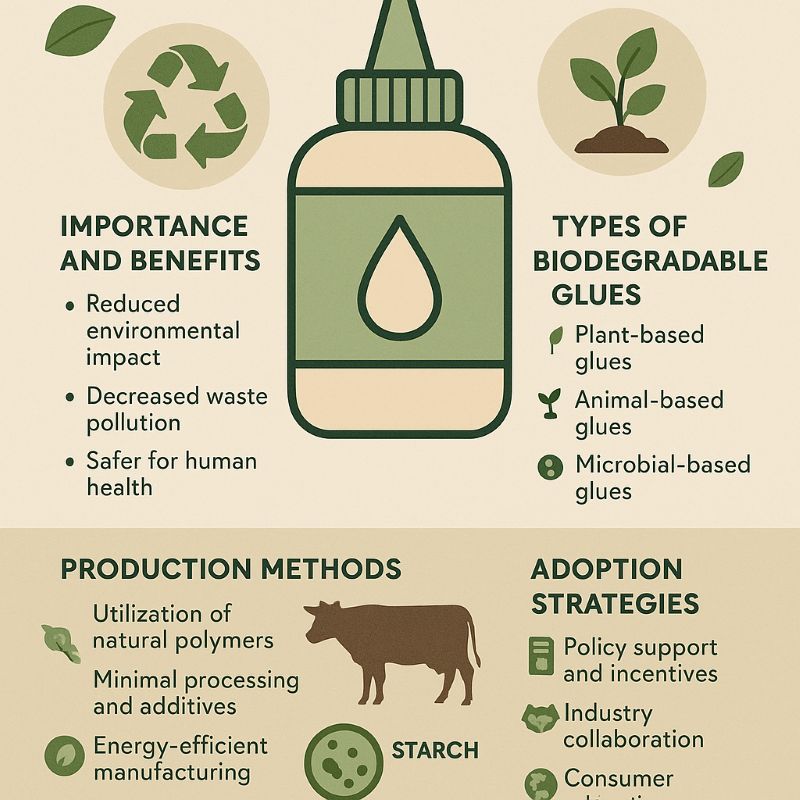
Looking ahead, the development of hot melt adhesive formulations is heavily influenced by sustainability mandates and energy efficiency goals. The push for bio-based polymers has accelerated, with new formulations utilizing renewable feedstocks without compromising bond strength. These sustainable options are becoming standard practice rather than niche alternatives in the packaging sector.
Additionally, researchers are prioritizing the development of low-application-temperature adhesives. By reducing the heat required to melt the polymer, manufacturing facilities can significantly lower their energy consumption and improve worker safety. These advancements ensure that adhesive technology will continue to adapt to the rigorous environmental standards defining the future of global manufacturing.
Facilities utilizing older, high-temperature adhesive equipment may face compatibility issues with newer bio-based formulations, requiring gradual equipment upgrades to maintain optimal production speeds.