


Table of Contents
- Understanding Hot Melt Adhesive Removers
- Safe Use on Durable Surfaces Like Metal and Glass
- Precautions for Sensitive and Coated Materials
- Choosing the Right Product for Your Environment
- Essential Safety Practices for 2026 and Beyond
Have you ever faced a stubborn, hardened glob of hot melt glue that refused to budge? You're not alone. From industrial assembly lines to home crafting projects, these powerful adhesives often leave behind residues that can be challenging to remove without damaging the underlying surface. The solution lies in using a dedicated hot melt adhesive remover, but its effectiveness is a delicate balancing act. Using the right product correctly can restore a surface to its original state, while a misstep can lead to irreversible damage. This guide provides a professional overview for 2026 on how to navigate this process safely, whether you're working with robust industrial machinery or delicate household items.
Understanding Hot Melt Adhesive Removers
A hot melt adhesive remover is a chemical agent, typically solvent-based, designed specifically to break down and dissolve the polymers in hot melt glues. Unlike general-purpose cleaners, these formulations target the unique chemical structure of hot melt adhesives, which are thermoplastic polymers that become liquid when heated and solidify upon cooling. The remover penetrates the hardened adhesive, weakening its bond with the substrate and returning it to a semi-liquid or softened state, making it easy to wipe or scrape away. Their primary function is to enable clean and efficient removal without excessive mechanical force, which could scratch or deform the surface. This chemical efficiency is why they are indispensable in manufacturing, packaging, and maintenance sectors, as well as for domestic repairs and crafting.
💡KEY POINT
- Function: Hot melt adhesive removers are solvent-based formulas that dissolve the polymers in hot melt glue.
- Mechanism: They work by chemically weakening the adhesive's bond, allowing for easy removal without physical force.
- Application: Widely used in both industrial settings for equipment maintenance and at home for cleanup and repairs.
Safe Use on Durable Surfaces Like Metal and Glass
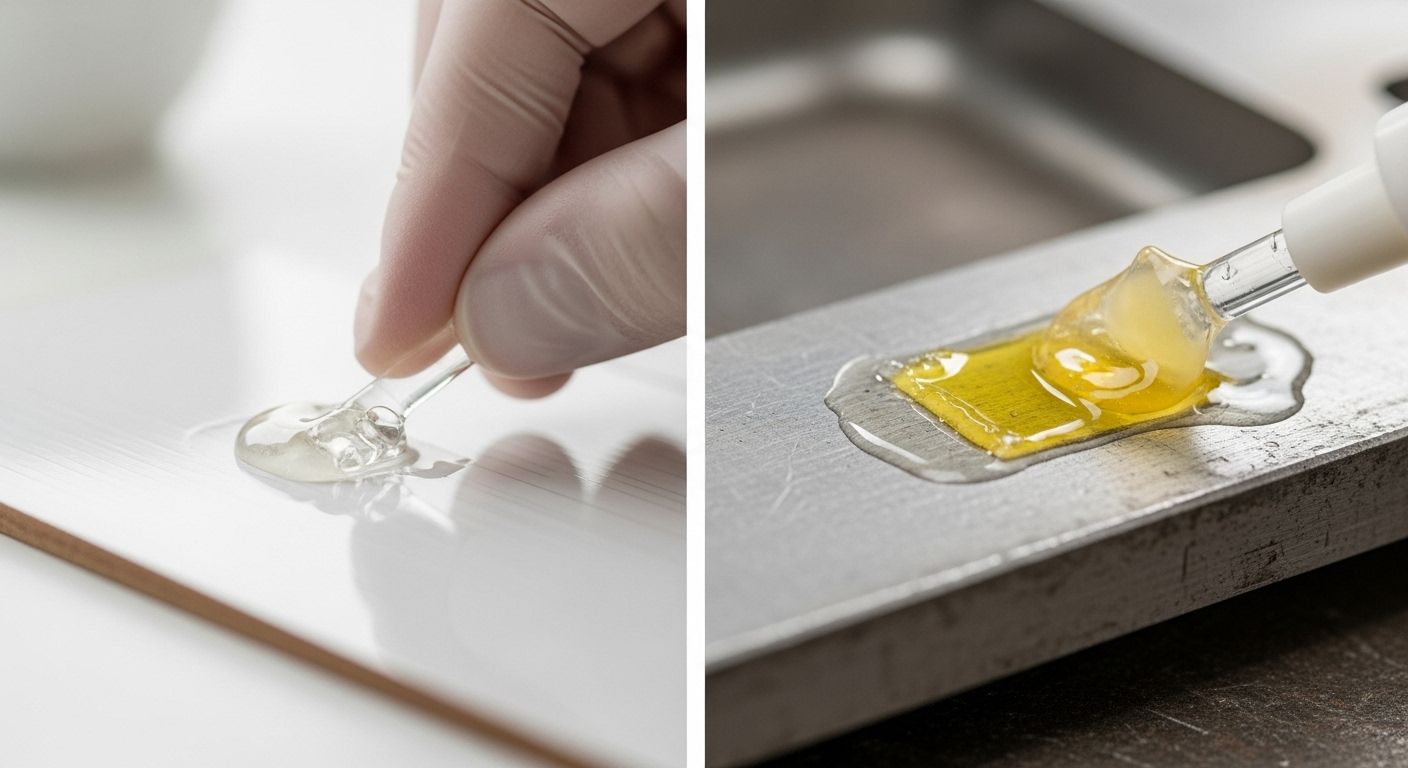
When dealing with non-porous and durable materials, hot melt adhesive removers are generally very effective and safe to use. Surfaces like stainless steel, aluminum, glass, and ceramics have high chemical resistance, allowing the remover to work on the adhesive without compromising the substrate. These materials are common in industrial machinery, automotive parts, and kitchen environments, where hot melt residue can be a frequent issue. The key to success is allowing the remover sufficient dwell time to fully penetrate the adhesive before attempting removal. For sealed or finished wood, caution is still advised, as some aggressive solvents could potentially dull or strip the finish.
| Surface Type | Application Method | Key Consideration |
|---|---|---|
| Metal (Steel, Aluminum) | Apply directly, let it sit, scrape/wipe | Non-reactive, making it ideal for machinery parts |
| Glass & Ceramics | Apply with a cloth, wipe clean | Avoid using abrasive tools that could scratch the surface |
| Sealed Wood | Apply sparingly, act quickly | Always test on a small, hidden area first as the sealant may be affected |
Precautions for Sensitive and Coated Materials
The real challenge in using a hot melt adhesive remover lies with sensitive substrates. Materials such as plastics, painted or coated surfaces, and fabrics can be highly susceptible to damage from the powerful solvents in these products. For plastics, the risk includes clouding, cracking, or even melting the material. On painted surfaces, the remover can cause discoloration, blistering, or peeling of the paint layer. Similarly, textiles and fabrics may experience staining or fiber degradation. This is where the principle of a "balancing act" becomes critical—the chemical must be strong enough to dissolve the glue but not so aggressive that it harms the underlying material. Therefore, performing a spot test on a small, inconspicuous area is not just recommended; it is an essential and non-negotiable step before full application.
⚠️CAUTION
Always Spot Test First
Before applying any hot melt adhesive remover to a sensitive or unknown surface, test it on a small, hidden area. Apply a tiny amount and wait to observe any adverse reactions like discoloration, softening, or peeling. This simple precaution can prevent costly and irreversible damage.
Choosing the Right Product for Your Environment
The selection of a suitable hot melt adhesive remover depends heavily on the application environment. A product designed for heavy industrial machinery cleanup will likely be too aggressive for use on delicate electronics or home furniture. As of 2026, the market offers a wide range of formulations tailored to specific needs. For industrial settings, factors like evaporation rate, residue-free finish, and compliance with workplace safety standards are paramount. In specialized environments, such as food processing plants or medical device manufacturing, removers must meet stringent regulatory standards to be considered food-safe or non-toxic. For general household use, consumers should look for products with lower volatility and user-friendly application methods. Always refer to the manufacturer's safety data sheet (SDS) and product guidelines to ensure the chosen remover is appropriate for both the material and the environment.
| Environment | Key Selection Criteria | Example Application |
|---|---|---|
| Industrial | High-strength, fast-acting, regulatory compliance | Cleaning glue nozzles and manufacturing equipment |
| Commercial | Moderate strength, low odor, safe for multiple surfaces | Removing labels and residue in retail or office settings |
| Household | User-friendly, low toxicity, material-specific formulas | Craft project cleanup, removing glue from furniture |
Essential Safety Practices for 2026 and Beyond
Regardless of the application, adhering to strict safety protocols is crucial when handling any chemical cleaning agent. The powerful solvents in hot melt removers can release volatile organic compounds (VOCs) and may be flammable or cause skin irritation. Proper personal protective equipment (PPE), including chemical-resistant gloves and safety glasses, should always be worn. Ensure the work area is well-ventilated to disperse fumes; if working in a confined space, consider using respiratory protection. Proper disposal is also a legal and environmental responsibility. Never pour unused removers down the drain. Instead, follow local regulations for hazardous waste disposal. By integrating these safety practices into your workflow, you can leverage the benefits of these powerful products while mitigating risks to yourself and the environment.
To maximize safety and effectiveness, always read the product label and Safety Data Sheet (SDS) before use. The SDS provides critical information on handling, storage, first aid, and disposal procedures specific to that chemical formulation. Keeping this document accessible is a best practice in any professional setting.