


Table of Contents
- What Is Hot Melt Adhesive Remover?
- Safe Application on Durable Materials
- Risks with Sensitive and Coated Surfaces
- Patch Testing and Safety Precautions
- Choosing the Right Remover for Each Environment
Have you ever faced the stubborn, rubbery residue of hot melt glue on a surface and wondered how to remove it without causing damage? Whether you're a DIY enthusiast correcting a mistake or an industrial technician maintaining equipment, the challenge is the same. The solution often lies in a powerful chemical agent: a hot melt adhesive remover. But its strength is a double-edged sword. Using it correctly is a balancing act between effective cleaning and potential surface damage. This guide provides a professional overview of which materials are safe for these removers and which require extreme caution, ensuring you get the job done right in 2026.
What Is Hot Melt Adhesive Remover?
A hot melt adhesive remover is a chemical solvent or a blend of solvents specifically formulated to break down and dissolve the thermoplastic polymers that constitute hot melt adhesives. Unlike general-purpose cleaners, these removers are engineered to target the unique chemical structure of the glue, softening it from a solid state back into a more viscous or liquid form. This process allows the adhesive to be wiped or scraped away easily without the need for aggressive mechanical force, which could scratch or damage the underlying material. The primary function is to reverse the bonding process, making cleanup efficient and preserving the integrity of the surface.
💡KEY POINT
- Purpose: To dissolve and soften cured hot melt adhesives for easy removal.
- Mechanism: Chemically breaks down the polymer bonds in the glue.
- Advantage: Reduces the need for harsh scraping or physical force, protecting surfaces.
- Key Consideration: The remover's chemical composition must be compatible with the material it is applied to.
These products are essential in both consumer and industrial settings. In manufacturing, they are used to clean nozzles, tanks, and other machinery parts that come into contact with hot melt glue. For consumers, they are invaluable for removing accidental spills, repairing projects, or cleaning up old adhesive residue. However, their effectiveness is entirely dependent on the interaction between the solvent and the surface material, making a clear understanding of material compatibility crucial.
Safe Application on Durable Materials
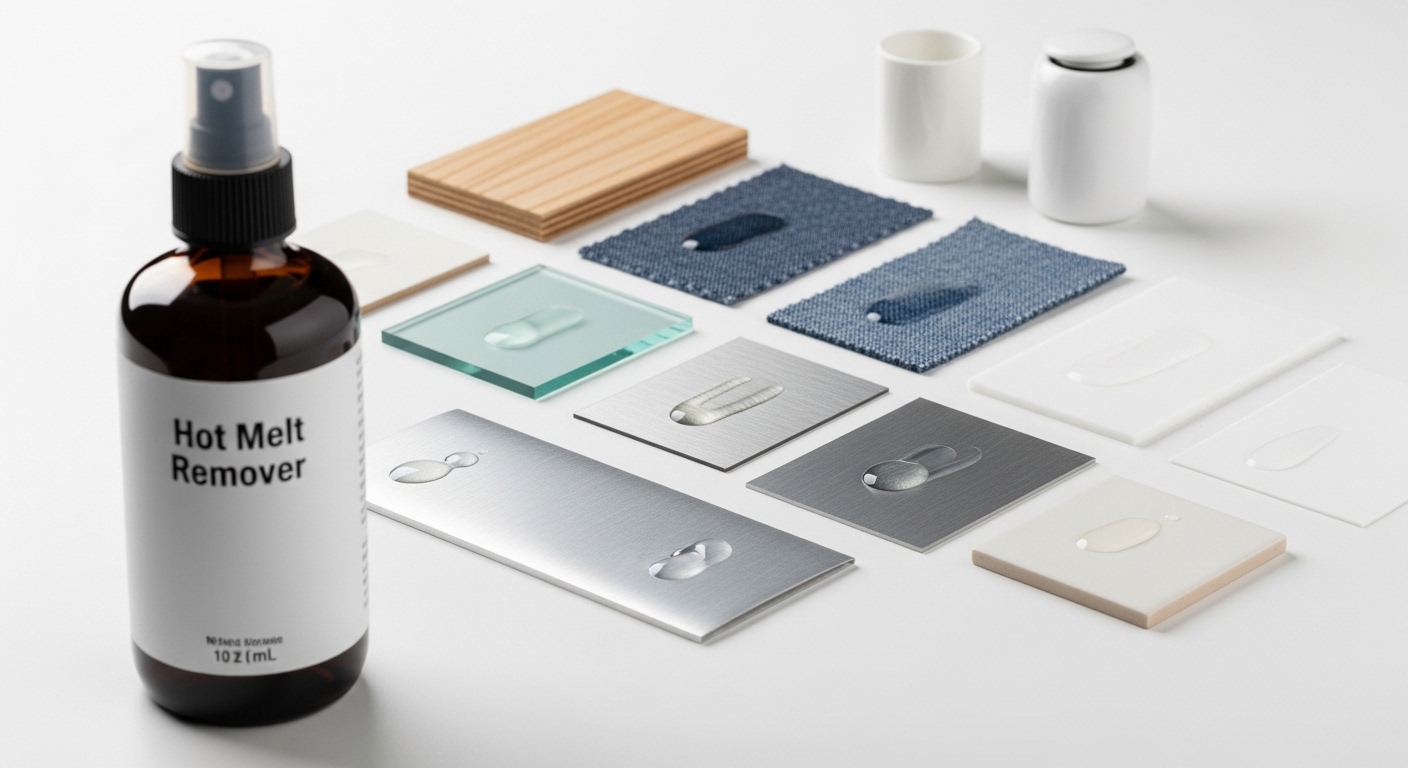
The good news is that hot melt adhesive remover can be used with a high degree of safety on a variety of robust, non-porous materials. These surfaces are chemically inert and physically tough enough to withstand the potent solvents found in most removers without degrading, discoloring, or weakening. Materials like metals, glass, and certain types of finished wood are prime candidates for safe and effective adhesive removal. Their lack of porosity prevents the solvent from seeping deep into the material, containing the chemical reaction to the surface where the glue resides.
For example, in an industrial setting, cleaning hot melt residue from steel or aluminum machinery parts is a common and safe practice. Similarly, removing a glue spill from a glass tabletop or a ceramic tile floor at home can typically be done without concern. The key is the material's resilience. These durable surfaces do not react with the solvents, allowing the remover to do its job on the adhesive alone.
| Material | Key Characteristics | Common Use Cases |
|---|---|---|
| Metals | Non-porous, chemically resistant (e.g., steel, aluminum) | Machinery parts, tools, metal equipment |
| Glass | Completely non-porous, smooth surface | Windows, tabletops, containers |
| Sealed Wood/Ceramics | Protected by a non-porous finish or glaze | Sealed furniture, tile floors, countertops |
Even with these materials, it is always a best practice to ensure adequate ventilation and follow the manufacturer's safety instructions. While the surface itself is safe, proper handling protects the user and the surrounding environment.
Risks with Sensitive and Coated Surfaces
While durable materials handle hot melt adhesive remover well, the story is entirely different for sensitive, porous, or coated surfaces. The same powerful solvents that dissolve glue can be "overly enthusiastic" and cause irreversible damage to more delicate materials. Plastics, painted or varnished finishes, and textiles are particularly vulnerable. The chemical interaction can lead to a range of problems, from subtle discoloration to complete structural failure.
Plastics are especially tricky, as there is a wide variety of polymer types. A solvent that is safe on one type of plastic might cause another to become cloudy, brittle, or even melt. Painted and coated surfaces are also at high risk because the remover may not distinguish between the adhesive and the paint, stripping the finish along with the glue. For textiles and leather, the remover can seep into the fibers, causing staining, weakening the fabric, or dissolving dyes. This is why a one-size-fits-all approach is dangerous and can lead to costly damage.
| Material Type | Potential Risks | Recommended Action |
|---|---|---|
| Plastics | Clouding, cracking, softening, or melting | Always perform a patch test on a hidden area |
| Painted/Coated Surfaces | Stripping of paint, varnish, or finish; discoloration | Avoid use or test with extreme caution |
| Textiles & Fabrics | Staining, discoloration, weakening of fibers | Use specialized fabric-safe products; test first |
Ultimately, for these sensitive categories, the risk of damage is significant. The chemical composition of the 접착제 제거제 (adhesive remover) is designed for strength, and that strength can easily overwhelm a delicate surface.
Patch Testing and Safety Precautions
Given the potential for damage on sensitive surfaces, patch testing is not just a recommendation—it is an essential, non-negotiable step. Before applying a hot melt adhesive remover to any visible or large area, you must first test it on a small, inconspicuous spot. This simple precautionary measure can save you from ruining a valuable item or surface. The goal is to observe how the remover and the material interact in a controlled manner before full-scale application.
To perform an effective patch test, follow these steps:
- Select a Hidden Area: Choose a spot that is out of sight, such as the underside of a piece of furniture, a seam allowance on fabric, or a corner of a plastic component.
- Apply a Small Amount: Use a cotton swab to apply a tiny amount of the remover to the selected area.
- Wait and Observe: Let the remover sit for the time recommended by the manufacturer, or for at least a few minutes. Watch for any signs of damage, such as discoloration, softening, bubbling, or swelling.
- Clean and Evaluate: Wipe the area clean with a cloth and let it dry completely. Examine the spot in good lighting to confirm that the surface's color, texture, and integrity remain unchanged. If there is any sign of a negative reaction, do not proceed.
Beyond testing, general safety precautions are also critical. Always work in a well-ventilated area to avoid inhaling fumes. Wear protective gloves to prevent skin irritation and safety glasses to shield your eyes from accidental splashes. Following these disciplined steps ensures that you are using the product effectively and, more importantly, safely.
Choosing the Right Remover for Each Environment
The selection of a hot melt adhesive remover should be tailored to the specific application and environment. The requirements for a home-based craft project are vastly different from those for cleaning heavy-duty industrial machinery. As of 2026, the market offers a wide range of formulations, from consumer-grade citrus-based solvents to powerful industrial-grade chemicals. Making the right choice involves considering the material, the scale of the task, and the safety standards of the environment.
In a home or office setting, removers with lower toxicity and milder fumes are generally preferred. These are often sufficient for smaller spills on common household surfaces. However, in an industrial environment—such as packaging, automotive, or electronics manufacturing—the adhesive bonds are typically stronger, and the machinery materials are more robust. Here, high-performance removers are necessary for efficient maintenance and to prevent costly downtime. Specialized formulations may even be required for sensitive applications like food processing equipment or medical device assembly, where specific regulatory standards must be met. The key is to match the strength and composition of the remover to the demands of the job.
💡KEY POINT
- Home/Consumer Use: Opt for milder, low-fume removers. Prioritize safety and compatibility with common household materials. Always read the label and test on a small area.
- Industrial/Professional Use: Select removers based on the specific type of adhesive and machinery. Factor in operational efficiency and compliance with 2026 safety regulations (e.g., ventilation, personal protective equipment).
- Specialty Applications: For sensitive environments like food or electronics, use certified, residue-free products designed for that specific purpose.
Ultimately, the most critical step is to read and follow the manufacturer's instructions and safety data sheet (SDS). These documents provide the most accurate and up-to-date guidance on material compatibility, proper application methods, and necessary safety precautions for that specific product.