


Table of Contents
- The Shifting Landscape of the Hot Melt Market
- Eco-Friendly vs. Conventional: A Composition Comparison
- Environmental Impact and Key Certifications
- Performance and Debunking Common Myths
- Practical Application Tips by Industry
As global industries pivot towards sustainability, the materials we use every day are undergoing a quiet revolution. By 2026, it's projected that the demand for green materials will reshape supply chains, and the humble adhesive is no exception. Once viewed as a simple utility, the choice of adhesive now carries significant weight, impacting everything from a product's carbon footprint to its end-of-life recyclability. This shift isn't just about environmental compliance; it's about meeting the demands of a new generation of consumers and businesses who prioritize sustainability as a core value. The question is no longer if we should adopt greener alternatives, but how we can integrate them without compromising on performance.
The Shifting Landscape of the Hot Melt Market 📈
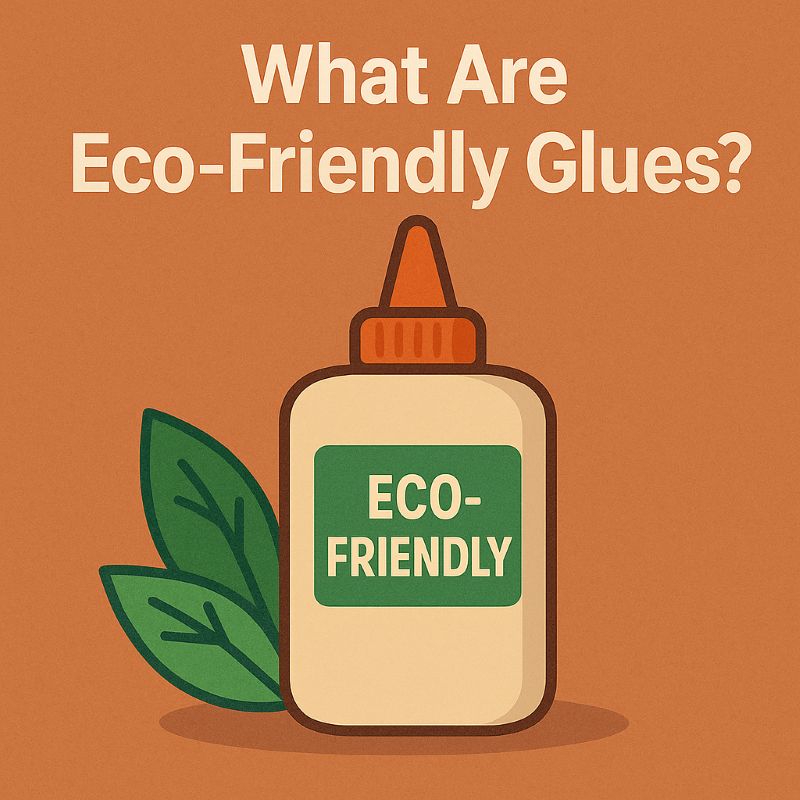
The hot melt adhesive market in 2026 is characterized by a strong and accelerating trend towards sustainability. This is not a niche movement but a mainstream industrial shift driven by regulatory pressure, corporate environmental goals, and increasing consumer awareness. Companies are actively seeking materials that reduce their environmental footprint, and eco-friendly hot melt adhesives have emerged as a powerful solution. Unlike their traditional counterparts, these next-generation adhesives are designed with their entire lifecycle in mind, from sourcing to disposal. This holistic approach is transforming industries like packaging, woodworking, and textiles, where adhesives play a critical role. The focus is now on circular economy principles, where materials are not only effective but also safe, renewable, and compatible with recycling or composting streams.
💡KEY POINT
- Key Market Drivers in 2026:
- Consumer Demand: A growing preference for sustainable and non-toxic products.
- Regulatory Pressure: Stricter regulations on VOCs (Volatile Organic Compounds) and plastic waste.
- Corporate Sustainability Goals: Companies are integrating green materials to meet their ESG (Environmental, Social, and Governance) targets.
Eco-Friendly vs. Conventional: A Composition Comparison 🔬
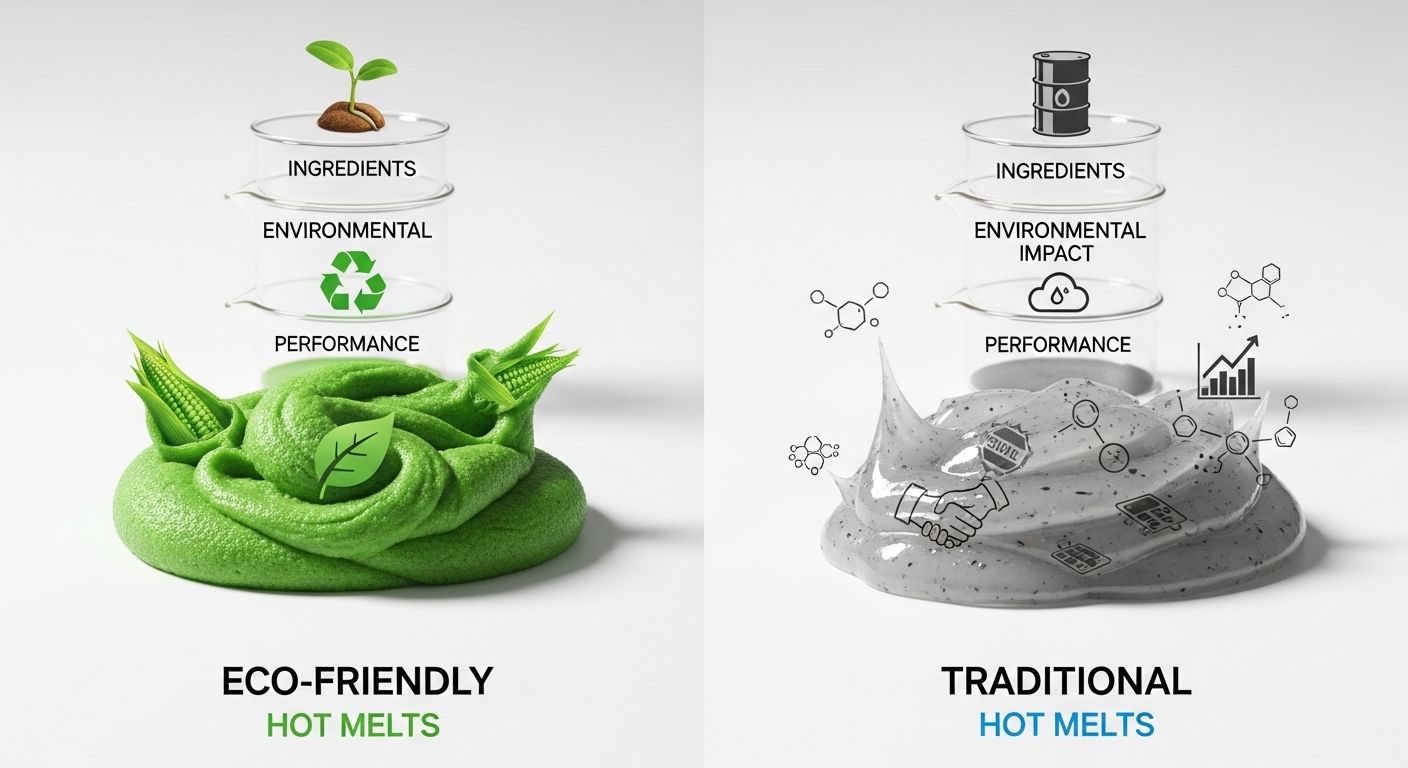
The fundamental difference between an environmentally friendly hot melt adhesive and a conventional one lies in its chemical origin. It’s a story of two distinct paths: one starting with finite fossil fuels and the other with renewable, bio-based resources. This initial difference in composition dictates the adhesive's properties, safety profile, and ultimate environmental fate. Conventional hot melts are typically derived from petroleum-based polymers, which have a significant carbon footprint and contribute to the consumption of non-renewable resources. In contrast, eco-friendly formulations are built on a foundation of renewable materials, such as plant-based starches, resins, or polylactic acid (PLA). This bio-based origin is the cornerstone of their environmental advantage, setting the stage for a more sustainable product lifecycle.
| Feature | Eco-Friendly Hot Melt | Conventional Hot Melt |
|---|---|---|
| Base Material | Renewable resources (e.g., plants, bio-polymers) | Petroleum-based/Fossil fuels |
| Origin | Sustainable and often carbon-neutral | Non-renewable and carbon-intensive |
| Chemical Profile | Low to zero VOCs, often free of harmful solvents | May contain VOCs and other synthetic chemicals |
Environmental Impact and Key Certifications 🌍
The lifecycle of an adhesive—from production to disposal—reveals its true environmental cost. Conventional hot melts can contribute to environmental pollution through the emission of VOCs during application and the creation of non-biodegradable waste. Because they are derived from petroleum, their end-of-life stage often results in microplastic pollution, as they do not break down naturally. In stark contrast, eco-friendly hot melt adhesives are designed for a gentler exit. Many are formulated to be biodegradable or compostable, breaking down into harmless organic matter under the right conditions. This makes them ideal for applications like compostable packaging. Furthermore, their low-VOC nature significantly improves air quality for workers and reduces harmful atmospheric emissions. When selecting a product, look for official certifications that verify these claims.
To ensure you are choosing a genuinely sustainable product, look for adhesives that comply with internationally recognized standards for compostability, such as ASTM D6400 (in the US) or EN 13432 (in Europe). These certifications provide third-party validation of a product's environmental claims.
Performance and Debunking Common Myths ⚙️
A common misconception is that "eco-friendly" is synonymous with compromised performance. However, by 2026, advancements in polymer science have largely closed this gap, achieving what is known as "performance parity." Modern eco-friendly hot melt formulations deliver fast set times, strong bonds, and excellent adhesion across a variety of substrates, rivaling their conventional counterparts. While early-generation bio-adhesives may have had limitations in areas like heat resistance, today's products are engineered for demanding industrial applications. The key is to select the right formulation for the specific job. The performance of these adhesives is no longer a barrier to adoption; rather, it's a testament to how innovation can align high functionality with environmental responsibility.
| Performance Metric | Myth | 2026 Reality |
|---|---|---|
| Bond Strength | Weaker than traditional adhesives. | Offers comparable or superior bond strength for most applications. |
| Set Time | Slower curing, reducing production efficiency. | Engineered for rapid set times suitable for high-speed automated lines. |
| Versatility | Limited to specific, non-demanding materials. | Formulations exist for a wide range of substrates, including cardboard, wood, and textiles. |
Practical Application Tips by Industry 📦
The versatility of environmentally friendly hot melt adhesive allows it to be a valuable tool across numerous sectors. The key to successful implementation is matching the adhesive's specific properties to the application's demands. Each industry has unique requirements, and choosing the right formulation ensures both optimal performance and maximum sustainability benefits. By understanding these nuances, businesses can seamlessly transition to greener alternatives without sacrificing quality or efficiency. This strategic approach helps maximize the positive impact of using sustainable materials in everyday production processes.
💡KEY POINT
- Industry-Specific Use Cases:
- Packaging: Ideal for sealing corrugated boxes, especially for food and beverage products, as it is often non-toxic and supports package recyclability or compostability.
- Woodworking & Furniture: The low-VOC profile creates a safer working environment and contributes to better indoor air quality in the final product.
- Hygiene Products: Used in the assembly of items like diapers and sanitary products, where non-toxic, skin-safe materials are paramount.
- Textiles: Provides a strong yet flexible bond for fabric applications without the use of harsh solvents.