



Table of Contents
- Hot-Melt Adhesives: A Quick Overview
- EVA and PO Hot-Melt Adhesives Explained
- Key Performance Factors in Real Applications
- Choosing the Right Adhesive for Your Needs
- Future Trends in Hot-Melt Adhesive Solutions
Have you ever considered the invisible force that holds the modern manufacturing world together? In 2026, automated production lines operate at unprecedented speeds, and the reliability of a hot melt adhesive dictates whether a product succeeds or fails on the assembly line. From securing corrugated packaging to assembling intricate electronic components, selecting the correct bonding agent is no longer a minor operational detail. It is a critical engineering decision. As industrial demands evolve, understanding the structural and functional differences between various adhesive technologies becomes paramount for technical engineers, procurement specialists, and product developers.
Hot-Melt Adhesives: A Quick Overview 🏭
A hot melt adhesive is a 100% solid thermoplastic polymer that remains firm at room temperature but becomes a fluid liquid when heated. This phase change allows the material to flow over a surface and create a highly durable bond as it cools and solidifies. Because they contain no solvents or water, these adhesives cure rapidly, making them indispensable for high-speed industrial applications.
Manufacturers rely on these bonding agents for diverse processes, including carton sealing, woodworking, and product assembly. The absence of volatile organic compounds ensures a safer working environment and aligns with modern environmental standards. Furthermore, the compact footprint of the melting equipment allows for seamless integration into existing manufacturing layouts. However, not all adhesives deliver the same results. The underlying chemical composition dictates the performance, environmental resistance, and overall efficiency of the bonding process.
- Rapid Curing: Solidifies quickly upon cooling to facilitate fast production cycles.
- Solvent-Free: Eliminates harmful chemical emissions and improves workplace safety.
- Versatile Application: Serves as an essential component for packaging, woodworking, and electronics.
EVA and PO Hot-Melt Adhesives Explained 🧪
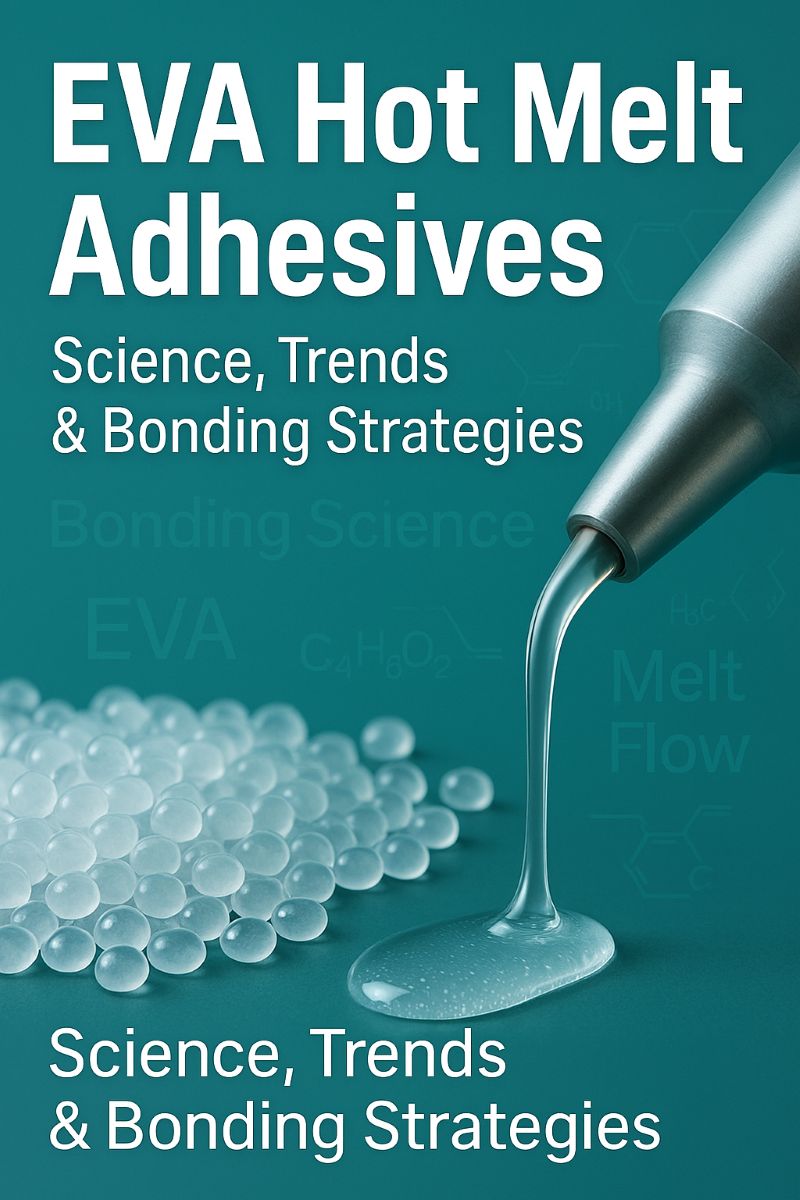
The industrial sector primarily utilizes two dominant types of hot-melt solutions: Ethylene Vinyl Acetate (EVA) and Polyolefin (PO). EVA has served as the traditional industry standard for decades. It is a copolymer that offers reliable bonding for standard applications. Its molecular structure provides flexibility and decent adhesion to a variety of basic substrates.
In contrast, PO-based adhesives utilize advanced polymer systems, typically synthesized from polyethylene or polypropylene variants. The distinct chemical architecture of a PO adhesive grants it enhanced stability and bonding strength. While EVA relies on a more conventional formulation, PO incorporates modernized polymer chains designed to withstand demanding environments and adhere to challenging surfaces. This fundamental difference in molecular design dictates how each product behaves under thermal stress and mechanical load.
| Feature | EVA Adhesive | PO Adhesive |
|---|---|---|
| Base Polymer | Ethylene Vinyl Acetate | Polyethylene / Polypropylene |
| Material Cost | Generally lower | Higher initial investment |
| Primary Strength | Flexibility on standard surfaces | High stability and strong bonds |
Key Performance Factors in Real Applications ⚙️
When evaluating bonding solutions for an active production line, simple price comparisons fail to capture the total operational impact. Thermal stability stands out as a primary differentiator. EVA formulations exhibit moderate heat resistance. Prolonged exposure to high temperatures in the melting tank often leads to discoloration, viscosity changes, and char buildup. Conversely, PO adhesives maintain excellent thermal stability, remaining consistent in the tank for over 24 hours without degrading.
Another critical factor is the adhesion range. EVA effectively bonds porous materials such as paper, cardboard, and wood. However, it struggles with low-energy surfaces. PO variants bond exceptionally well to difficult, non-porous substrates like plastics and coated films. Furthermore, maintenance requirements differ significantly. The tendency of EVA to char results in frequent nozzle clogs, whereas PO ensures cleaner running operations, thereby reducing equipment downtime. Production managers often note that the time saved from skipping daily maintenance routines translates directly into higher output volumes.
| Performance Metric | EVA Characteristics | PO Characteristics |
|---|---|---|
| Thermal Stability | Moderate; susceptible to charring | Excellent; resists degradation |
| Adhesion Range | Porous materials (paper, wood) | Non-porous plastics and films |
| Maintenance Need | Higher; requires regular cleaning | Lower; clean running performance |
Choosing the Right Adhesive for Your Needs 🎯
Selecting between EVA and PO requires a thorough analysis of your specific application and production environment. For standard corrugated packaging or simple woodworking tasks, an EVA adhesive remains a cost-effective and highly functional choice. Its widespread availability and lower upfront cost make it suitable for operations where extreme temperatures or difficult substrates are not a concern. Many legacy systems are already calibrated for EVA, making it a straightforward drop-in solution for standard packaging lines.
However, if your production involves coated cartons, plastic components, or environments with significant temperature fluctuations, investing in a PO-based solution is necessary. The improved mileage of PO means you use up to 20% less material per application, which can offset the higher initial purchase price. Evaluating the total cost of ownership, including maintenance and material waste, provides a more accurate financial picture for long-term operations.
Always analyze your substrate material before purchasing. If you are bonding low-energy plastics, prioritize PO formulations to prevent bond failure and ensure structural integrity.
Future Trends in Hot-Melt Adhesive Solutions 🚀
As we move through 2026, the manufacturing landscape increasingly prioritizes high-performance, eco-friendly, and highly efficient materials. The industry is witnessing a massive shift toward advanced polymer systems. PO-based adhesives are gaining massive popularity due to their operational stability and lower environmental impact. The reduction of degraded material waste directly supports sustainable manufacturing goals. As regulatory frameworks tighten globally, minimizing chemical waste and reducing energy consumption during the melting process become critical compliance factors.
Furthermore, automated dispensing systems demand adhesives that run cleanly to prevent costly interruptions. The superior thermal properties of PO solutions align perfectly with the requirements of modern, high-speed robotics. While EVA will maintain its position in standard applications, the future undoubtedly leans toward the advanced efficiency and reliability offered by modern polyolefin technologies.
Do not base your procurement decisions solely on the cost per kilogram. Ignoring maintenance expenses and machine downtime can lead to significant financial losses over time.