


If you are looking for the best hot melt adhesive for oil filter end cap bonding, start from the end cap material and the fluid, not from a product name: metal end caps need an adhesive that wets and grips coated or bare steel, plastic end caps need one that bonds to the specific polymer, and both must hold their seal in hot oil or fuel for the life of the filter. This guide compares metal and plastic end caps, explains what the adhesive has to survive, and lists the tests that show whether a bond is fit for service.
Key takeaways
- End cap bonds seal the pleat pack so fluid cannot bypass the media; a weak or porous bond defeats the filter.
- Metal end caps are commonly bonded with plastisol or hot melt; plastic end caps can be welded or bonded, depending on the polymer and design.
- Polyamide hot melts are widely evaluated for oil and fuel filters because they combine fast setting with good heat and oil resistance.
Why the end cap bond matters
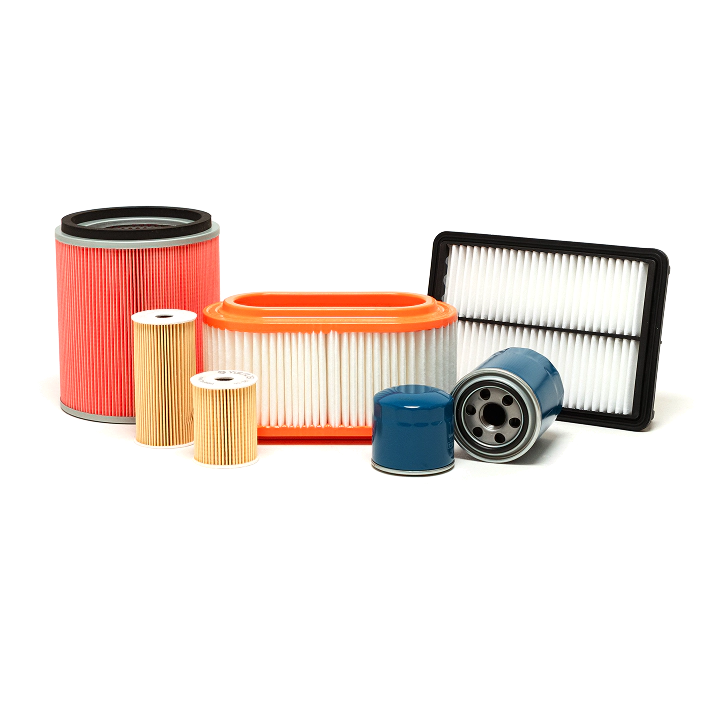
In a spin-on or cartridge oil filter, the pleated media is closed at both ends by end caps. The bond between the pleat tips and the end cap does two jobs. It holds the pack mechanically, and it seals the ends so that oil has to pass through the media rather than around it. If the adhesive leaves gaps at the pleat tips, softens at operating temperature or swells in oil, unfiltered fluid can bypass the media. Fuel filters face the same task with a different fluid, and diesel fuel filters often add water separation, so the bond also sees water and fuel additives.
The adhesive therefore has to meet three groups of demands: it must flow into and wet the pleat tips during assembly, it must stay strong at the oil or fuel temperature in service, and it must not soften, swell or crack after long immersion and many heat cycles.
Metal vs plastic end caps
Both designs are common, and each points to different joining options.
| Point | Metal end caps | Plastic end caps |
|---|---|---|
| Typical material | Steel, often coated | Engineering plastics such as PA6 or PA66 |
| Common joining | Plastisol or hot melt | Hot melt, or welding of the cap into the media |
| Adhesion concern | Oils and coatings on the steel | Low surface energy or moisture in the polymer |
| Process note | Plastisol needs oven curing | Welding avoids adhesive but limits design |
With metal end caps, plastisol has long been used because it fills gaps well, but it needs an oven cure, which adds energy, floor space and time. Hot melt removes the oven: the adhesive sets on cooling, so the filter can move to the next step within seconds or minutes. The trade-off is that the hot melt grade must be chosen for adhesion to the specific steel surface, including any residual forming oil or coating.
With plastic end caps, some designs melt the cap surface and press the pleat pack into it, avoiding adhesive entirely. That works only when the cap polymer and media suit the process. Where a separate adhesive is used, the hot melt has to bond the cap polymer, which may need surface preparation or a grade developed for that polymer. Plastic caps also make metal-free elements possible, which can simplify disposal of used filters.
Choosing the best hot melt adhesive for oil filter end cap bonding: what it must survive
Engine oil filters run hot, and the oil itself ages, collects fuel dilution and carries additives. Fuel filters see gasoline or diesel, biodiesel blends and water. A suitable adhesive needs:
- Heat resistance above the highest oil or fuel temperature the filter will see, with margin for peaks. Our guide to heat-resistant hot melt adhesives up to 200°C explains how to read heat data.
- Oil and fuel resistance so the bond does not swell, soften or lose strength after immersion.
- Flexibility to tolerate pressure pulses, vibration and thermal cycling without cracking.
- Good wetting so pleat tips are fully embedded with no channels.
Polyamide hot melts are frequently evaluated here. Their amide groups give relatively high softening points and resistance to oils and many solvents, and they set quickly on cooling. EVA hot melts are common in air filters but generally soften at lower temperatures, which is why they are less often used in oil-wetted joints. For a wider comparison in filter work, see polyamide vs EVA hot melt for air filter manufacturing.
The bonding process step by step
Hot melt end cap bonding usually follows the sequence below. Settings such as melt temperature, adhesive weight and open time are tuned during line trials.
Typical end cap bonding sequence with hot melt
- Prepare the pleat pack
Pleat, join the first and last pleat, and check pack height and roundness. - Dispense adhesive into the end cap
Apply a ring or full bed of molten adhesive at a controlled weight. - Seat the pleat pack
Press the pack into the molten adhesive within the open time so pleat tips are fully embedded. - Cool and set
Hold position until the adhesive sets; no oven cure is needed for hot melt. - Inspect and test
Check for gaps at pleat tips, then run bond, leak and fluid immersion checks on samples.
Exact temperatures, adhesive weight and open time depend on the grade and line and are set during trials.
Two process points cause most problems. First, if the pleat pack is seated after the adhesive has started to skin over, pleat tips will not be fully embedded and the seal will leak. Second, if the adhesive is held too long at high temperature in the melt tank, it can darken or gel, which changes its flow. Matching the open time to the line speed and keeping tank residence time short solve most of these issues.
How to test an end cap bond
Filter makers normally test both the adhesive and the finished element. For oil filters, the ISO 4548 series covers test methods for full-flow lubricating oil filters on internal combustion engines, and ISO 4020 covers test methods for diesel fuel filters. Typical adhesive-related checks include:
- Fluid immersion: bonded samples are soaked in hot oil or fuel for a set time, then checked for swelling, softening and strength loss.
- Heat aging: samples are held at temperature and compared with unaged samples.
- Leak or bypass checks: the finished element is checked for flow around the media.
- Pressure and pulse tests: the element is exposed to burst or cyclic pressure to see whether the end cap bond holds.
Test conditions vary by customer and vehicle program, so it is good practice to agree the fluid, temperature and duration with the adhesive supplier before sampling.
Filter adhesives from SILVERSTAR CHEMICAL
SILVERSTAR CHEMICAL Co., Ltd. is a polyamide hot melt manufacturer in Yangsan, South Korea, producing its own polyamide hot melts since 2011 under the ERAMID brand. Its filter grades are designed for first and last pleat joining, pleating and edge sealing, and bonding metal end caps, with resistance to hot oil and solvents. The company handles raw material selection, formulation and quality inspection in house and can develop custom viscosities and formulations. Products are exported to the United States, Japan, Europe and Asia.
See the filter solutions page for product details, or the SILVERSTAR CHEMICAL company FAQ for company information. Grade-specific data is available on request.
Frequently Asked Questions
Q. What is the best hot melt adhesive for oil filter end cap bonding?
There is no single answer. The right grade depends on the end cap material, the oil temperature and the immersion requirements. Polyamide hot melts are widely evaluated because they set fast and resist heat and oil, but the final choice should be confirmed by immersion and heat aging tests.
Q. Can hot melt replace plastisol on metal end caps?
In many lines it can. Hot melt removes the oven cure step because it sets on cooling. The grade must be qualified for adhesion to the specific steel surface and for long-term oil resistance.
Q. Do plastic end caps always need adhesive?
No. Some designs weld the pleat pack into the softened cap surface. When an adhesive is used, the grade must be selected for the cap polymer.
Q. Which standards cover oil and fuel filter testing?
The ISO 4548 series covers test methods for full-flow lubricating oil filters, and ISO 4020 covers test methods for diesel engine fuel filters. Customers often add their own adhesive immersion and aging tests.
Q. Does SILVERSTAR CHEMICAL supply hot melt for filter end caps?
Yes. Its ERAMID polyamide hot melts for filters include grades for bonding metal end caps and for pleat joining and edge sealing, designed with resistance to hot oil and solvents. Contact the company for grade data and samples.
Tell us your end cap material, fluid, operating temperature and line speed, and we will suggest a polyamide hot melt grade for trials. Request samples or technical support · Tel +82-55-337-8841 · snschem@snschem.kr