


Table of Contents
- Why Hot Melt Melting Point is a Range, Not a Number
- Melting Points by Key Polymer Type
- Melting Point vs. Application Temperature: A Crucial Distinction
- How Melting Points Are Measured: The Ring & Ball Method
- A Practical Guide to Applying Melting Point Data
Have you ever wondered why one hot melt glue stick turns into a puddle on a warm day, while another holds strong inside a hot car? The answer isn't a simple melting point, but a complex thermal profile. Unlike water freezing at a precise 0°C, hot melt adhesives soften over a wide temperature spectrum. Understanding this principle is the key to selecting the right adhesive for any application, from delicate crafting to demanding industrial assembly, ensuring your bond never fails when the heat is on.
Why Hot Melt Melting Point is a Range, Not a Number 🌡️
A common misconception about hotmelt adhesives is that they have a single, fixed melting point. In reality, this property is a temperature range, not a specific number. This is because hot melt adhesives are not pure crystalline substances but complex formulations. They are primarily composed of a base polymer, tackifying resins, waxes, and antioxidants, each with its own thermal behavior.
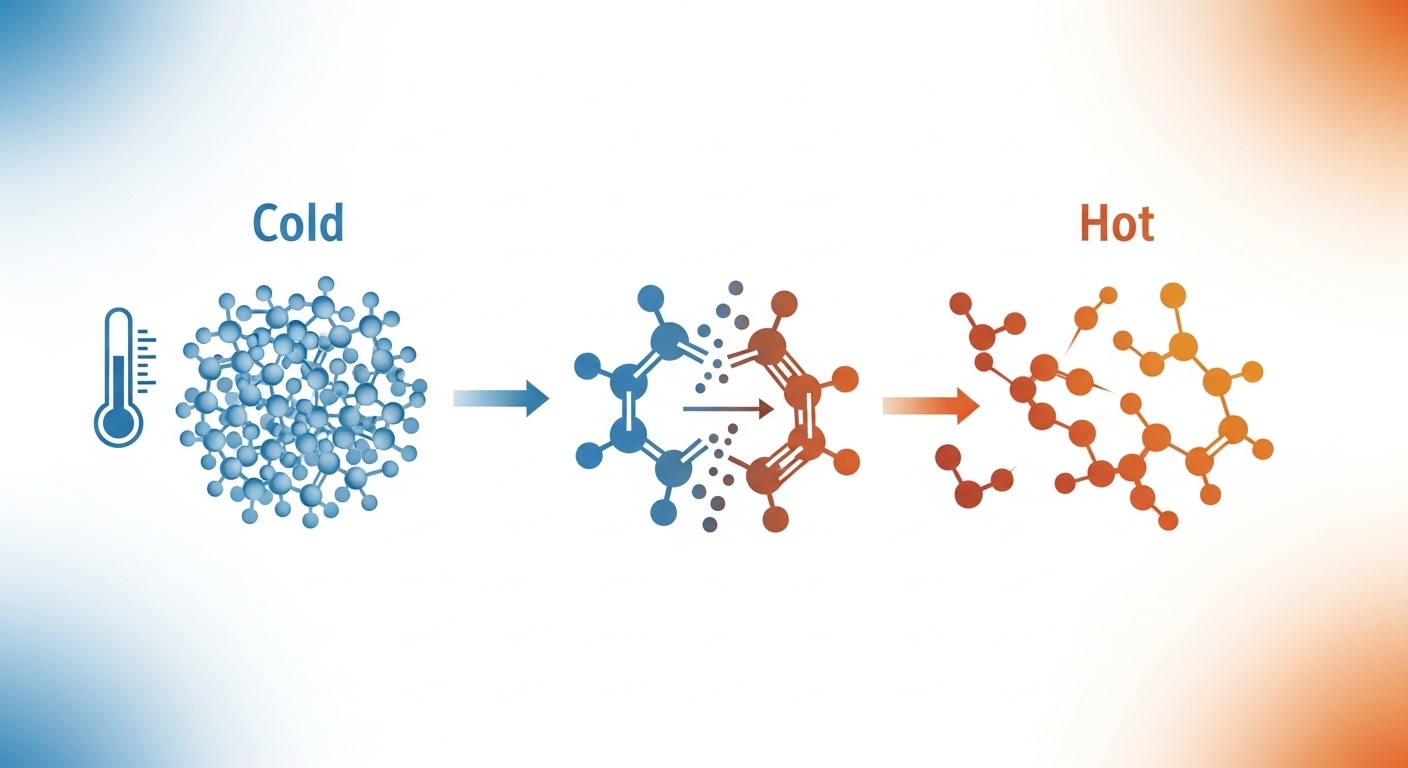
The transition from a solid to a liquid is a gradual process. Instead of snapping from solid to liquid at a precise degree, the adhesive begins to soften, loses its solid structure, and becomes progressively less viscous as the temperature rises. This gradual change is known as the softening point range. The base polymer—such as Ethylene-vinyl acetate (EVA), polyamide, or polyester—dictates the primary thermal characteristics, while additives fine-tune properties like tackiness, open time, and final bond strength. This compositional diversity is why one hot melt can be designed for low-temperature applications while another is engineered for high-performance, heat-resistant bonding.
💡KEY POINT
- Complex Formulation: Hot melt adhesives are mixtures of polymers, resins, and waxes, not single compounds.
- Gradual Softening: They don't melt instantly but soften over a temperature range.
- Composition Dictates Properties: The specific ingredients determine the adhesive's thermal behavior and performance characteristics.
Melting Points by Key Polymer Type 🔬
The base polymer is the single most important factor determining a hot melt adhesive's melting range and overall performance. Different polymers are selected based on the end-use requirements, such as flexibility, chemical resistance, and, most importantly, heat resistance. Understanding the typical ranges for common polymers is the first step in selecting the right product for your needs.
High-performance adhesives based on polyamide and polyester are engineered for applications requiring superior heat and chemical resistance, making them suitable for automotive and electronics assembly. EVA-based adhesives are the most common general-purpose hot melts, offering a good balance of performance and affordability for packaging, woodworking, and crafts. The specific grade and formulation within each polymer family will further influence the final melting range.
| Polymer Type | Typical Melting Range (°C) | Key Characteristics |
|---|---|---|
| EVA (Ethylene-vinyl acetate) | 120°C – 180°C | General purpose, good flexibility, cost-effective |
| Polyamide (PA) | 180°C – 220°C | High performance, excellent heat & chemical resistance |
| Polyester (PES) | 180°C – 220°C | High strength, good adhesion to difficult substrates |
Melting Point vs. Application Temperature: A Crucial Distinction ⚙️
In the world of adhesives, one of the most critical and often misunderstood concepts is the difference between an adhesive's melting point and its application temperature. Confusing the two can lead to poor bonding, equipment damage, and project failure. The melting point is simply the temperature at which the solid adhesive begins to turn into a liquid. However, this is not the temperature at which it should be applied.
The application temperature is always significantly higher than the melting point. This is because at its melting point, the adhesive is technically liquid but is still far too viscous (thick) to be applied effectively. It cannot "wet" the surface of the substrates properly, meaning it won't flow into the microscopic pores of the material to create a strong mechanical bond. Heating the adhesive to the recommended application temperature lowers its viscosity, allowing it to flow smoothly and create a uniform, robust bond upon cooling. Always refer to the manufacturer's Technical Data Sheet (TDS) for the correct application temperature.
For optimal bonding, ensure your application equipment is set to the temperature recommended by the adhesive manufacturer, not just the melting point. Pre-heating the substrates, especially metals or thick materials, can also improve wetting and extend the adhesive's "open time" before it sets.
How Melting Points Are Measured: The Ring & Ball Method 🧪
To standardize the measurement of a hot melt's gradual softening behavior, manufacturers often use industry-standard test methods. The most common of these is the Ring & Ball method (ASTM E28). This test provides a consistent and repeatable way to determine the softening point, which is a reliable indicator of the adhesive's heat resistance.
In this procedure, a sample of the solid adhesive is cast into two standardized brass rings. A steel ball of a specific weight is placed on top of each sample. The entire apparatus is then heated at a controlled rate in a liquid bath (like glycerin or water). The softening point is defined as the temperature at which the adhesive has softened enough for the steel balls to fall a specified distance. This method doesn't measure a true "melting point" but rather a specific point of viscosity under load, which is highly relevant for predicting how an adhesive will behave under thermal stress in a real-world application.
💡KEY POINT
- Purpose: The Ring & Ball method measures the softening point, not a true melting point.
- Process: A weighted ball is placed on an adhesive sample, which is then heated at a controlled rate.
- Result: The temperature at which the ball drops a specified distance is recorded as the softening point, indicating the material's heat resistance.
A Practical Guide to Applying Melting Point Data 📋
Understanding the technical data is only half the battle; applying it correctly is what ensures a successful outcome. The melting point and softening point data from a Technical Data Sheet (TDS) are your primary guides for both selecting an adhesive and setting up your process. A low-temperature hot melt is ideal for heat-sensitive materials like foam or thin plastics, while a high-performance polyamide is necessary for parts that will be exposed to elevated temperatures.
Beyond selection, this data informs storage and handling. Storing adhesives above their softening point range can cause them to fuse together or deform, rendering them unusable. During application, consistently monitoring the temperature of your equipment is crucial. An operating temperature that is too low will result in poor adhesion, while a temperature that is too high can degrade the polymer, causing charring, discoloration, and a significant loss of bond strength. Use the following checklist to ensure you are using thermal data effectively.
| Checkpoint | Action Required | Why It's Important |
|---|---|---|
| Material Compatibility | Match the adhesive's heat resistance to the substrate's thermal limits. | Prevents damage to heat-sensitive materials like foam or fabric. |
| End-Use Environment | Select an adhesive with a softening point well above the maximum service temperature. | Ensures the bond remains stable and does not fail under operational heat. |
| Equipment Settings | Calibrate your applicator to the manufacturer's recommended application temperature. | Guarantees proper viscosity for optimal surface wetting and bond formation. |
| Proper Storage | Store adhesives in a cool, dry place away from direct heat sources. | Prevents premature softening, deformation, and degradation of the product. |