


Table of Contents
- What is Hot Melt Adhesive?
- Key Chemical Classifications of Hot Melts
- Special-Purpose Hot Melts: PSA and Fugitive
- Physical Forms and Dispensing Equipment
- Application-Specific Recommendations and Selection Criteria
Choosing the right industrial adhesive can feel overwhelming. A packaging line that runs smoothly in the winter suddenly experiences bond failures during a summer heatwave. A new product design requires bonding two dissimilar materials that just won't stick. These common challenges often stem from a single misunderstanding: not all hot melt adhesive products are created equal. The term "hot melt" is not a single product but a broad category of thermoplastic adhesives, each with a unique chemical base and performance profile. This 2026 guide will demystify the options, ensuring you select the perfect adhesive for your specific application, environment, and equipment.
What is Hot Melt Adhesive?
Hot melt adhesive, also known as hot glue or thermal adhesive, is a type of thermoplastic bonding agent. Unlike solvent-based adhesives that cure through evaporation, hot melt adhesives are 100% solid materials with no water or solvents. The bonding process is simple and rapid: the solid adhesive is heated above its melting point, applied to a substrate in its molten state, and then solidifies upon cooling to form a strong bond.
This physical change—from solid to liquid and back to solid—is the core of its functionality. This mechanism provides several key advantages, including extremely fast set times, a long shelf life, and the elimination of volatile organic compounds (VOCs), making them a more environmentally friendly choice in many industrial settings. The final bond's characteristics, such as flexibility, strength, and resistance to heat or chemicals, are determined entirely by the base polymer used in its formulation.
💡KEY POINT
- 100% Solids: Contains no solvents or water, reducing environmental impact and eliminating drying time.
- Thermoplastic Nature: Melts when heated and solidifies upon cooling, allowing for rapid bond formation.
- Fast Setting: The bond is created as soon as the adhesive cools, which is ideal for high-speed production lines.
Key Chemical Classifications of Hot Melts
The performance of a hot melt adhesive is fundamentally defined by its base polymer. Understanding these chemical families is the first step toward making an informed purchasing decision. Each type offers a different balance of cost, adhesion, and resistance properties tailored to specific industrial needs.
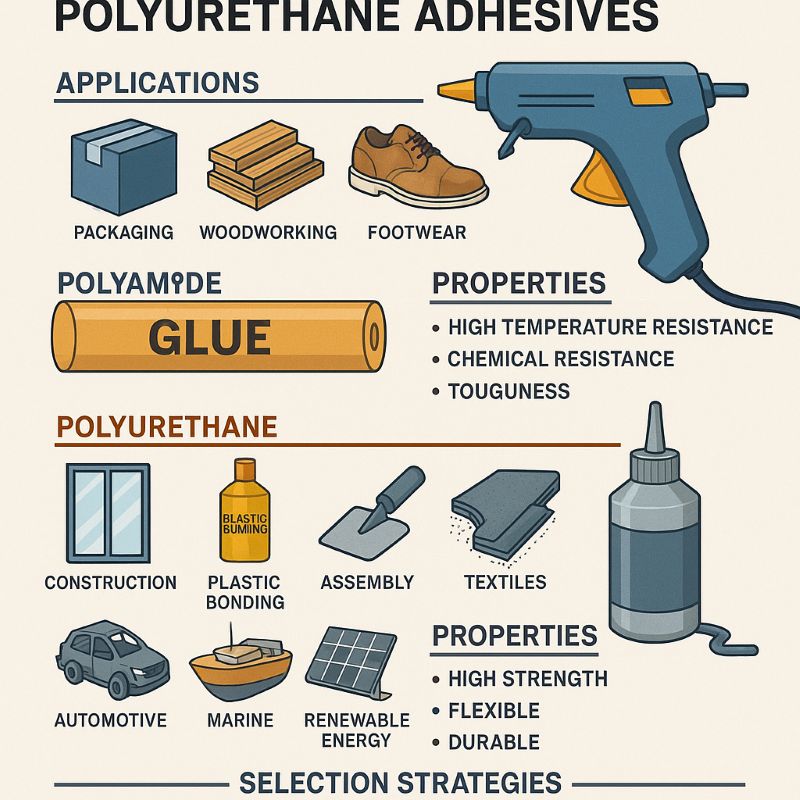
The most common types are based on Ethylene-vinyl acetate (EVA), Polyolefins (PO), and Polyurethanes (PUR). EVA is a versatile, cost-effective option for general-purpose applications like packaging and paper products. Polyolefins offer superior thermal stability and adhesion to difficult-to-bond plastics. Reactive Polyurethanes (PUR) provide the highest performance, curing with ambient moisture to form an exceptionally strong, permanent bond resistant to heat, chemicals, and moisture.
| Adhesive Type | Key Characteristics | Common Applications |
|---|---|---|
| EVA | General purpose, cost-effective, good adhesion to paper & porous materials | Carton sealing, paper converting, crafts |
| Polyolefin | Excellent thermal stability, good adhesion to plastics (PP, PE), clean running | Non-wovens, product assembly, packaging |
| PUR | Very high bond strength, cures with moisture, excellent resistance | Woodworking, automotive, bookbinding |
| Polyamide | High heat resistance, good chemical resistance, strong but flexible | Electronics, filters, automotive assembly |
Special-Purpose Hot Melts: PSA and Fugitive
Beyond standard structural bonding, certain applications require unique adhesive properties. Two important categories that serve these niche needs are Pressure-Sensitive Adhesives (PSA) and Fugitive Adhesives. These are not defined by a single polymer but by their end-use function.
Pressure-Sensitive Adhesives (PSA)
As the name suggests, these hot melts remain permanently tacky after cooling. A bond is formed by applying pressure, without the need for heat or curing. This "evergreen" tackiness makes them ideal for applications where items need to be attached and potentially repositioned. Think of labels, tapes, graphic arts, and the elastic strands in non-woven products like diapers. They provide excellent peel strength and flexibility.
Fugitive Adhesives
Also known as temporary or "gummy" glue, fugitive adhesives are designed to create a temporary, non-damaging bond. The goal is for the bond to hold items together securely for shipping or marketing purposes but allow for clean removal by the end-user. Common examples include credit cards attached to paper mailers, promotional items glued to magazines, or creating pallet stabilization without shrink wrap. They have low tensile strength but good peelability, leaving no residue behind.
When choosing between PSA and Fugitive adhesives, consider the end goal. If the bond needs to be permanent but applied without heat (like a label), choose a PSA. If the bond is intentionally temporary and must be removed cleanly (like a promotional insert), a fugitive adhesive is the correct choice.
Physical Forms and Dispensing Equipment
Hot melt adhesives are manufactured in various physical forms, and the correct choice depends entirely on your application method and dispensing equipment. Using the wrong format can lead to equipment clogs, inconsistent application, and production downtime. It's not just about the chemistry; it's also about the logistics of application.
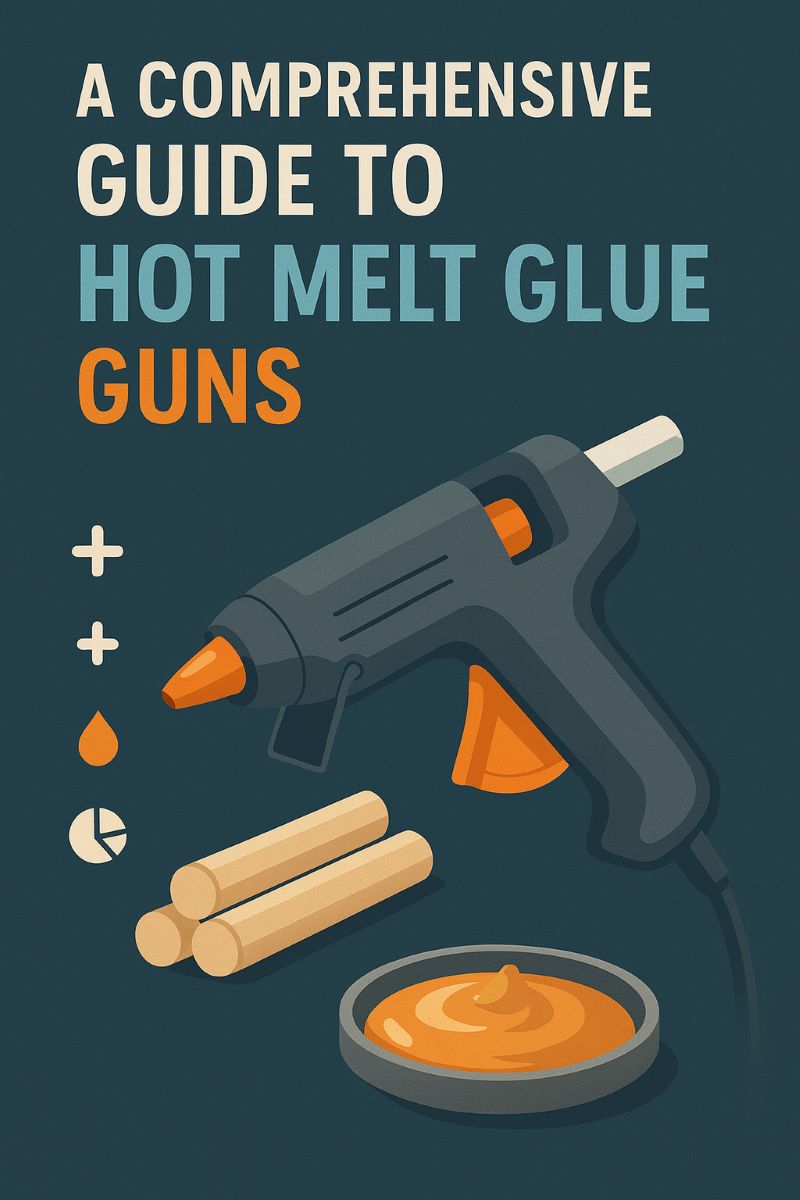
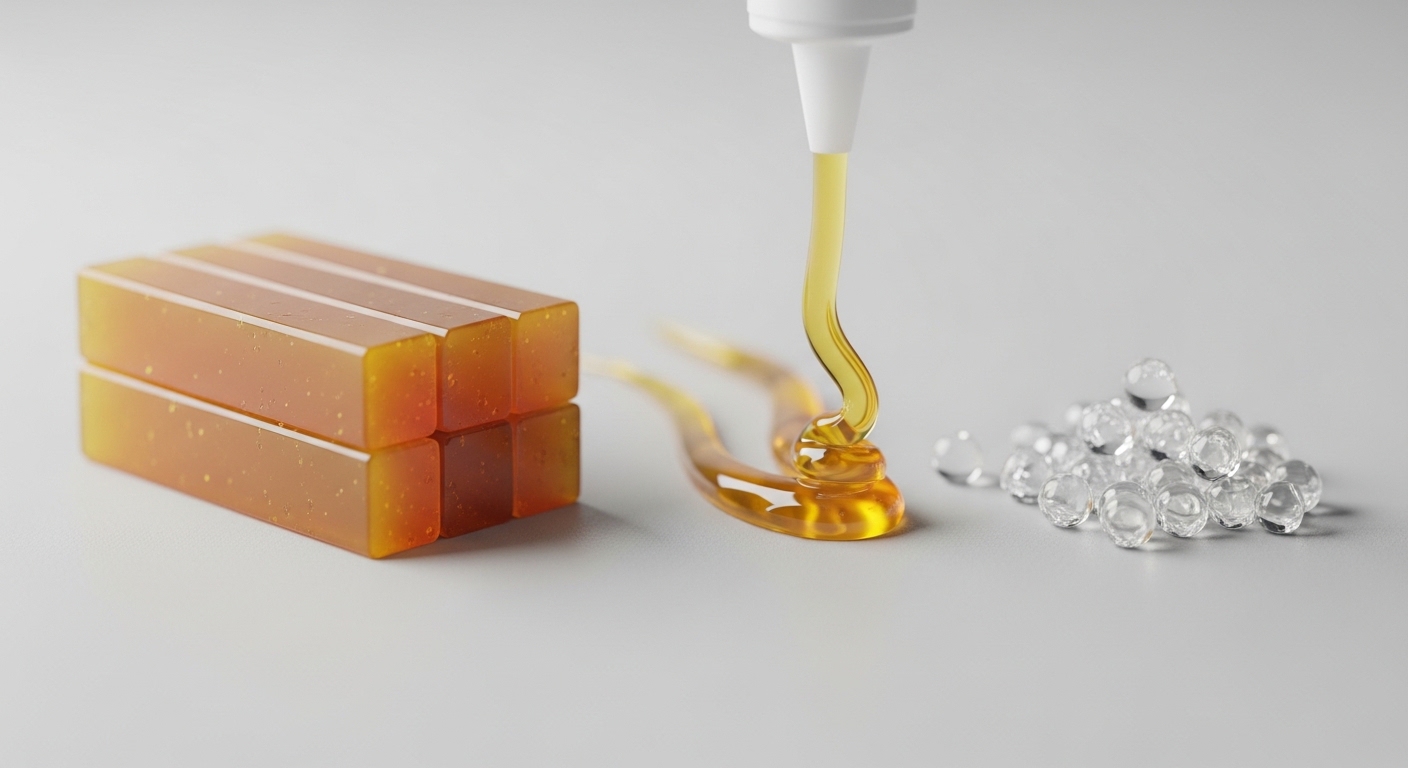
The most common forms are glue sticks and slugs, which are used in manual or semi-automatic handheld glue guns for repairs, prototyping, and low-volume assembly. For automated, high-volume industrial processes, adhesives come in pellets, chips, or pillows. These are melted in large tanks and pumped through hoses to automated applicator heads on production lines, common in packaging and product assembly. Finally, blocks or cartridges are used in specialized bulk dispensing systems that offer precise temperature and flow control for demanding applications in industries like automotive and woodworking.
💡KEY POINT
- Glue Sticks/Slugs: Ideal for manual, low-volume work with handheld glue guns.
- Pellets/Pillows: The standard for high-volume, automated production lines with tank-based systems.
- Blocks/Cartridges: Used in specialized bulk dispensers for applications requiring high precision and output.
Application-Specific Recommendations and Selection Criteria
Selecting the right hot melt adhesive goes beyond matching a polymer to a substrate. A successful bond depends on a holistic evaluation of the entire application environment. The key is to move from general categories to specific performance requirements. Before making a final decision, you must consider the operational stressors and the lifecycle of the bonded product.
For example, in packaging, an EVA might be sufficient for a standard cardboard box, but a product being shipped through variable climates may require a polyolefin-based adhesive with a wider service temperature range to prevent pop-opens. In woodworking, the extreme strength and resistance of a PUR hot melt are often necessary to withstand the stresses placed on furniture joints. For bonding plastics in product assembly, a metallocene polyolefin may be required to achieve a strong bond to low-surface-energy materials like polypropylene. Always ask: what will this bond endure?
| Selection Factor | Key Question to Ask | Why It Matters |
|---|---|---|
| Substrates | What specific materials are being bonded (e.g., paper, PP, wood, metal)? | Determines the required polymer chemistry for proper surface wetting and adhesion. |
| Service Temperature | What is the maximum and minimum temperature the final product will be exposed to? | Ensures the bond remains stable and does not fail in extreme heat or cold. |
| Open/Set Time | How much time is needed for positioning before the bond sets? | Critical for aligning parts correctly in manual or complex automated assembly. |
| Application Method | Will it be applied with a manual gun or an automated system? | Dictates the required physical form (stick, pellet, etc.) and viscosity of the adhesive. |