



Table of Contents
- What Sets High-Performance Hot Melts Apart?
- Key Industries Leveraging Hot Melt Solutions
- Essential Properties for Harsh Environments
- Matching Materials and Adhesive Performance
- Innovations and Future-Forward Applications
In modern manufacturing, the difference between a successful product and a failure can come down to a single, often invisible, component: the adhesive. Consider an electric vehicle battery assembly that must endure constant vibration and extreme temperature shifts, or a medical device requiring a biocompatible bond that holds true under sterilization. For these critical applications in 2026, standard adhesives are no longer sufficient. This is the domain of high-performance hot melt adhesives, engineered solutions designed to provide structural integrity and unwavering reliability where conventional options would falter. They represent a pivotal technology enabling innovation across the most demanding industrial sectors.
What Sets High-Performance Hot Melts Apart?
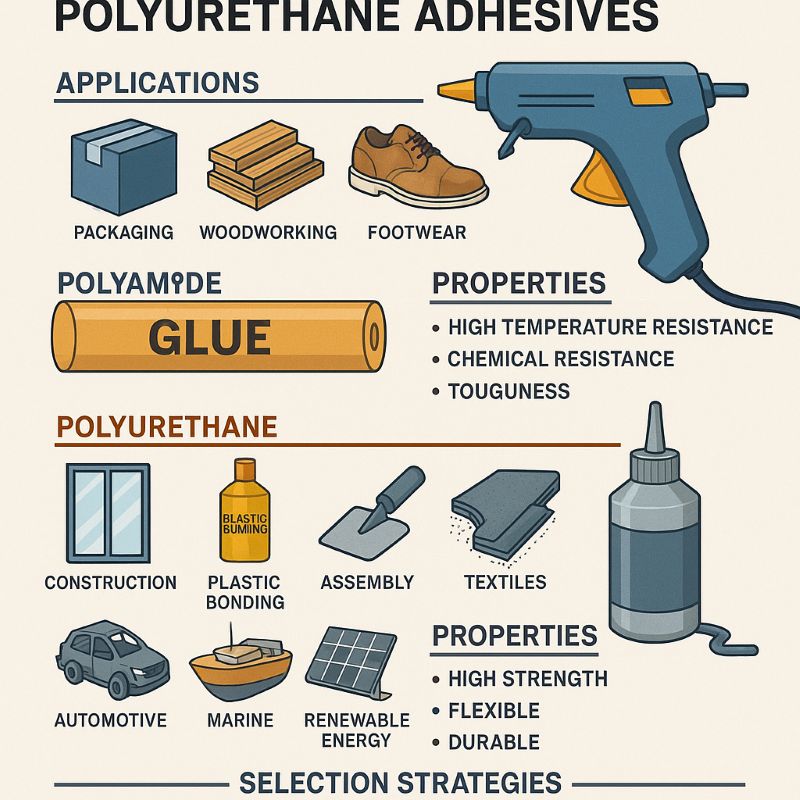
The term "hot melt" might evoke images of simple craft glue sticks, but high-performance variants are in a completely different league. Unlike standard adhesives, which are often based on Ethylene-vinyl acetate (EVA), high-performance hot melt adhesives are formulated from advanced polymers such as polyamide, polyester, and reactive polyurethane (PUR). This fundamental difference in chemistry is what gives them their superior capabilities.
These advanced formulations are engineered to deliver exceptional performance under stress. They create bonds that are not only stronger but also significantly more durable. The key distinction lies in their resistance to factors that typically cause adhesive failure. This includes extreme temperatures, both high and low, exposure to chemicals and moisture, and constant mechanical stress like vibration or impact. While a standard glue might become brittle in the cold or soften in the heat, a high-performance hot melt maintains its structural integrity, ensuring a reliable, long-lasting bond on even the most challenging substrates like metals, composites, and low-energy surface plastics.
| Feature | Standard Hot Melt (e.g., EVA) | High-Performance Hot Melt |
|---|---|---|
| Temperature Resistance | Low to Moderate | High (withstands extreme heat/cold) |
| Bond Strength | Good for general use | Superior, structural-grade bonding |
| Substrate Compatibility | Porous materials (paper, fabric) | Difficult surfaces (metals, plastics, composites) |
| Durability | Limited | Excellent resistance to chemicals, moisture, and stress |
Key Industries Leveraging Hot Melt Solutions
The adoption of high-performance hot melts is not a niche trend but a widespread necessity across several key industries. In 2026, these advanced adhesives are critical for manufacturing products that are safer, more durable, and more efficient. Each sector leverages their unique properties to overcome specific production challenges.
In the automotive industry, these adhesives are essential for everything from assembling interior components and headliners to securing battery modules in electric vehicles. The bonds must withstand a lifetime of vibration and a wide spectrum of temperatures. In electronics, high-performance hot melts are used for potting and encapsulating sensitive components, protecting them from shock, moisture, and thermal stress while providing electrical insulation. For high-end packaging, they ensure that heavy-duty containers and climate-sensitive packages remain sealed throughout demanding supply chains, including deep-freeze conditions. Finally, in the woodworking and furniture sector, they provide strong, invisible structural bonds for edge banding and assembly, enabling sleek designs and long-term durability that consumers demand.
💡KEY POINT
- Automotive: Ensures structural integrity under constant vibration and thermal stress.
- Electronics: Provides critical component protection and secure assembly.
- Packaging: Delivers reliable sealing for demanding and climate-controlled supply chains.
- Woodworking: Creates strong, invisible bonds for high-quality finishes and durability.
Essential Properties for Harsh Environments
The true test of an adhesive is its ability to perform reliably in "extreme" or "harsh" environments. This is where high-performance hot melts demonstrate their most significant advantage. Their formulations are specifically engineered to maintain bond integrity when exposed to conditions that would cause a standard bond to snap or melt away.
Thermal Stability is paramount. These adhesives are designed with a high service temperature range, meaning they won't soften or lose strength when exposed to engine heat, industrial processes, or direct sunlight. Conversely, they resist becoming brittle or cracking in freezing temperatures. Chemical Resistance is another critical property, allowing bonds to hold firm despite exposure to oils, solvents, cleaning agents, and other industrial chemicals. Furthermore, their Mechanical Strength—including high tensile and shear strength—ensures they can withstand physical loads, impacts, and vibrations without failing. This combination of properties makes them indispensable for applications where bond failure is not an option, from aerospace components to outdoor equipment.
When selecting an adhesive for a harsh environment, always review the product's Technical Data Sheet (TDS). Look for specific values like service temperature range, peel strength, and chemical compatibility to ensure it meets your application's precise demands.
Matching Materials and Adhesive Performance
Achieving a successful bond is a matter of chemistry. The most powerful adhesive will fail if it is not compatible with the materials being joined, known as substrates. A core principle in using high-performance hot melt is selecting a formulation that is specifically designed for the substrates in your application. Bonding a metal composite is fundamentally different from bonding a low-surface-energy plastic or a porous wood material.
Different polymer bases offer distinct advantages. For instance, polyamide-based hot melts are renowned for their excellent heat resistance and strong adhesion to metals and engineered plastics. Reactive Polyurethane (PUR) hot melts provide exceptional structural strength and flexibility, making them ideal for applications requiring durability and impact resistance. For notoriously difficult-to-bond plastics like polypropylene, specialized polyolefin-based formulations are necessary to create a lasting connection. The selection process for 2026 manufacturing must be a careful calculation of the substrate, the expected environmental exposure, and the required bond strength to ensure optimal and reliable performance.
| Substrate Type | Recommended High-Performance Type | Key Consideration |
|---|---|---|
| Metals & Composites | Polyamide, Reactive Polyurethane (PUR) | High structural strength, temperature resistance |
| Plastics (Low Surface Energy) | Polyolefin-based | Requires specialized formulation for adhesion |
| Wood & Porous Materials | Polyamide, APAO | Deep penetration for strong, durable bonds |
Innovations and Future-Forward Applications
Looking ahead in 2026, the field of high-performance hot melts continues to evolve, driven by demands for greater sustainability, manufacturing efficiency, and performance in new frontiers. One of the most significant trends is the development of bio-based adhesives, which reduce reliance on fossil fuels without compromising performance. These sustainable options are becoming increasingly crucial for companies focused on circular economy principles.
Innovation is also expanding the application landscape into highly specialized and unexpected areas. Beyond traditional manufacturing, high-performance hot melts are being used in the assembly of high-tech sporting goods. For example, a precise amount of hot melt is added inside golf club heads to fine-tune weight distribution and dampen vibration, directly impacting a player's performance. In archery, it's used to securely bond arrow inserts and points, ensuring safety and accuracy. As automation and advanced assembly processes become standard, the demand for hot melts with precise application characteristics and rapid set times will only continue to grow, solidifying their role as a key enabler of future technology.
⚠️CAUTION
As application demands grow more complex, not all high-performance hot melts are interchangeable. Using an adhesive not specifically formulated for your substrate or environmental conditions can lead to bond failure, compromising product integrity and safety. Always consult with a technical expert for critical applications.