


Table of Contents
- Understanding Hot Melt Adhesive Coating Machines
- 2026 Price Range by Machine Size and Features
- Key Technical Specs That Affect Pricing
- Essential Buying Checklist for 2026
- Budgeting Tips and Total Cost Considerations
In the competitive manufacturing landscape of 2026, efficiency and precision are paramount. The right adhesive application technology can be the difference between a streamlined production line and costly bottlenecks. A hot-melt adhesive coating machine is a significant investment, with prices ranging from a few hundred dollars for a simple manual unit to well over a hundred thousand for a fully automated industrial system. This guide is designed to demystify the market, providing a clear price overview and a practical checklist to help you make an informed purchasing decision that aligns with your specific operational needs and budget.
Understanding Hot Melt Adhesive Coating Machines
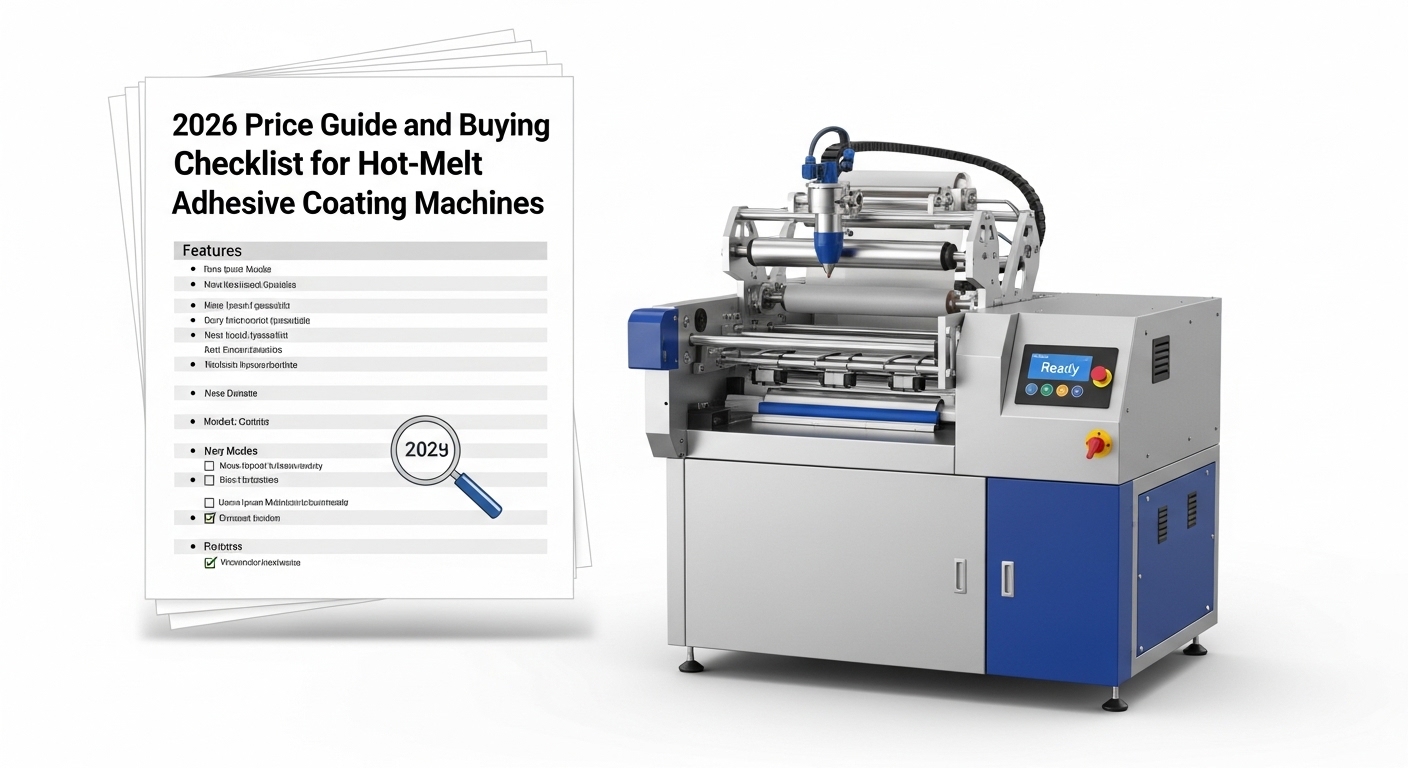
A hot melt adhesive coating machine, also known as a hot melt adhesive applicator, is a piece of industrial equipment designed to melt solid thermoplastic adhesive and apply it as a uniform coating onto a substrate. These machines are integral to numerous industries, including packaging, nonwovens, automotive assembly, and product labeling, where they provide strong, fast-setting bonds. The technology offers a clean, efficient, and solvent-free alternative to other bonding methods.
Fundamentally, these machines can be categorized into three main types based on their level of automation and scale:
- Manual Applicators: These are typically handheld glue guns or small tabletop units used for low-volume production, prototyping, or repair work. They offer flexibility but lack the speed and consistency for large-scale operations.
- Semi-Automatic Systems: Often benchtop models, these machines provide more control and consistency than manual applicators. They are suitable for small to medium-sized enterprises (SMEs) that require repeatable quality for moderate production volumes.
- Fully Automatic Systems: These are integrated into larger production lines and offer the highest levels of speed, precision, and control. They are designed for high-volume, continuous manufacturing and often include advanced features like programmable logic controllers (PLCs) and sophisticated monitoring systems.
💡KEY POINT
- What It Is: A machine that melts and applies thermoplastic adhesive onto a surface.
- Key Applications: Widely used in packaging, textiles, automotive, and electronics for bonding.
- Primary Types: Range from simple manual applicators for small tasks to complex, fully automated systems for mass production.
2026 Price Range by Machine Size and Features
The price of a hot melt adhesive coating machine in 2026 is determined by a combination of its size, automation level, and feature set. The market accommodates a vast spectrum of needs, from small-scale workshops to large industrial factories, resulting in a correspondingly wide price range. Understanding these tiers is the first step toward creating a realistic budget. A simple tabletop unit might cost a few hundred dollars, whereas a comprehensive industrial production line can easily exceed $100,000.
To provide a clearer picture, we can segment the market into three general categories. It is important to note that these figures are estimates and can vary based on the manufacturer, region, and specific customizations.
| Machine Category | Estimated 2026 Price Range (USD) | Typical Use Case |
|---|---|---|
| Entry-Level / Benchtop | $800 – $8,000 | Prototyping, small-batch production, R&D labs. |
| Mid-Range / Semi-Automatic | $15,000 – $50,000 | SME factories, moderate production volumes, dedicated product lines. |
| Industrial / Fully Automatic | $75,000 – $300,000+ | Large-scale manufacturing, high-speed production lines, 24/7 operations. |
The significant price jumps between these categories reflect increases in production capacity, precision, durability, and automation. An entry-level machine may be perfect for a startup, but a growing business will need to invest in a more robust system to meet demand and maintain quality standards.
Key Technical Specs That Affect Pricing
While machine size and automation level set the general price bracket, specific technical specifications are the primary drivers of cost within each category. When you request a quote, the supplier will ask for detailed requirements, as each feature adds to the engineering complexity and material cost of the hot melt coating machine. Understanding these factors will help you prioritize what is essential for your application versus what is a "nice-to-have" feature.
Key price-determining specifications include:
- Coating Width: This is one of the most significant cost factors. A wider coating head requires more sophisticated engineering to ensure even heat distribution and uniform adhesive application, directly increasing the machine's price.
- Production Speed: Machines designed for higher line speeds need more powerful motors, faster heating elements, and more robust components to handle the increased throughput, all of which contribute to a higher cost.
- Coating Technology: The type of applicator head—such as a slot die, spray nozzle, or roller—greatly influences price. Slot die systems, for example, offer high precision but are typically more expensive than standard spray or bead applicators.
- Automation and Control Systems: The level of control impacts the final price. Basic machines may have simple analog controls, while advanced systems feature PLCs, touch-screen interfaces, and real-time monitoring, which add significant value and cost.
- Specialized Features: Customizations like pattern controllers, automatic adhesive feeding systems, or compatibility with reactive adhesives (PUR) will increase the initial investment.
Before requesting quotes, create a detailed list of your non-negotiable specifications. Include your substrate material, required coating weight (in grams per square meter), and target line speed. Providing this information upfront ensures you receive accurate and directly comparable proposals from different suppliers.
Essential Buying Checklist for 2026
Navigating the procurement process for a hot melt adhesive applicator requires a systematic approach. A checklist ensures you cover all critical aspects, from defining your needs to planning for long-term operation. Using a structured evaluation process helps prevent overlooking crucial details and ensures the machine you select is a perfect fit for your production environment. This checklist is designed to guide you through the key stages of the purchasing journey.
| Phase | Key Considerations | Action Item |
|---|---|---|
| 1. Requirement Definition | Application, substrate, adhesive type, production volume, line speed. | Document your complete process requirements and desired outcomes. |
| 2. Technical Specification | Coating width, accuracy tolerance, heating capacity, control system. | Create a detailed technical specification sheet for potential suppliers. |
| 3. Vendor Evaluation | Reputation, technical support, spare parts availability, training options. | Research and shortlist at least three reputable suppliers for comparison. |
| 4. Long-Term Planning | Installation requirements, maintenance schedule, operator training. | Discuss post-purchase support and training programs with each vendor. |
Following this checklist will empower you to engage with suppliers from a position of knowledge. It transforms the conversation from a simple price inquiry into a detailed discussion about value, performance, and long-term partnership, ultimately leading to a more successful investment.
Budgeting Tips and Total Cost Considerations
A smart investment in a hot melt adhesive coating machine goes beyond the initial purchase price. To create an accurate and realistic budget, you must consider the Total Cost of Ownership (TCO). TCO includes all direct and indirect costs associated with the machine over its entire lifecycle. Overlooking these ongoing expenses can lead to unexpected financial strain and disrupt your return on investment (ROI) calculations. A comprehensive budget prepares your organization for the machine's operational reality.
Key components of TCO to include in your budget are:
- Initial Purchase Price: The upfront cost of the machine, including any necessary customizations or accessories.
- Installation and Integration: Costs associated with site preparation, electrical work, and integrating the machine into your existing production line.
- Ongoing Maintenance: Budget for routine maintenance, including labor and a preventative maintenance kit. Well-maintained equipment has a longer lifespan and fewer unexpected breakdowns.
- Spare Parts: All machines have wearable components (e.g., nozzles, filters, seals). Inquire about the cost and lead time for critical spare parts and consider keeping a small inventory on-site.
- Operational Costs: This includes the energy required to run the machine and the cost of the hot melt adhesive itself. An efficient machine can lead to significant long-term savings in both areas.
💡KEY POINT
- Look Beyond the Sticker Price: The initial purchase is only one part of the total investment.
- Factor in Ongoing Expenses: Include maintenance, spare parts, and operational costs (energy, adhesive) in your budget.
- Calculate Total Cost of Ownership (TCO): A comprehensive TCO analysis provides a more accurate picture of the machine's long-term financial impact.