


Table of Contents
- Oxidation Risks
- Preserving Quality
- Chemical Mechanisms
- Selection Strategies
- Industry Solutions
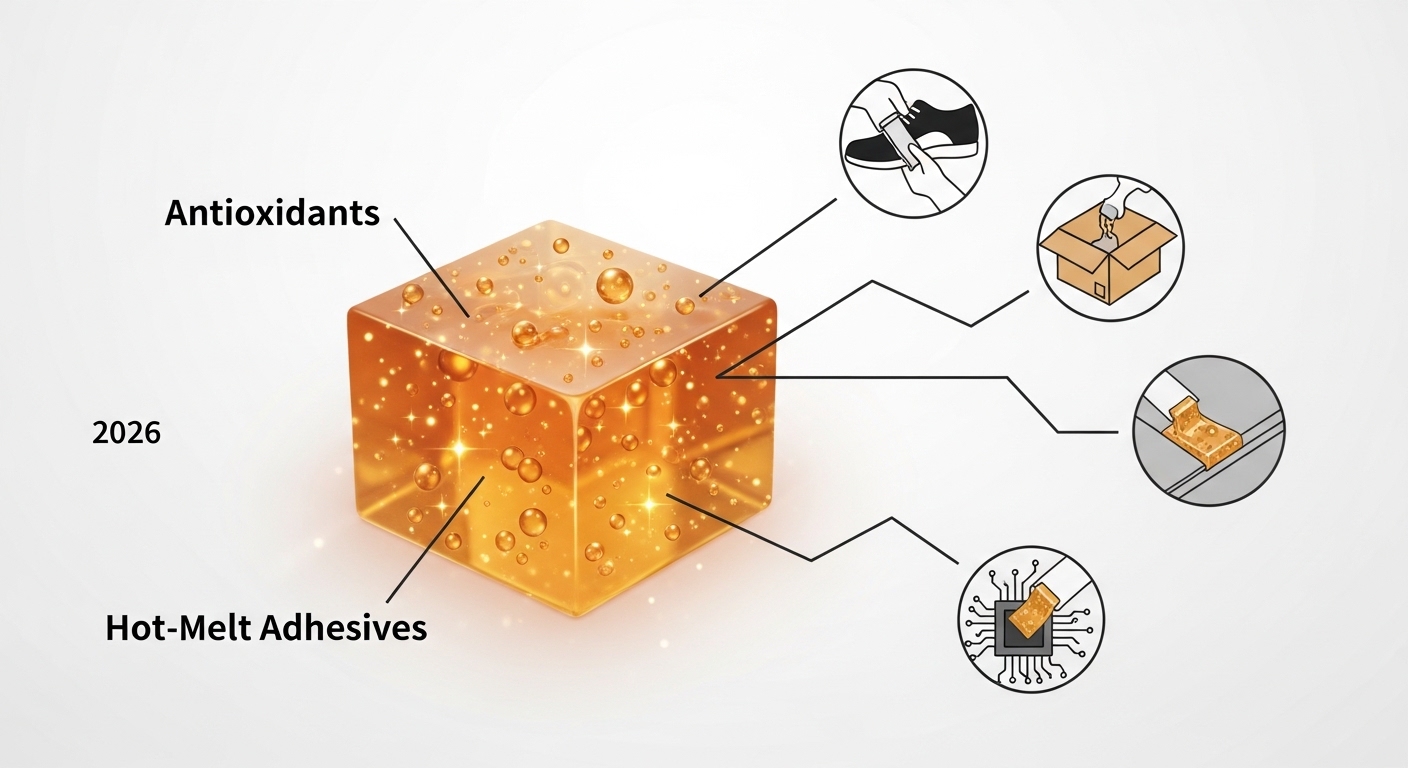
As manufacturing standards evolve in 2026, maintaining the structural integrity of bonding materials under extreme conditions is a critical priority. Heat acts as both a fundamental necessity and a primary adversary in adhesive applications. When exposed to elevated temperatures during processing, these materials become highly susceptible to thermal degradation. Implementing a highly effective hot-melt adhesive antioxidant is not merely an option but a structural requirement to prevent polymer breakdown. Understanding this dynamic provides engineers and quality control professionals with the foundation needed to optimize production efficiency and ensure long-term reliability.
Oxidation Risks ⚠️
The application of bonding materials inherently requires high temperatures, which initiates rapid thermal oxidation. This chemical reaction breaks down the base polymers, fundamentally altering the physical and mechanical properties of the formulation. Without adequate protection, the material undergoes severe thermal degradation, leading to immediate production flaws and long-term failure. The primary goal of a hot-melt adhesive antioxidant is to interrupt this destructive cycle before it compromises the structural integrity of the final product.
- High-temperature processing inevitably triggers thermal oxidation in base polymers.
- Unchecked oxidation causes severe thermal degradation and physical property loss.
- Formulating with appropriate antioxidants prevents structural breakdown.
Preserving Quality 🛡️
One of the most visible impacts of thermal degradation is the alteration of fluid dynamics and visual appearance. Maintaining viscosity stability is crucial for consistent application and optimal machine performance. When oxidation occurs, the material may either cross-link, causing it to thicken, or undergo chain scission, resulting in excessive thinning. Furthermore, aesthetic preservation is essential, as oxidation frequently causes unwanted discoloration or yellowing. Incorporating specific adhesive additives prevents these quality deviations, ensuring the product performs consistently from the melting tank to the final substrate.
| Defect Type | Manufacturing Consequence | Prevention Focus |
|---|---|---|
| Viscosity Shifts | Inconsistent application rates | Polymer chain stabilization |
| Discoloration | Poor aesthetic finish | Oxidation inhibition |
| Brittleness | Reduced mechanical strength | Flexibility retention |
Chemical Mechanisms 🔬
The fundamental science behind preventing degradation relies on free radical scavenging. When heat generates free radicals within the polymer matrix, these unstable molecules attack healthy polymer chains. Primary antioxidants function by neutralizing these radicals immediately upon formation. To maximize efficacy, engineers employ a synergistic protective effect by combining primary and secondary agents. Secondary antioxidants decompose hydroperoxides, which are byproducts of the initial oxidation phase. This dual-action mechanism ensures comprehensive protection throughout the entire heating cycle.
Combine primary hindered phenols with secondary phosphites to achieve the most stable formulation and prevent premature polymer degradation during prolonged heating.
Selection Strategies 📊
Choosing the correct protection strategy requires a systematic evaluation of the manufacturing environment and the base polymer chemistry. Different formulations experience varying levels of oxidative stress depending on their specific application temperatures and exposure durations. Quality control professionals must align the antioxidant profile with the exact thermal demands of the processing equipment. Selecting optimal adhesive additives involves analyzing the specific melt temperature, the expected duration in the melting tank, and the chemical composition of the primary resin.
| Selection Criteria | Engineering Consideration | Operational Impact |
|---|---|---|
| Melt Temperature | Peak heat exposure levels | Determines volatility limits |
| Base Chemistry | Resin compatibility | Ensures uniform dispersion |
| Tank Duration | Time under thermal stress | Dictates required concentration |
Industry Solutions 🏭
In actual production environments, unchecked thermal stress leads to severe operational bottlenecks. Common on-site challenges include the formation of skinning on the surface of the melt and charring within the equipment hoses. These issues severely reduce the operational pot life of the material and increase machine downtime for maintenance. By integrating a precisely calibrated hot-melt adhesive antioxidant package, manufacturers effectively eliminate skinning and charring. This strategic implementation directly translates to uninterrupted production lines, reduced maintenance intervals, and significantly improved manufacturing efficiency across all operational phases in 2026.
Regularly monitor the melt tank for early signs of skinning or charring, as these are primary indicators that the current antioxidant concentration requires immediate adjustment.