


Table of Contents
- Understanding Removers
- Key Removal Factors
- Step-by-Step Guide
- Challenging Surfaces
- Common Pitfalls
In 2026, the global manufacturing and DIY sectors are utilizing thermal adhesives more than ever, but a persistent challenge remains: removing them without a trace. Did you know that improper extraction techniques cause permanent surface damage in a significant number of industrial repair cases? Whether you are a construction professional or a weekend enthusiast, mastering the use of a hot melt adhesive remover is absolutely essential. The secret lies not just in the chemical itself, but in understanding the specific surface materials and applying the correct methodology to ensure a flawless finish.
Understanding Removers 🧪
A hot melt adhesive remover is a specialized chemical solution designed specifically to break down the tough polymer bonds of thermal glues. Unlike general-purpose cleaners, these formulas penetrate the hardened resin directly, softening it for safe and efficient extraction. In 2026, the industry has seen a shift toward advanced solutions formulated to minimize volatile organic compounds while maintaining high operational efficacy. These modern liquids act rapidly to separate the adhesive layer from the base substrate. Understanding the chemical interaction is the first step toward achieving a clean surface without compromising the integrity of your materials.
- Breaks down tough polymer bonds efficiently
- Softens hardened thermal glues for easy lifting
- Minimizes potential surface damage risks
Key Removal Factors 📊
The overall success rate of any hot melt adhesive remover heavily depends on the underlying material and environmental conditions. Non-absorbent surfaces allow the solvent to pool effectively and dissolve the glue completely. Conversely, porous materials absorb both the glue and the solvent, making absolute extraction highly difficult. Furthermore, adhesive age plays a crucial role; older glues become highly brittle and require significantly longer exposure to the solvent. Recognizing these variables ensures realistic expectations and guides the professional in selecting the appropriate supplementary tools for the task at hand.
| Surface Type | Removal Expectancy | Key Characteristic |
|---|---|---|
| Glass & Metal | Nearly complete removal | Non-absorbent and smooth |
| Wood & Fabric | Partial residue likely | Porous and highly absorbent |
| Painted Plastic | Variable outcomes | Prone to chemical discoloration |
Step-by-Step Guide 🛠️
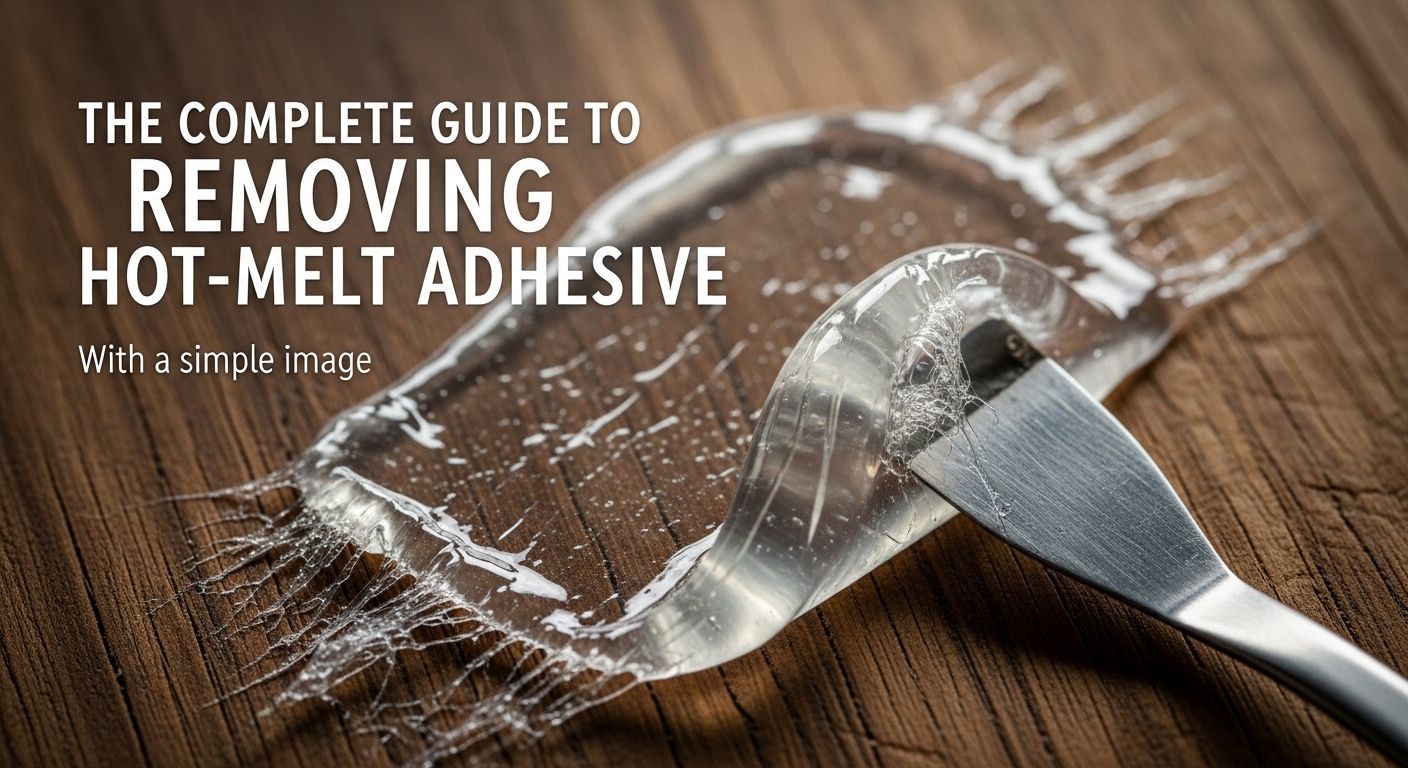
Achieving optimal results requires a highly systematic approach. First, apply the hot melt adhesive remover generously over the target area. Allow it sufficient dwell time—usually a few minutes—to properly penetrate and weaken the hardened resin. Next, gently scrape the softened material using a dedicated tool to prevent scratching the substrate. Finally, wipe the entire area with isopropyl alcohol to clear away any lingering oily residue left by the chemical reaction. Following these exact steps significantly reduces the risk of structural damage while maximizing the cleaning efficiency.
Always use a plastic scraper instead of metal tools to gently lift the softened glue without scratching or gouging the delicate substrate.
Challenging Surfaces 🪵
When dealing with porous materials like untreated wood, paper, or fabric, your operational expectations must be carefully managed. A hot melt adhesive remover might not achieve absolute perfection on these substrates because the liquid glue seeps deeply into the microscopic fibers during initial application. In these challenging scenarios, industry professionals often combine chemical solvents with alternative physical techniques to maximize extraction. Methods such as controlled thermal application or rapid freezing can alter the physical state of the glue, making it easier to extract without destroying the fragile base material.
| Method | Application Focus | Primary Precaution |
|---|---|---|
| Chemical Solvent | Direct surface application | Check for material color fading |
| Thermal Heating | Softening old hardened glue | Avoid burning sensitive materials |
| Rapid Cooling | Making the glue brittle | Use safe specialized freezing sprays |
Common Pitfalls 🚫
The most frequent mistake observed in the field is applying excessive mechanical force before the hot melt adhesive remover has fully activated. This impatience directly leads to permanent surface scarring and structural degradation. Additionally, failing to perform a preliminary patch test on painted or synthetic surfaces can result in severe chemical burns or melting. Always clean the final surface with soapy water or pure ethanol to neutralize any active chemical remnants. Proper post-treatment ensures the material remains structurally sound and visually pristine for future applications.
Never skip the patch test on painted or synthetic surfaces, as highly concentrated chemical solvents can cause irreversible discoloration or structural melting.