


Table of Contents
- What Makes Hot-Melt Adhesive Polymers Unique?
- Types of Polymers Used in Hot-Melt Adhesives
- How Polymer Characteristics Shape Adhesive Performance
- Choosing the Right Polymer for Your Application
- Recent Innovations and Future Trends in Hot-Melt Polymers
In 2026, the demand for precise and durable bonding solutions drives manufacturing advancements. At the center of this industrial operation lies the hot-melt adhesive polymer. Rather than acting as a simple additive, this primary component dictates the structural integrity and functionality of the entire system. Understanding how these chemical structures operate allows engineers to optimize bonding strength and design custom formulations for specific environmental conditions.
What Makes Hot-Melt Adhesive Polymers Unique? 🧬
A hot-melt adhesive polymer functions as the structural backbone of any bonding formulation. It delivers the essential cohesive strength required to maintain physical stability under stress. Industry analysis confirms that the polymer dictates the overall personality of the bond, distinguishing a rigid seal from a flexible joint. Without this central foundation, other ingredients fail to form a stable matrix. The molecular structure directly establishes the baseline mechanical performance of the final product.
- Structural Backbone: Provides the primary cohesive strength for the adhesive.
- Bond Personality: Defines the fundamental physical traits such as flexibility.
- Performance Core: Anchors all secondary ingredients within the formulation.
Types of Polymers Used in Hot-Melt Adhesives 🧪
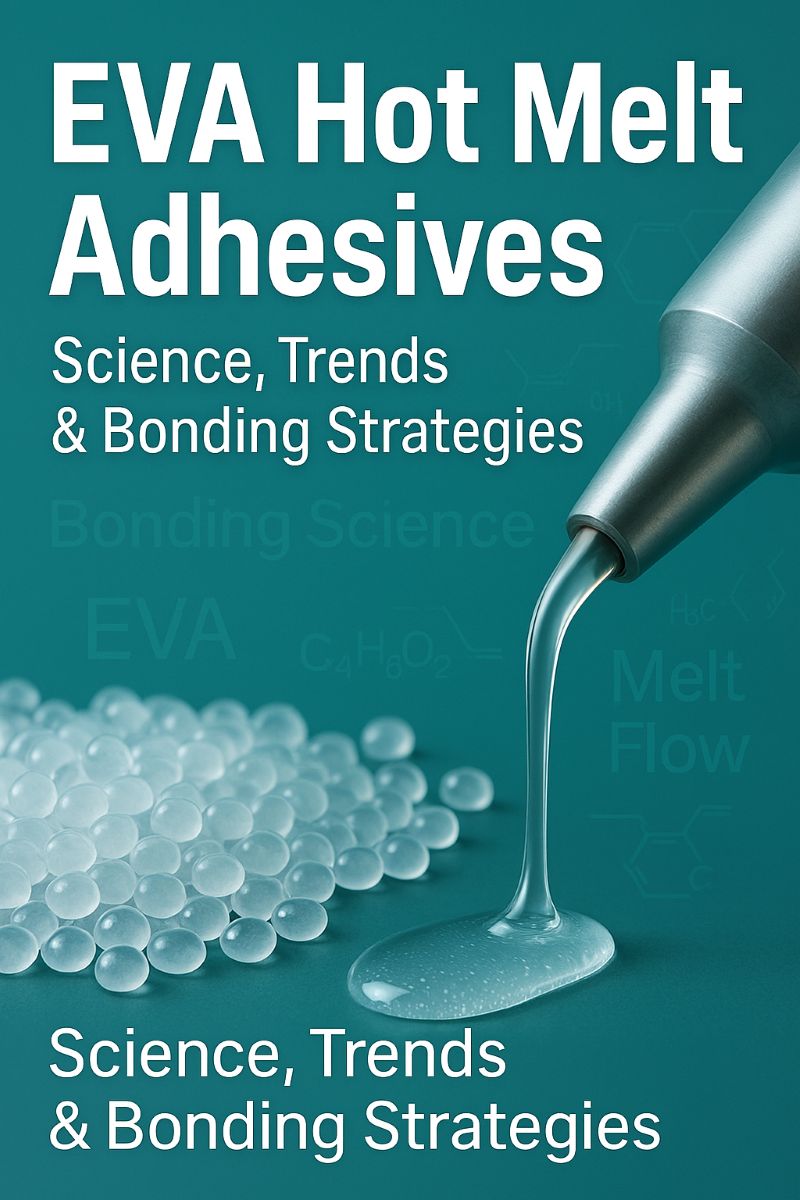
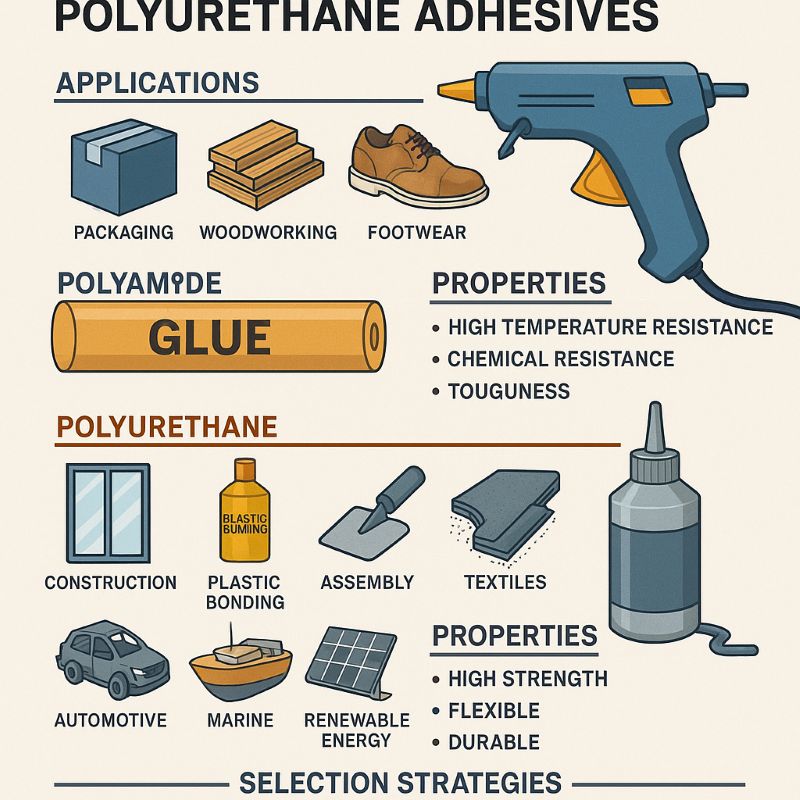
Manufacturers rely on several distinct polymer frameworks to achieve targeted mechanical properties. Ethylene-vinyl acetate remains the standard for general applications due to its reliable adhesion. Styrenic block copolymers offer high elasticity for pressure-sensitive products. Polyamides and polyolefins provide specialized resistance for demanding industrial environments. Selecting the correct hot-melt adhesive polymer ensures the formulation meets specific operational requirements.
| Polymer Type | Key Characteristic | Typical Use Case |
|---|---|---|
| EVA | Balances adhesion and flexibility | Packaging and paper binding |
| SBC | High tackiness and elasticity | Pressure-sensitive materials |
| PA | High thermal resistance | Automotive and woodworking |
| PO | Superior chemical resistance | Industrial product assembly |
How Polymer Characteristics Shape Adhesive Performance ⚙️
The internal chemistry of the hot-melt adhesive polymer determines multiple performance metrics simultaneously. These polymers interact with resins, waxes, and additives to balance tackiness, open time, and flexibility. The specific type and molecular weight influence the melting point and internal viscosity. Higher molecular weight increases internal toughness but requires higher application temperatures. This interaction controls how the adhesive flows during application and solidifies upon cooling.
Adjusting the molecular weight of your hot-melt adhesive polymer alters the viscosity, enabling precise control over flow rates and application speeds.
Choosing the Right Polymer for Your Application 🎯
Selecting the optimal material requires matching the polymer properties to the specific end-use environment. Engineers evaluate temperature fluctuations, chemical exposure, and mechanical stress before finalizing a formulation. A mismatch in the hot-melt adhesive polymer compromises the cohesive strength and leads to premature bonding failure. Proper selection ensures the final product maintains its structural integrity throughout its intended lifecycle.
| Application Requirement | Recommended Polymer | Key Selection Factor |
|---|---|---|
| High Temperature | PA (Polyamides) | Thermal stability |
| High Elasticity | SBC (Styrenic Block Copolymers) | Flexibility and elongation |
| Chemical Exposure | PO (Polyolefins) | Barrier properties |
Recent Innovations and Future Trends in Hot-Melt Polymers 🚀
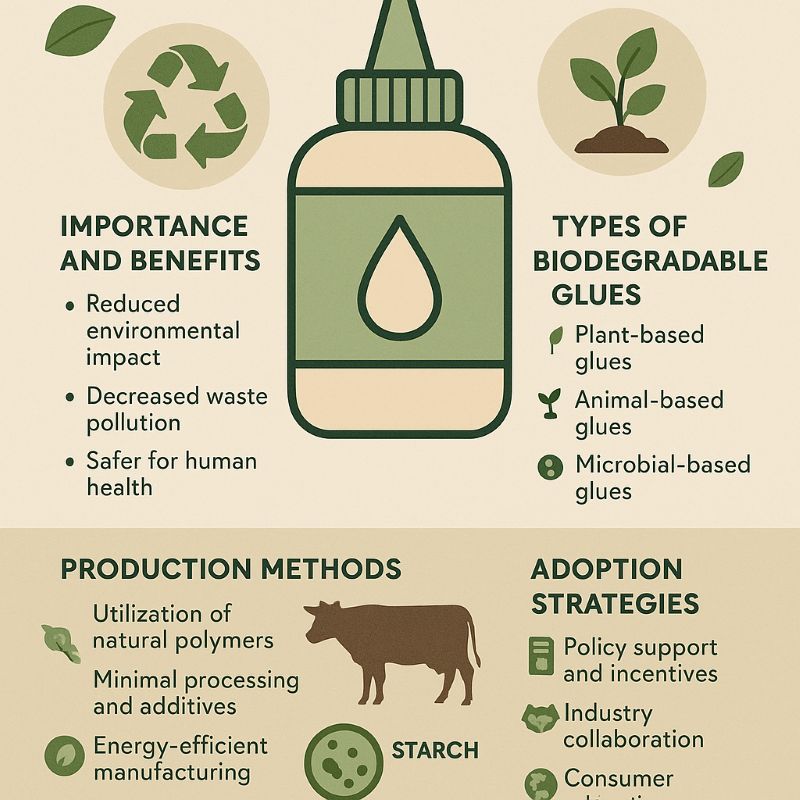
As of 2026, industrial formulations increasingly incorporate sustainable and bio-based materials. Modern engineering aims to maintain cohesive strength while reducing reliance on traditional petrochemical sources. The hot-melt adhesive polymer remains the central axis for these material innovations. Recognizing that the polymer is not merely an additive but the core determinant of performance allows developers to increase application success rates. Understanding these properties enables targeted quality improvements in custom adhesive design.
When integrating new bio-based hot-melt adhesive polymer alternatives, verify compatibility with existing resins to prevent phase separation during the melting process.