


Table of Contents
- Unique Characteristics
- Shaping Adhesive Strength
- Flexibility and Heat Resistance
- Interaction with Additives
- Optimizing Formulations
Did you know that the reliability of modern manufacturing processes often depends on a single microscopic structure? In 2026, industries ranging from automotive assembly to advanced packaging rely heavily on optimized bonding solutions. At the core of these systems lies the hot-melt adhesive polymer, an essential component that does much more than simply stick things together. It dictates the structural integrity, mechanical performance, and overall personality of the bond. Understanding how these polymers function is absolutely critical for formulators and engineers who aim to design superior adhesive products.
Unique Characteristics 🧪
Hot-melt adhesives stand out in the industrial sector because they do not rely on water or solvents to function. Instead, they transition between solid and liquid states based on temperature changes. The hot-melt adhesive polymer serves as the primary structural backbone of the entire operation. It provides the essential internal cohesion required to maintain a durable bond over time. Without this central element, the adhesive would lack the physical properties necessary to withstand mechanical stress. The polymer essentially defines the baseline capabilities of the formulation, dictating how it behaves during application and after it sets.
| Feature | Description | Impact on Performance |
|---|---|---|
| Structural Backbone | Provides necessary internal cohesion | Determines overall bond integrity |
| Thermoplastic Nature | Melts with heat and solidifies upon cooling | Enables rapid setting times |
| Solvent-Free | Contains no volatile organic compounds | Improves environmental safety |
Shaping Adhesive Strength 💪
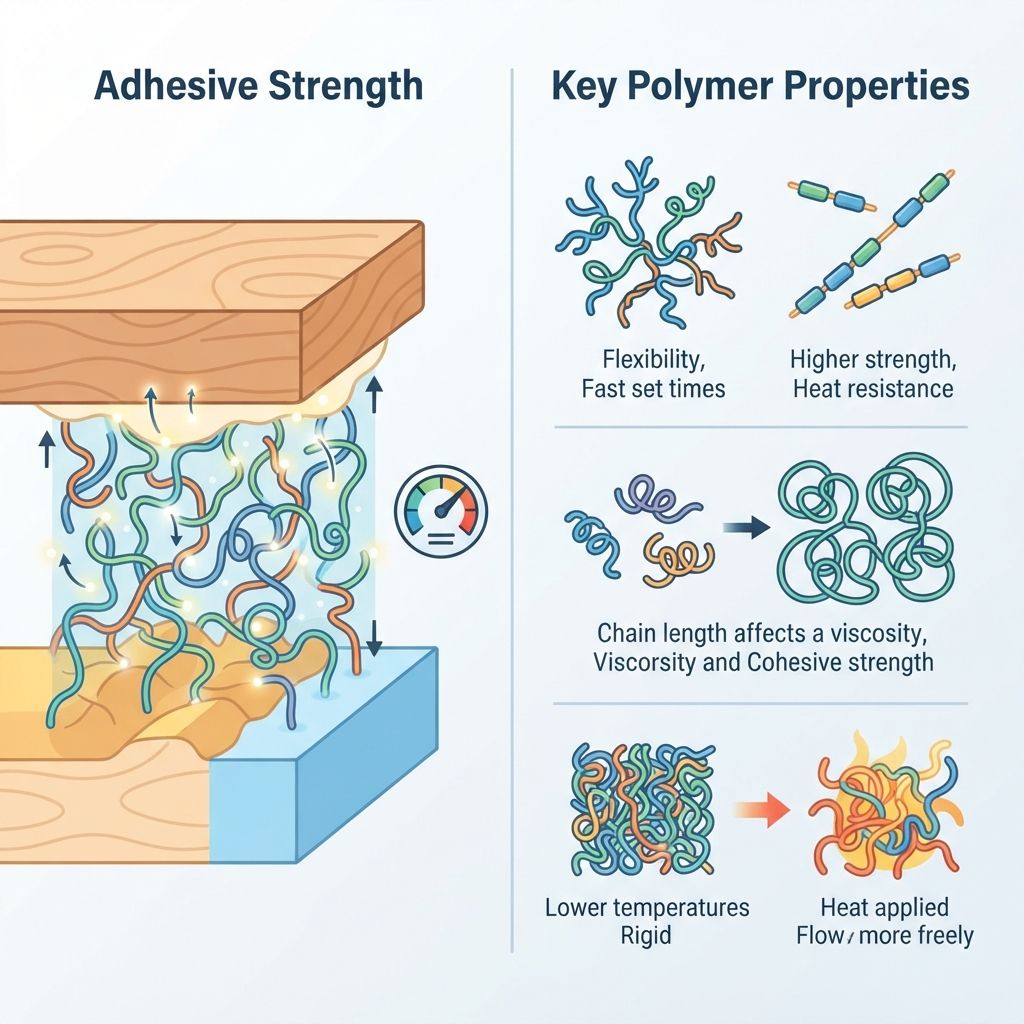
The primary responsibility of the polymer within a formulation is to establish internal cohesive strength. Cohesion ensures that the adhesive layer remains intact and does not fracture under applied loads. The molecular weight and specific chemical structure of the chosen polymer directly influence this strength. High molecular weight polymers typically offer superior cohesive properties, making them ideal for high-stress applications. Conversely, lower molecular weight variations might be selected when lower viscosity and faster application speeds are prioritized. Selecting the appropriate polymer structure is the first step in ensuring the adhesive can handle the physical demands of its intended use.
Focus on selecting polymers with a high molecular weight when formulating adhesives for load-bearing applications. This ensures the internal structure remains robust under continuous stress.
Flexibility and Heat Resistance 🌡️
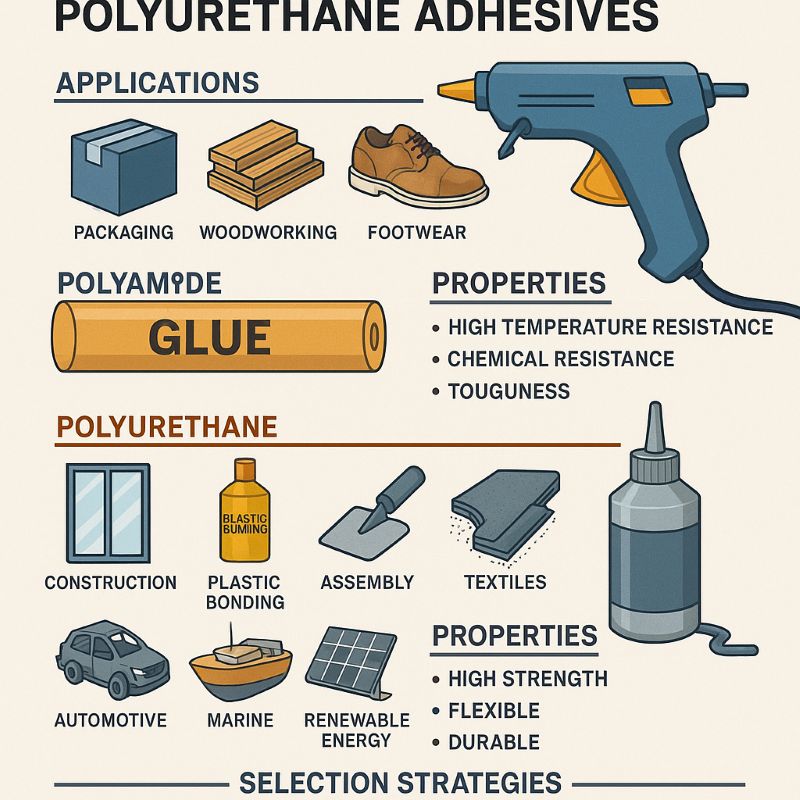
Beyond establishing basic strength, the polymer determines how the adhesive responds to environmental fluctuations. Different polymer families offer distinct levels of elasticity and thermal stability. For example, Ethylene Vinyl Acetate (EVA) provides standard flexibility suitable for general packaging. In contrast, Polyamides (PA) deliver exceptional high-temperature resistance, making them indispensable for automotive components. Polyolefins (PO) offer excellent chemical resistance. By carefully selecting the polymer type, engineers can guarantee that the adhesive performance remains stable even when exposed to extreme temperatures or physical deformation.
| Polymer Type | Key Characteristic | Typical Use Case |
|---|---|---|
| EVA | Standard flexibility and adhesion | General packaging and paper |
| Polyamides (PA) | High thermal stability | Automotive and electronics |
| Polyolefins (PO) | Excellent chemical resistance | Non-woven product assembly |
Interaction with Additives 🔗
A high-performing adhesive is never composed of a polymer alone; it requires a carefully balanced mixture of several components. Polymers must interact seamlessly with tackifying resins, waxes, and antioxidants. The polymer establishes the melting point and baseline viscosity. Resins are then added to enhance surface tackiness and improve adhesion to specific substrates. Waxes are incorporated to control the setting speed and adjust the open time. Understanding this complex synergy allows formulators to balance tackiness, open time, and flexibility. The component compatibility ultimately determines the consistency and reliability of the final product.
- The hot-melt adhesive polymer sets the core viscosity and melting characteristics.
- Tackifying resins enhance surface adhesion and initial grab.
- Waxes control the cooling rate and adjust the open time.
- Precise balance among these elements ensures optimal mechanical performance.
Optimizing Formulations ⚙️
Designing custom adhesives demands a comprehensive understanding of polymer behavior and material science. By analyzing the precise requirements of an application, formulators can modify the polymer base to achieve highly specific outcomes. Adjusting the polymer type, concentration, and molecular weight allows for targeted improvements in bond longevity and environmental resistance. This level of optimization ensures that the adhesive not only meets but exceeds operational expectations. Mastering the selection and manipulation of the adhesive backbone leads to highly efficient and specialized industrial solutions.
Always conduct thorough testing of polymer compatibility with the actual substrate materials before finalizing any formulation. Surface energy variations can drastically alter bonding efficiency.