


Table of Contents
- The Chemical Landscape of Hot Melt Removers
- Identifying Potential Hazards
- Essential Safety Gear and Practices
- Decoding the MSDS: A User's Guide
- Safer Alternatives for Adhesive Removal
The satisfaction of a completed project can quickly fade when you're left with stubborn, hardened hot melt adhesive residue. While a chemical hot melt adhesive remover seems like a quick fix, have you ever paused to consider what's inside that bottle? As of 2026, the market offers a wide array of formulas, but their safety profiles are not created equal. This guide will empower you to choose and use these products wisely, ensuring your safety is the top priority.
The Chemical Landscape of Hot Melt Removers 🧪
Understanding what you are working with is the first step toward safety. Hot melt adhesive removers are not a one-size-fits-all solution; their effectiveness and potential risks are dictated by their core chemical components. The safety of a hot melt remover is fundamentally tied to its ingredients, which generally fall into two categories: solvent-based and citrus-based.
Solvent-based removers often contain powerful organic compounds designed to dissolve adhesives quickly. While highly effective, they can also be more aggressive, potentially emitting strong fumes and requiring careful handling. In contrast, many newer formulas are citrus-based, utilizing natural oils like d-Limonene. These are often perceived as safer due to lower volatility and less harsh odors, but they can still cause skin irritation for some individuals. The key is to never assume a product is safe based on its marketing. Always check the label for its primary active ingredients.
| Ingredient Type | Common Characteristics | Key Safety Consideration |
|---|---|---|
| Solvent-Based | Fast-acting, strong odor, potentially high VOCs | Requires excellent ventilation and appropriate PPE |
| Citrus-Based | Slower-acting, pleasant odor, often biodegradable | Can cause skin irritation; still requires caution |
| Alcohol-Based (IPA) | Readily available, moderate effectiveness | Flammable; must be used away from heat sources |
Identifying Potential Hazards ⚠️
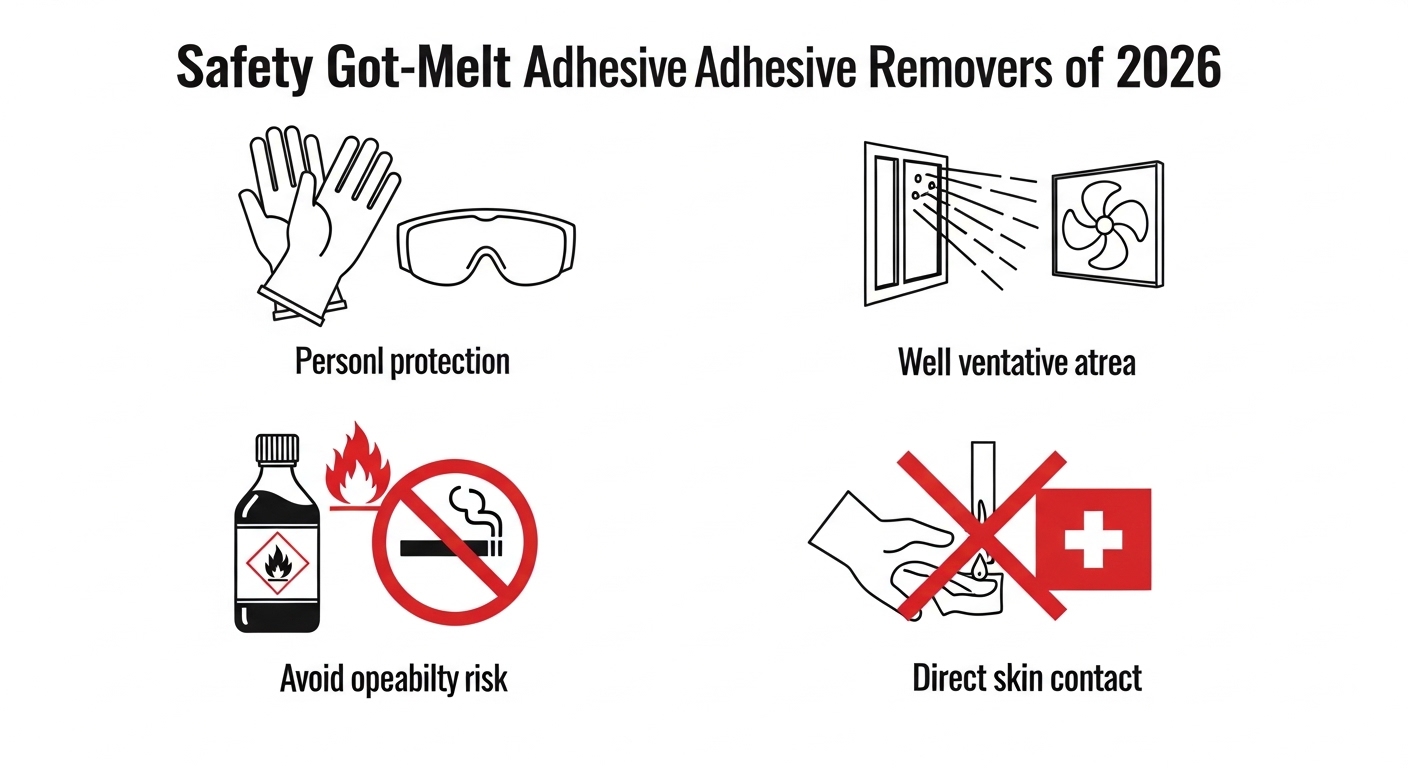
Once you understand the ingredients, you must recognize the associated hazards. The risks of using a hot melt adhesive remover extend beyond a simple bad smell. Many formulations, especially those with volatile organic compounds (VOCs), can pose health risks if used improperly. Inhalation of fumes in a poorly ventilated area can lead to dizziness, headaches, or respiratory irritation.
Direct skin contact is another significant concern. Potent solvents can strip natural oils from your skin, leading to dryness, redness, and irritation. For sensitive individuals, this can escalate to more severe dermatitis. Furthermore, many remover ingredients are flammable. Using them near an open flame, a pilot light, or even a spark from a power tool can have dangerous consequences. It is crucial to read the warning labels on any product, as they provide specific information regarding flammability, toxicity, and necessary precautions.
⚠️CAUTION
Always treat chemical products with respect. Flammability is a primary hazard for many solvent-based removers. Ensure your workspace is free from ignition sources like sparks, static electricity, and open flames before you begin.
Essential Safety Gear and Practices 🛡️
Knowledge of hazards is useless without implementing protective measures. The most critical safety rule is to ensure adequate ventilation. Whether you are in a small workshop or a garage, open windows and doors to create cross-ventilation. If possible, use a fan to direct fumes away from your breathing zone. This simple step significantly reduces the concentration of airborne chemicals.
Personal Protective Equipment (PPE) is your non-negotiable second line of defense. Always wear the right gear for the job. This includes chemical-resistant gloves (nitrile or neoprene are often recommended over latex) to protect your hands and safety glasses or goggles to shield your eyes from accidental splashes. For projects involving extensive use of a powerful hot melt remover, a respirator with the appropriate cartridge may be necessary to protect your lungs.
Before starting, designate a specific area for your work. Lay down a protective covering on your work surface and keep all remover containers sealed when not in immediate use. This minimizes the risk of spills and reduces ambient fume levels.
Decoding the MSDS: A User's Guide 📄
For any chemical product, the most reliable source of safety information is its Material Safety Data Sheet (MSDS), now globally referred to as the Safety Data Sheet (SDS). This document is a legal requirement for manufacturers and provides comprehensive details about a product's composition and potential hazards. You can typically find the MSDS for a product on the manufacturer's website or by request.
Learning to read an MSDS is a vital skill. You don't need to be a chemist to understand the basics. Focus on key sections that provide actionable information for safe handling, emergency procedures, and required protective measures. Taking a few minutes to review this document before using a new hot melt adhesive remover can prevent accidents and ensure you are prepared for any situation.
| MSDS Section | Information to Look For | Why It's Important |
|---|---|---|
| Section 2: Hazard(s) Identification | Signal words (Danger, Warning), hazard statements, pictograms | Tells you the primary risks at a glance |
| Section 4: First-Aid Measures | Instructions for skin contact, eye contact, inhalation, ingestion | Prepares you to respond correctly in an emergency |
| Section 7: Handling and Storage | Safe handling practices, storage conditions, flammability | Guides you on how to use and store the product safely |
| Section 8: Exposure Controls/Personal Protection | Recommended PPE (gloves, eyewear), ventilation requirements | Specifies the exact protective gear you need to use |
Safer Alternatives for Adhesive Removal 🌿
Sometimes, the best hot melt adhesive remover is not a specialized chemical at all. Depending on the surface and the amount of adhesive, several safer and more accessible alternatives can be surprisingly effective. These methods are particularly useful for individuals with chemical sensitivities or for use in environments where ventilation is limited.
One of the most common and effective methods is the application of heat. A heat gun on a low setting or even a hairdryer can soften the hot melt adhesive, allowing you to peel or scrape it away with a plastic tool. Another widely available option is Isopropyl Alcohol (IPA). Applying a small amount can break down the adhesive's bond, making it easier to remove. These alternatives may require more patience and effort, but they significantly reduce the chemical exposure risks.
💡KEY POINT
- Heat Application: Use a heat gun or hairdryer to soften the adhesive for easy scraping.
- Isopropyl Alcohol (IPA): A common household item that can effectively dissolve the adhesive's bond.
- Mechanical Removal: For small, hardened bits, careful scraping with a plastic razor or putty knife can work without chemicals.