Defining Innovative Adhesive Solutions
Types of Adhesive Technologies
Importance of Adhesive Innovations
Methods of Adhesive Application
Latest Trends in Adhesives
Strategies for Industry Revolution
Future of Adhesive Solutions
Innovative adhesive solutions refer to advanced bonding systems designed to improve strength, flexibility, precision, and environmental performance in industrial applications. Rather than focusing on specific products, innovation in adhesives is defined by material science advancements, formulation design, and process compatibility. These solutions aim to enhance productivity, reduce material waste, and support sustainability goals across manufacturing, construction, electronics, and assembly industries.
Adhesive technologies can be broadly categorized based on their functional characteristics and application requirements.
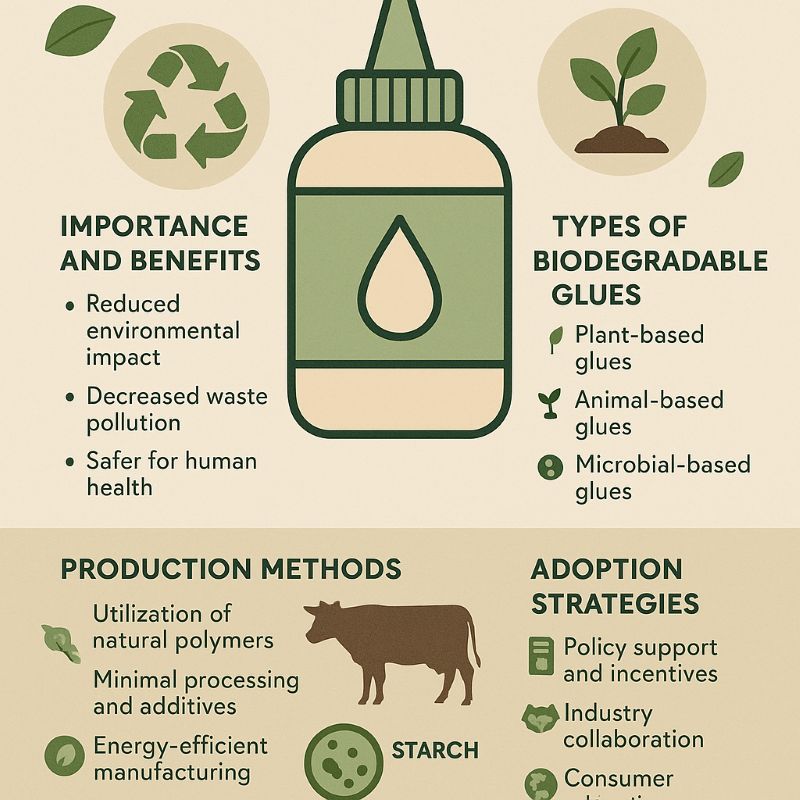
Eco-conscious adhesive systems emphasize reduced environmental impact through lower emissions, renewable raw materials, or improved recyclability.
Flexible adhesive technologies are designed to accommodate movement, vibration, and thermal expansion without loss of bonding performance.
High-durability adhesive systems focus on long-term mechanical strength and resistance to environmental stress.
Precision-oriented adhesives enable controlled bonding in applications requiring accuracy, such as fine assemblies or compact components.
Each technology serves distinct industrial needs, and selection depends on performance requirements rather than brand-specific solutions.
Adhesive innovation plays a critical role in modern industry by enabling improved efficiency, reliability, and sustainability. Advanced adhesive systems allow manufacturers to replace mechanical fastening methods, reduce component weight, and streamline production processes. Innovations also support environmental objectives by minimizing waste, lowering energy consumption, and enabling new design possibilities. The importance of these developments lies in their ability to adapt to evolving industrial demands while maintaining consistent performance.
Adhesive performance is strongly influenced by the application method used. Common techniques include spray application for uniform surface coverage, roller application for flexible or continuous bonding, brush application for controlled manual processes, and nozzle-based dispensing for precision placement. Selecting the appropriate method ensures optimal adhesive distribution, consistent bond quality, and efficient material usage. Application methods are chosen based on substrate type, production scale, and required bonding accuracy rather than on specific adhesive brands.
Current trends in adhesive technology emphasize sustainability, adaptability, and integration with advanced manufacturing systems. There is growing interest in adhesives that support environmentally responsible production, including formulations with reduced emissions and improved lifecycle performance. Flexibility and precision are also key trends, particularly in industries dealing with complex geometries or compact assemblies. Overall, the industry is shifting toward solutions that balance functional performance with environmental and operational considerations.
Revolutionizing industrial processes through adhesive technology requires strategic integration rather than simple material substitution. Key strategies include evaluating adhesive performance requirements at the design stage, aligning adhesive selection with production methods, and optimizing application processes to reduce waste. Training personnel and maintaining equipment consistency further enhance outcomes. By focusing on system-level integration, industries can leverage adhesive technologies to improve efficiency, sustainability, and product quality.
The future of adhesive solutions is expected to center on smarter materials, enhanced sustainability, and greater process compatibility. Developments are likely to include adhesives with adaptive properties, improved environmental profiles, and compatibility with automated and digital manufacturing systems. As industries continue to evolve, adhesive technologies will remain a foundational element in enabling innovation, supporting lightweight design, and meeting environmental expectations.
What are innovative adhesive solutions?
They are advanced bonding systems developed through material and process innovation to improve strength, flexibility, precision, and sustainability.
What types of adhesive technologies exist?
Adhesive technologies include eco-conscious systems, flexible adhesives, high-durability formulations, and precision-oriented bonding solutions.
Why are adhesive innovations important?
They enhance manufacturing efficiency, enable new product designs, reduce waste, and support environmental objectives.
What methods are used for adhesive application?
Common methods include spray, roller, brush, and precision dispensing techniques, selected based on application needs.
What are the latest trends in adhesives?
Trends focus on sustainability, adaptability, precision, and integration with automated production systems.
How can industries strategically adopt adhesive solutions?
By aligning adhesive selection with design requirements, optimizing application processes, and integrating adhesives into overall production strategy.
What is the future direction of adhesive technology?
Future developments will emphasize smart functionality, environmental performance, and compatibility with advanced manufacturing systems.