


Table of Contents
- Understanding Hot-Melt Coating Equipment Structure
- Working Principles of Hot-Melt Adhesive Coating Machines
- Key Advantages Over Conventional Coating Methods
- Diverse Industrial Applications and Use Cases
- Choosing and Implementing the Right Coating Solution
In an era where production speed and environmental responsibility are paramount, industries are rapidly shifting away from traditional solvent-based adhesives. By 2026, the demand for efficient and eco-friendly bonding solutions is reshaping manufacturing processes across the globe. At the heart of this transformation lies a powerful technology: the hot-melt adhesive coating machine. This equipment offers a unique combination of speed, precision, and sustainability, making it a cornerstone of modern production lines. This guide provides a practical overview of its structure, principles, and real-world applications for professionals considering this advanced technology.
Understanding Hot-Melt Coating Equipment Structure
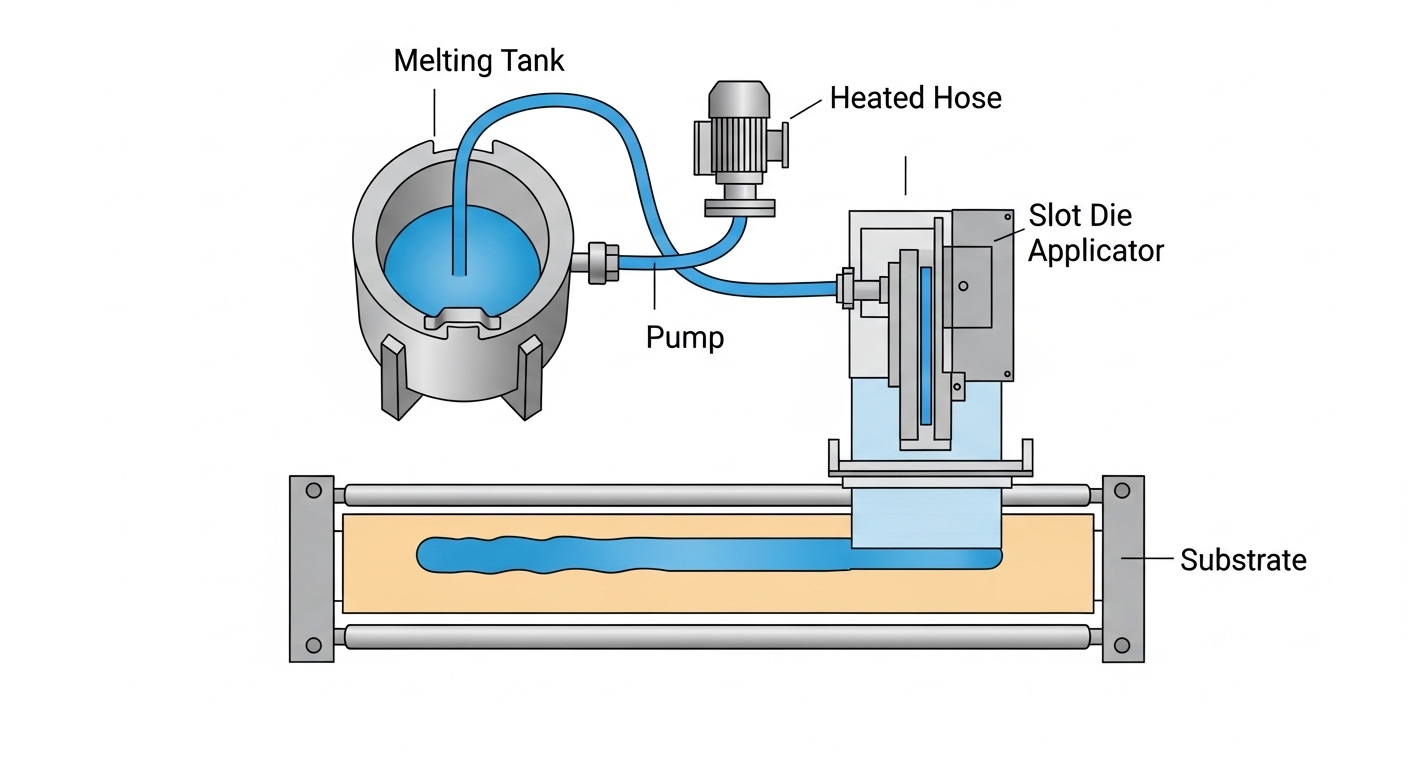
A hot-melt adhesive coating machine is a sophisticated system where each component plays a crucial role in delivering a precise and consistent coating. Understanding its structure is the first step to harnessing its full potential. The design integrates several key units to manage the entire process from melting solid adhesive to applying it onto a substrate.
The core of the machine is the melting tank or pre-melter, where solid thermoplastic adhesive is heated to a specific application temperature, transforming it into a viscous liquid. From there, a high-precision pumping system transports the molten adhesive to the coating head. The coating head is the most critical component for determining the application quality and can come in various forms, such as a slot die for uniform films, a roller for pattern applications, or a spray nozzle for wider, less-uniform coverage. Finally, a sophisticated control system, often utilizing PLC (Programmable Logic Controller) or PID controllers, manages all critical parameters like temperature, pressure, and line speed to ensure repeatable and high-quality results.
💡KEY POINT
- Melting Tank: Heats solid adhesive into a liquid state at a precise temperature.
- Pumping System: Accurately transfers the molten adhesive to the application point.
- Coating Head: Applies the adhesive to the substrate (e.g., slot die, roller, spray).
- Control System (PLC/PID): Manages and synchronizes all operational parameters for consistency.
Working Principles of Hot-Melt Adhesive Coating Machines
The operation of a hot-melt coater is based on a straightforward yet highly effective thermal process. Unlike solvent or water-based systems that require a lengthy drying or curing phase, hot-melt technology achieves bonding almost instantaneously through a simple change in physical state. The entire principle revolves around melting, applying, and cooling the adhesive in a continuous, controlled sequence.
The process begins when solid adhesive, typically in the form of pellets, chips, or blocks, is fed into the melting tank. Once it reaches the target viscosity and temperature, the molten adhesive is applied to a moving substrate, such as paper, film, or nonwoven fabric. The magic happens immediately after application: as the hot adhesive makes contact with the cooler substrate, it rapidly cools and solidifies, creating a strong, durable bond in seconds. This elimination of a drying step is what gives hot-melt systems their significant advantage in production speed.
| Stage | Process Description | Key Control Factor |
|---|---|---|
| Melting | Solid adhesive is heated in a tank to a viscous liquid state. | Precise Temperature |
| Application | The molten adhesive is transferred to a substrate via a pump and coating head. | Flow Rate & Pressure |
| Bonding | The adhesive cools and solidifies rapidly, creating an instant bond. | Cooling Time & Substrate Temp |
Key Advantages Over Conventional Coating Methods
When compared to traditional adhesive application methods, hot-melt adhesive coating machines offer compelling benefits that directly impact productivity, cost-effectiveness, and environmental compliance. These advantages make them a superior choice for a wide range of modern manufacturing environments. The most significant benefit is the dramatic increase in processing speed.
Without the need for drying ovens or long curing conveyors, production lines can run faster and require a smaller physical footprint. This translates directly to higher output and lower energy consumption. Furthermore, hot-melt adhesives are 100% solid materials and are solvent-free. This eliminates the emission of Volatile Organic Compounds (VOCs), creating a safer working environment and simplifying compliance with environmental regulations. The bonds created are also strong and reliable, offering excellent performance across various substrates.
| Feature | Hot-Melt Coating | Conventional (Solvent/Water-Based) |
|---|---|---|
| Processing Speed | Instant bonding upon cooling | Requires significant drying/curing time |
| Environmental Impact | Low (solvent-free, no VOCs) | Higher (emits VOCs or requires energy for water evaporation) |
| Equipment Footprint | Generally more compact | Often requires large drying ovens or ventilation systems |
| Bond Strength | High initial tack and final strength | Varies, can be high but takes time to develop |
Diverse Industrial Applications and Use Cases
The versatility of hot-melt coating technology allows it to be used across a vast spectrum of industries. Its ability to bond dissimilar materials quickly and cleanly makes it an indispensable tool for creating innovative and high-performance products. From everyday consumer goods to specialized industrial components, the applications are constantly expanding.
Key industries that rely heavily on hot-melt coating include:
- Packaging: Sealing cartons, forming cases, and applying labels where high-speed, reliable adhesion is critical.
- Hygiene Products: Manufacturing diapers, sanitary napkins, and other nonwoven products that require soft, flexible, and skin-safe bonds.
- Automotive: Assembling interior components like headliners, door panels, and seating, where bonds must withstand temperature fluctuations and vibration.
- Textiles and Laminates: Bonding fabrics for apparel, upholstery, and technical textiles.
- Bookbinding: Applying adhesive to the spines of books for durable and flexible binding.
- Medical and Construction: Creating specialized medical tapes, wound dressings, and construction materials like roofing membranes and insulation.
When evaluating a hot-melt coater for a specific application, always test the adhesive on your actual substrate material under production-like conditions. Factors like substrate porosity, surface energy, and ambient temperature can significantly impact final bond performance and require process adjustments.
Choosing and Implementing the Right Coating Solution
Selecting the appropriate hot-melt adhesive coating machine is a critical decision that impacts long-term production efficiency and product quality. A successful implementation goes beyond the machine itself and requires a holistic evaluation of the adhesive, the substrate, and the desired process outcomes. Making an informed choice involves analyzing several key factors to ensure the equipment aligns perfectly with your operational needs.
First, consider the type of adhesive you will be using, paying close attention to its viscosity, open time, and required application temperature. Next, define your process requirements, including the necessary coating width, line speed, and application pattern (e.g., full coverage, stripe, or spray). The substrate material is another crucial factor, as its thermal properties and surface characteristics will influence both adhesion and the cooling process. Finally, determine the necessary level of automation and control. Modern systems with advanced PLC controls offer superior precision and repeatability, which is essential for demanding applications. By carefully considering these elements, you can invest in a solution that delivers a strong return and enhances your competitive edge.
💡KEY POINT
- Analyze Adhesive Properties: Match the machine's capabilities to the adhesive's viscosity and temperature requirements.
- Define Process Needs: Clarify required line speed, coating width, and application pattern.
- Evaluate Substrate Compatibility: Ensure the system can handle your specific materials effectively.
- Determine Control Level: Choose a system with the right level of automation for quality and consistency.