


Table of Contents
- Hot-Melt Adhesive Coating Machines Explained
- Key Industrial Advantages Driving Adoption
- Comparing Hot-Melt and Traditional Coating Methods
- Versatile Applications in Modern Industries
- Essential Factors for Equipment Selection
In today's fast-paced manufacturing landscape, the pressure to increase production speed while simultaneously enhancing sustainability has never been greater. For decades, industries relied on traditional adhesive methods that often involved long drying times and the release of volatile organic compounds (VOCs). However, as of 2026, a transformative technology is setting a new standard: the hot-melt adhesive coating machine. These systems are not just an incremental improvement; they represent a fundamental shift in how materials are bonded, offering a powerful combination of speed, precision, and environmental responsibility that is reshaping production lines across the globe. This article explores why this technology is rapidly becoming an indispensable asset in modern industrial settings.
Hot-Melt Adhesive Coating Machines Explained
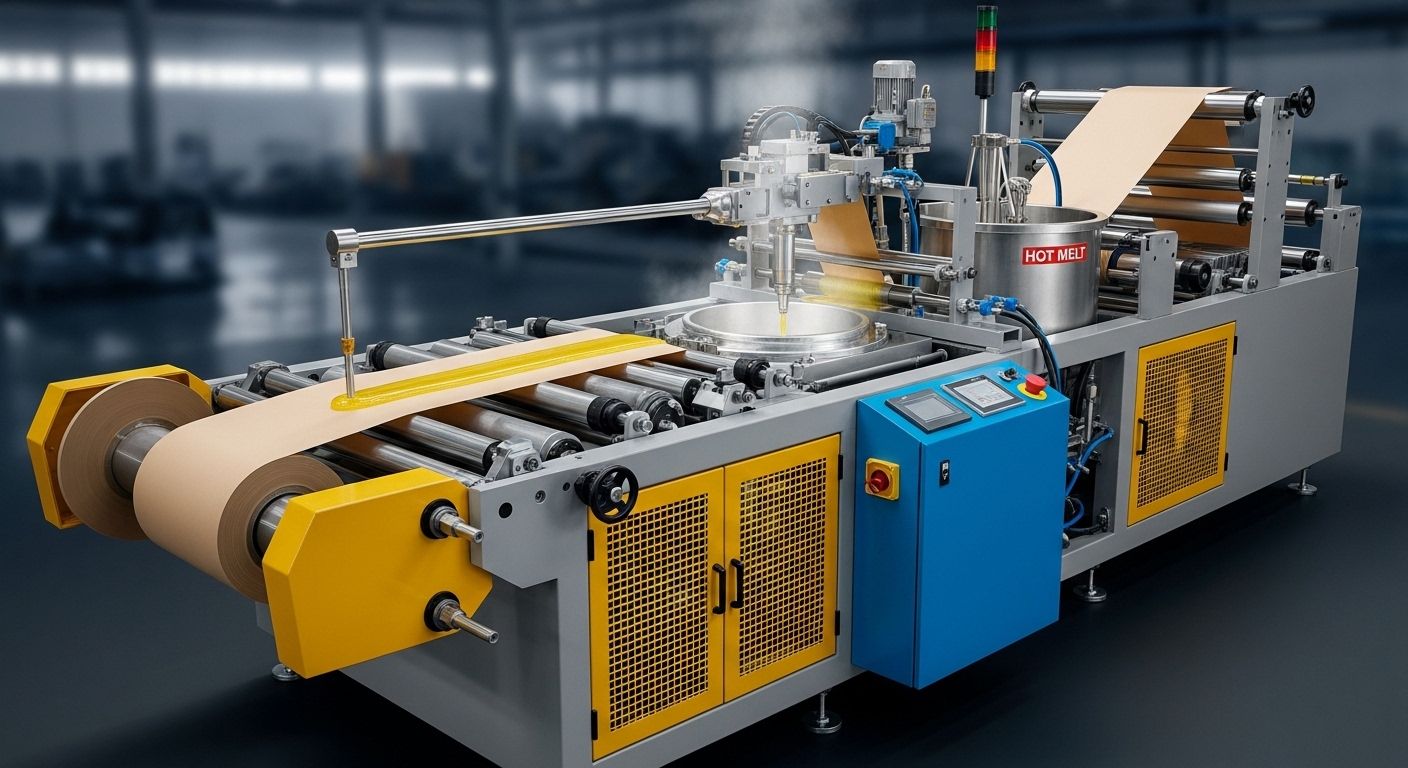
A hot-melt adhesive coating machine, often called a hot-melt coater, is a specialized piece of industrial equipment designed to apply thermoplastic adhesives onto a wide range of substrates, including paper, film, fabric, and nonwovens. Unlike solvent-based or water-based systems that require evaporation or drying, hot-melt technology functions on a simple yet highly effective thermal principle. The process begins with solid adhesive, typically in the form of pellets or blocks, being loaded into a heated tank or pre-melter where it is transformed into a viscous liquid. This molten adhesive is then precisely transferred via a pump to an applicator head. The applicator, which can be a slot-die, roller, or spray nozzle, applies a uniform and controlled layer of the adhesive onto the moving substrate. As the coated material cools, the adhesive solidifies almost instantly, creating a strong and durable bond without any secondary curing or drying steps. This immediate bonding capability is the core of its efficiency.
💡KEY POINT
Core Components of a Hot-Melt Coater
- Melting Tank/Pre-melter: Heats solid adhesive into a liquid state at a controlled temperature.
- Pump System: Transports the molten adhesive from the tank to the application head at a consistent pressure and volume.
- Applicator Head (Coating Head): The crucial component that applies the adhesive to the substrate. Common types include slot-die for precise, uniform films; rollers for wider coverage; and spray nozzles for patterns or porous materials.
- Control System (PLC/PID): The brain of the machine, managing temperature, pump speed, and line tension to ensure consistent and high-quality coating results.
Key Industrial Advantages Driving Adoption
The widespread adoption of the hot-melt adhesive coating machine in 2026 is driven by several compelling advantages that directly address modern manufacturing challenges. The most significant benefit is the dramatic increase in production speed. Since hot-melt adhesives bond through cooling, there is no need for lengthy drying tunnels or curing stations. This elimination of a major bottleneck allows for significantly faster line speeds and higher throughput, directly boosting productivity. Secondly, these systems are inherently more environmentally friendly. Hot-melt adhesives are 100% solid materials and contain no solvents, which means they do not release harmful Volatile Organic Compounds (VOCs) into the atmosphere. This helps companies meet increasingly strict environmental regulations and create a safer workplace. The strong bonding performance across a variety of materials—from plastics and textiles to metals and paper—adds to their appeal, ensuring reliable and durable products.
⚠️CAUTION
Precise Temperature Control is Critical
While hot-melt systems offer numerous benefits, their performance is highly dependent on maintaining precise temperature control throughout the process. If the adhesive is too hot, it can lose its viscosity and bonding properties or even damage the substrate. If it's too cold, it may not flow correctly, leading to inconsistent coating and weak adhesion. Therefore, a high-quality control system with accurate sensors and PID controllers is not a luxury but a necessity for consistent operation.
Comparing Hot-Melt and Traditional Coating Methods
To fully appreciate the impact of hot-melt adhesive coating machines, it is useful to compare them directly with conventional adhesive application methods. Traditional systems, which primarily use water-based or solvent-based adhesives, have long been the industry standard but come with inherent operational trade-offs. The most notable difference lies in the bonding process and the associated time and energy costs. Traditional methods rely on the evaporation of water or a solvent to achieve a bond, a process that requires significant time and energy-intensive drying equipment. In contrast, hot-melt technology provides an almost instantaneous bond as the adhesive cools, streamlining the entire production line. This fundamental difference has a cascading effect on overall efficiency, cost, and environmental footprint.
| Feature | Hot-Melt Adhesives | Traditional (Solvent/Water-Based) Adhesives |
|---|---|---|
| Bonding Speed | Nearly instantaneous (seconds) | Slow (minutes to hours) |
| Environmental Impact | Zero VOCs (solvent-free) | Can release VOCs and require waste treatment |
| Energy Consumption | Moderate (for melting) | High (for drying ovens/tunnels) |
| Equipment Footprint | Compact (no drying tunnels needed) | Large (requires extensive drying space) |
Versatile Applications in Modern Industries
The flexibility of the hot-melt adhesive coating machine makes it suitable for an exceptionally broad spectrum of industrial applications. Its ability to bond diverse substrates with precision and speed has made it a go-to solution in numerous sectors. In the packaging industry, these machines are essential for sealing cartons, creating flexible packaging, and producing self-adhesive labels and tapes. The hygiene and nonwovens sector relies heavily on hot-melt coaters for manufacturing products like diapers, sanitary napkins, and medical gowns, where gentle yet secure bonding is crucial. In the automotive industry, they are used to assemble interior components such as headliners, door panels, and insulation. Other significant applications include bookbinding, textile lamination, electronics assembly, and even construction materials like roofing membranes and flooring. The adaptability of the technology allows it to meet the unique demands of each of these fields.
| Application Method | Best For... | Key Consideration |
|---|---|---|
| Slot-Die Coating | High-precision, uniform, defect-free films (e.g., labels, medical tapes) | Requires clean adhesive and precise machine calibration |
| Spray Coating | Irregular surfaces, patterns, or breathable applications (e.g., hygiene) | Can create overspray; pattern control is key |
| Roller Coating | Full-surface coverage on flexible substrates (e.g., textile lamination) | Achieving a perfectly uniform thickness can be challenging |
Essential Factors for Equipment Selection
Choosing the right hot-melt adhesive coating machine is a critical decision that can significantly impact production efficiency and product quality. A one-size-fits-all approach does not work, and several key factors must be carefully evaluated to ensure the selected equipment aligns with specific operational needs. The first consideration is the type of substrate and adhesive to be used. The machine must be compatible with the materials you intend to coat and the specific formulation of the hot-melt adhesive. Secondly, production requirements such as the desired coating width, line speed, and the required precision of the coating thickness are paramount. A high-volume production line will require a more robust and faster machine than a small-scale operation. Finally, the sophistication of the control system should not be overlooked. Modern machines equipped with advanced PLC systems offer superior control over temperature, pressure, and speed, leading to greater consistency and reduced waste.
Key Questions to Ask Your Equipment Supplier
Before investing in a new hot-melt coater, be prepared to discuss these critical points with potential suppliers:
- What range of adhesive viscosities can the machine handle?
- What are the minimum and maximum achievable coating weights and widths?
- How does the control system ensure temperature stability and application consistency?
- What is the recommended maintenance schedule, and what level of technical support is provided?
- Can the machine be customized or upgraded to accommodate future production needs?