


Table of Contents
- What Makes Hot-Melt Adhesives Heat Resistant?
- Key Polymers for High-Temperature Performance
- Understanding Thermal Properties and Metrics
- How Polymer Selection Impacts Real-World Applications
- Practical Tips for Ensuring Stable Adhesion at High Temperatures
In the rapidly advancing industrial manufacturing landscape of 2026, mechanical components face unprecedented thermal stress. When bonding materials for automotive engines or advanced electronics, standard adhesives often degrade rapidly. Selecting a high temperature resistant hot melt adhesive polymer is absolutely critical to prevent catastrophic bond failures. Understanding the underlying chemistry and physical properties ensures long-term durability under extreme operational conditions.
What Makes Hot-Melt Adhesives Heat Resistant? 🌡️
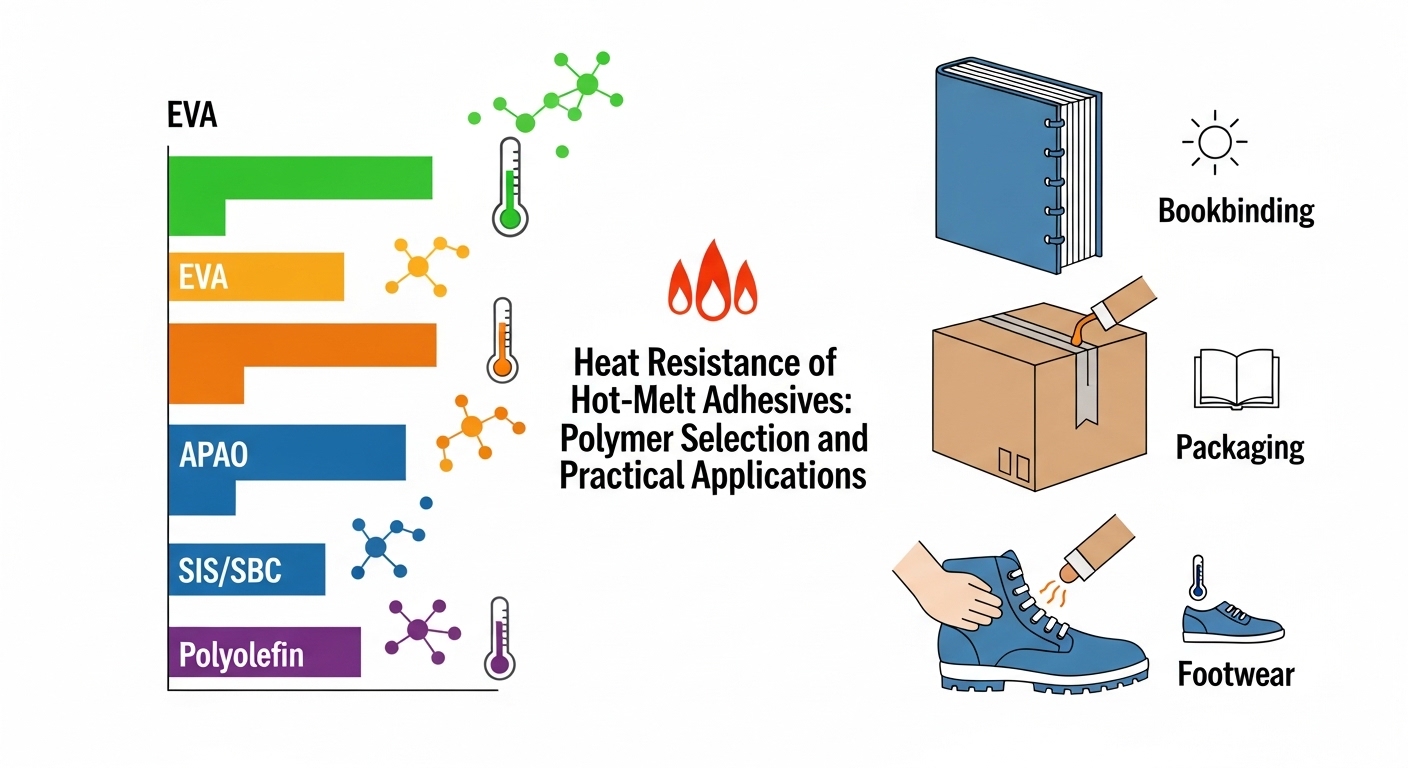
The fundamental ability of an adhesive to withstand extreme heat relies entirely on its molecular architecture. Conventional options like ethylene-vinyl acetate are widely utilized for general purposes but typically lack the thermal stability required for highly demanding environments. When exposed to elevated temperatures, standard formulations become highly prone to softening and structural creep.
To achieve true heat resistance, engineers must transition to specialized polymers characterized by strong intermolecular forces and optimal crystallinity. The resistance depends not just on the base material, but also on how the polymer chains interact under thermal load. Without these advanced structural characteristics, maintaining a durable bond in extreme environments is virtually impossible.
- Standard ethylene-vinyl acetate lacks sufficient high-temperature resistance for extreme heat.
- Exceptional thermal stability requires strong intermolecular forces and crystallinity.
- Specialized polymers prevent structural creep and premature bond failure.
Key Polymers for High-Temperature Performance 🧪
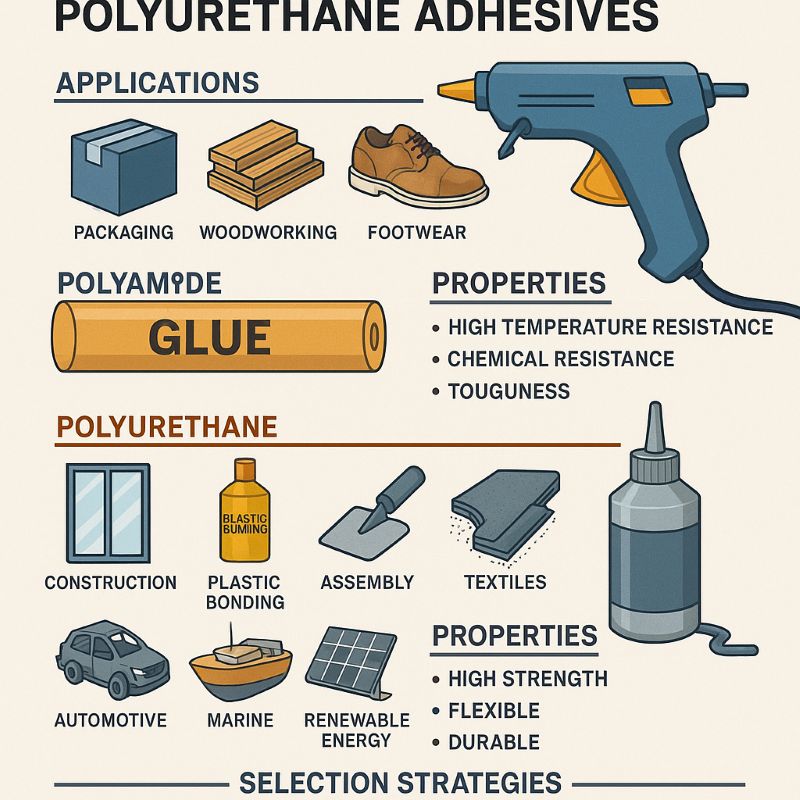
Achieving reliable bonds in severe environments requires specific chemical formulations. Polyamides and polyesters stand out among thermoplastic options for their exceptional mechanical strength. Polyamides provide robust performance even as service temperatures escalate significantly. Similarly, specific grades of polyesters offer superior thermal endurance compared to basic alternatives, making them highly effective for industrial usage.
Furthermore, reactive polyurethanes undergo a secondary moisture-curing process. This chemical crosslinking forms permanent bonds, greatly enhancing their resistance to extreme heat. Selecting the appropriate high temperature resistant hot melt adhesive polymer from these categories ensures that the adhesive joint remains completely intact during continuous thermal exposure.
| Polymer Category | Thermal Characteristics | Primary Advantage |
|---|---|---|
| Polyamide | Withstands extreme heat | High mechanical strength |
| Polyester | Superior to standard options | Reliable structural stability |
| Reactive Polyurethane | Permanent chemical bonds | Exceptional creep resistance |
Understanding Thermal Properties and Metrics 📊
Evaluating a high temperature resistant hot melt adhesive polymer requires precise analytical metrics. The primary goal during material selection is identifying polymers with a high softening point and an elevated glass transition temperature. The softening point indicates the exact thermal threshold where the adhesive begins to flow and lose structural integrity.
Meanwhile, the glass transition temperature marks the critical transition from a rigid state to a more flexible, rubbery phase. High values in both of these metrics guarantee that the adhesive joint does not creep or fail when exposed to sustained thermal loads. Relying on these specific data points allows engineers to make objective, highly reliable material choices.
Always verify the glass transition temperature against the maximum expected operating temperature of your specific application to ensure a sufficient safety margin.
How Polymer Selection Impacts Real-World Applications 🏭
Theoretical thermal properties must translate into functional reliability across various demanding industries. In automotive manufacturing, components located near the engine block require adhesives that maintain complete integrity despite continuous thermal cycling. Electronics assembly demands highly precise bonding that actively resists the heat generated by densely packed circuits.
Choosing the correct polymer ensures that technical bonds remain completely secure, whether joining difficult plastics or constructing durable building materials in the infrastructure sector of 2026. Applying the right high temperature resistant hot melt adhesive polymer directly prevents costly system failures and extends the overall lifespan of the manufactured product.
| Industry Sector | Typical Application | Recommended Polymer |
|---|---|---|
| Automotive | Engine compartment bonding | Polyamide |
| Electronics | Circuit board assembly | Reactive Polyurethane |
| Construction | Structural panel lamination | Polyester |
Practical Tips for Ensuring Stable Adhesion at High Temperatures 💡
Implementing a high temperature resistant hot melt adhesive polymer successfully requires careful operational planning. First, precisely define the continuous service temperature and the peak thermal exposure of your specific application. Second, analyze the exact substrates being bonded, as differing thermal expansion rates can severely stress the adhesive joint over time.
Finally, ensure the manufacturing environment fully supports the specific curing requirements of the chosen polymer. Over-engineering can lead to unnecessary processing difficulties, but underestimating thermal requirements guarantees mechanical failure. Balancing these factors ensures optimal performance and consistent production quality.
When utilizing reactive polyurethanes, strictly monitor ambient humidity levels in the facility. Insufficient moisture during the secondary curing phase will severely compromise the final thermal resistance.