


Table of Contents
- Flame-Retardant Hot Melt: Key Differences
- Material Types and Flame-Retardant Systems
- Industry Applications and Product Selection
- Understanding UL94, RoHS, and REACH Certifications
- Choosing the Right Solution for Your Needs
As electronic components become more integrated and automotive systems grow in complexity, the risk of fire from thermal events is a critical concern for engineers and product developers. Standard hot melt adhesives, being thermoplastics, are naturally flammable. This inherent characteristic poses a significant safety challenge in applications where heat or potential ignition sources are present. Consequently, the demand for specialized adhesives that can mitigate these risks has never been higher. Flame-retardant hot melt is not just an alternative but a necessary evolution, engineered with specific additives to suppress, delay, or prevent the spread of fire. Understanding the distinctions between these advanced formulations is crucial for ensuring product safety, reliability, and regulatory compliance in 2026.
Flame-Retardant Hot Melt: Key Differences
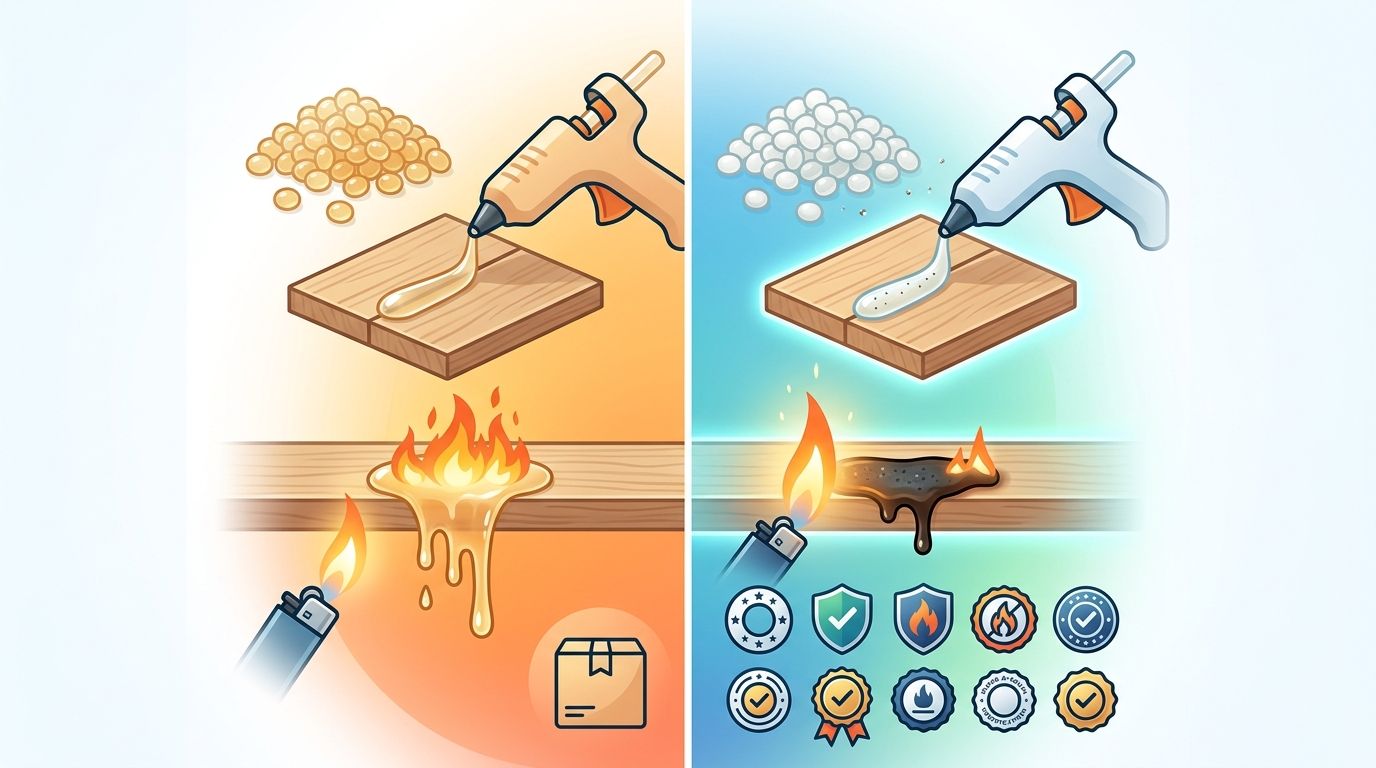
Standard hot melt adhesives are prized for their fast setting times and strong bonding capabilities. However, their base polymers, such as EVA or polyolefins, are combustible. The fundamental difference with flame retardant hot melt lies in its chemical composition. These adhesives are formulated with specific additives that interfere with the combustion cycle. When exposed to high heat or a flame, these additives activate to cool the material, dilute flammable gases, or form a protective char layer that insulates the underlying polymer.
This modification fundamentally changes the material's behavior in a fire scenario. While a standard hot melt would melt, drip, and contribute to the fire's spread, a flame-retardant version is designed to self-extinguish once the ignition source is removed. This property is essential in enclosed spaces like electronic casings or vehicle interiors, where preventing a small thermal event from escalating into a major fire is paramount. The goal is not to make the adhesive fireproof, but to control its flammability to meet stringent safety standards.
💡KEY POINT
- Standard Hot Melt: Based on naturally flammable thermoplastic polymers. It can melt, drip, and propagate flames when ignited.
- Flame-Retardant Hot Melt: Contains chemical additives that actively suppress combustion by cooling, diluting flammable gases, or forming a protective char layer.
- Primary Goal: To achieve self-extinguishing properties and meet specific safety certifications, thereby enhancing the overall safety of the final product.
Material Types and Flame-Retardant Systems
The performance of a flame retardant hot melt is determined by the synergy between its base polymer and the flame-retardant system used. Not all combinations are equal; each offers a unique balance of adhesive properties, thermal stability, and cost. The choice of base polymer dictates the fundamental characteristics like flexibility, bond strength, and service temperature, while the additive system provides the necessary fire safety.
There are two primary categories of flame-retardant systems: halogenated and halogen-free. Halogenated systems (containing bromine or chlorine) are highly effective and cost-efficient but are facing increased regulatory scrutiny due to environmental and health concerns. As a result, the industry trend in 2026 is shifting decisively toward halogen-free alternatives. These include systems based on phosphorus, nitrogen, or inorganic compounds like aluminum hydroxide (ATH) and magnesium hydroxide (MDH), which work by releasing water vapor upon decomposition, cooling the substrate and diluting flammable gases.
| Base Polymer | Key Characteristics | Common Flame-Retardant System |
|---|---|---|
| Polyamide (PA) | High thermal stability, excellent chemical resistance, strong adhesion. | Halogen-free (Phosphorus/Nitrogen based) |
| Polyolefin (PO) | Good flexibility, moisture resistance, cost-effective. | Halogen-free (ATH/MDH) |
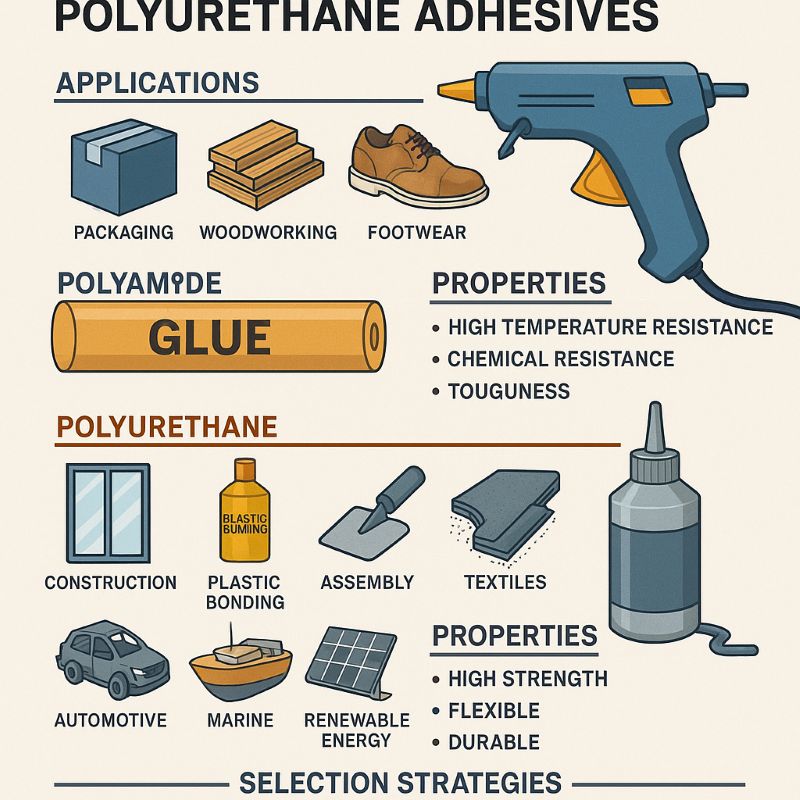
| Polyurethane (PUR) | Reactive, forms strong cross-linked bonds, excellent flexibility. | Halogen-free (Phosphorus based) |
Industry Applications and Product Selection
The application of flame retardant hot melt adhesives spans numerous industries where safety is non-negotiable. In electronics manufacturing, they are used for wire tacking, component potting, and securing connectors within devices like power supplies and battery packs. In the automotive sector, these adhesives are critical for bonding interior trim, securing wiring harnesses, and assembling seating components, helping manufacturers meet strict vehicle fire safety standards. Other applications include aerospace, construction (for bonding insulation and sealing cable penetrations), and manufacturing of specialty filters.
Selecting the right product requires a thorough analysis of the application's demands. The primary consideration is the required level of flame retardancy, which is dictated by industry standards and regulations. Beyond that, developers must consider the substrates being bonded, the required open time and set speed for the manufacturing process, and the environmental conditions the final product will endure, such as temperature fluctuations and exposure to moisture or chemicals. Failure to match the adhesive's properties to the application can result in bond failure or non-compliance with safety regulations.
When selecting a flame-retardant hot melt, always request a Technical Data Sheet (TDS) and a Safety Data Sheet (SDS) from the supplier. Cross-reference the listed certifications (e.g., UL94 rating) with your project's specific requirements. It is also wise to conduct your own performance tests on the actual substrates to validate bond strength and compatibility under simulated service conditions.
Understanding UL94, RoHS, and REACH Certifications
For industrial adhesives, certifications are not just quality marks; they are essential proof of compliance and safety. For flame retardant hot melt, three standards are particularly important: UL94, RoHS, and REACH. Understanding them is critical for product developers and compliance officers.
UL94 is the key standard for testing the flammability of plastic materials. It rates a material's ability to self-extinguish after being ignited. The ratings are crucial for determining if a material is suitable for use in electronic devices and other equipment. RoHS (Restriction of Hazardous Substances) is a European Union directive that restricts the use of specific hazardous materials found in electrical and electronic products. REACH (Registration, Evaluation, Authorisation and Restriction of Chemicals) is another EU regulation that addresses the production and use of chemical substances and their potential impacts on both human health and the environment. Compliance with RoHS and REACH is often a prerequisite for market access in Europe and many other regions that have adopted similar standards.
| Certification | Purpose | Key Metric/Requirement |
|---|---|---|
| UL94 | Measures the flammability and self-extinguishing properties of plastics. | Ratings like V-0 (vertical burn; stops within 10s), V-1, and V-2. |
| RoHS | Restricts the use of specific hazardous substances in electronics. | Limits on lead, mercury, cadmium, hexavalent chromium, and certain brominated flame retardants. |
| REACH | Manages the risks posed by chemicals to health and the environment. | Requires registration and documentation for all chemical substances manufactured or imported into the EU. |
Choosing the Right Solution for Your Needs
Selecting the optimal flame retardant hot melt is a multi-faceted decision that balances performance, safety, and regulatory compliance. The process begins with a clear understanding of the application's end-use environment and the specific fire safety rating required. As established, the choice of base polymer—be it polyamide for high-temperature resistance or polyolefin for flexibility—sets the foundation for the adhesive's mechanical properties.
Equally important is the flame-retardant system. With global regulations tightening, the trend for 2026 and beyond is a strong preference for halogen-free solutions. While effective, halogenated systems are increasingly being designed out of new products due to environmental concerns. Finally, always verify certifications. An adhesive's compliance with standards like UL94 V-0, RoHS, and REACH is not just a technical detail; it is a legal and ethical requirement that ensures the safety of the end-user and protects your brand's reputation. A careful evaluation of these factors will lead to a reliable and compliant adhesive solution.
💡KEY POINT
- Define Requirements: Start by identifying the necessary UL94 rating and the operational environment (temperature, chemical exposure).
- Evaluate Material Systems: Compare base polymers (PA, PO, PUR) for mechanical properties and flame-retardant systems (halogen-free preferred) for safety and environmental compliance.
- Verify Certifications: Ensure the product is fully compliant with all relevant standards for your target market, including UL94, RoHS, and REACH.