


Table of Contents
- The Promise of Biodegradable Hot Melt Adhesives
- The "Trigger" Conditions for True Biodegradation
- Industrial Composting vs. Real-World Disposal
- Decoding Certifications and Eco-Labels
- Making an Informed Choice: Myths vs. Reality
In 2026, the global push for sustainable solutions has permeated every industry, from manufacturing to packaging. As companies and consumers alike seek to minimize their environmental footprint, materials once considered mundane are now under intense scrutiny. Adhesives, the invisible force holding countless products and packages together, are no exception. The term "biodegradable hot melt" has emerged as a promising alternative, suggesting a glue that performs its duty and then harmlessly returns to the earth. But does this promise hold up in the real world? The answer is more complex than a simple "yes" or "no" and depends entirely on understanding what truly makes these materials break down.
The Promise of Biodegradable Hot Melt Adhesives
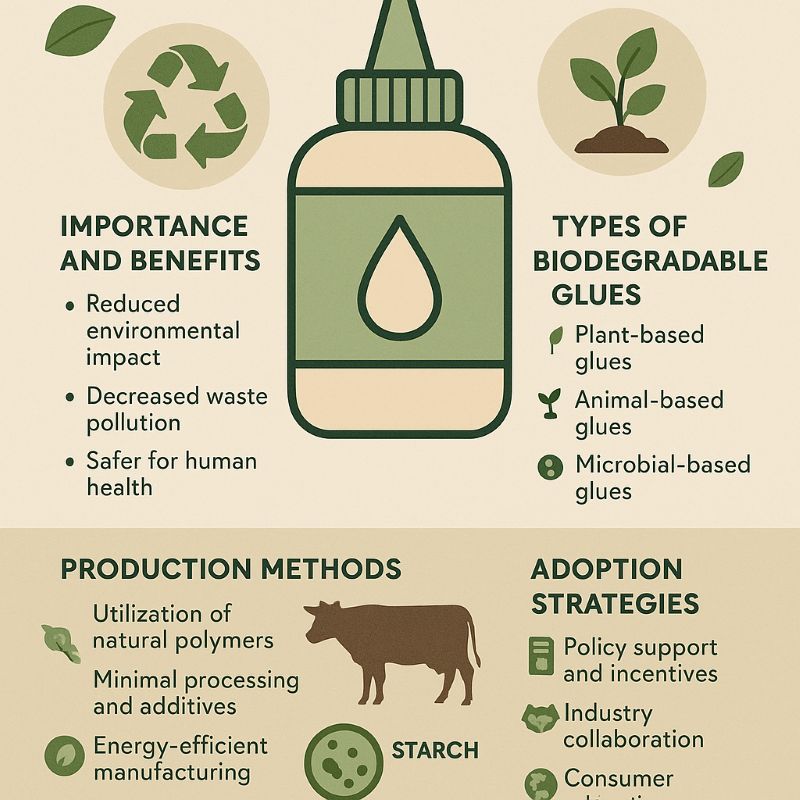
The concept of a biodegradable hot melt adhesive is an appealing one. It suggests a powerful bonding agent that, after its useful life, can be broken down by natural processes, reducing landfill waste and plastic pollution. Unlike traditional petroleum-based hot melts, which can persist in the environment for hundreds of years, these eco-friendly alternatives are typically formulated from bio-based polymers, such as polylactic acid (PLA) or other plant-derived starches.
However, the term "environmentally safe" is conditional. A biodegradable adhesive isn't designed to dissolve on contact with water or crumble after a few weeks of use. Its stability during application and use is paramount. The innovation lies in its end-of-life design. These adhesives are engineered to remain inert and effective under normal conditions—on a warehouse shelf, in a shipping container, or on a consumer's product. The magic of biodegradation only begins when specific environmental triggers are introduced. Therefore, understanding the distinction between its functional life and its disposal phase is critical for anyone looking to implement these materials effectively and responsibly. Simply using a biodegradable glue is not enough; ensuring it ends up in an environment where it can actually biodegrade is the key to unlocking its full ecological benefit.
When evaluating a biodegradable adhesive, always consider its entire lifecycle. Ask not only what it is made from, but also what specific conditions are required for its proper disposal and breakdown. This ensures you are choosing a product that is sustainable in practice, not just in name.
The "Trigger" Conditions for True Biodegradation
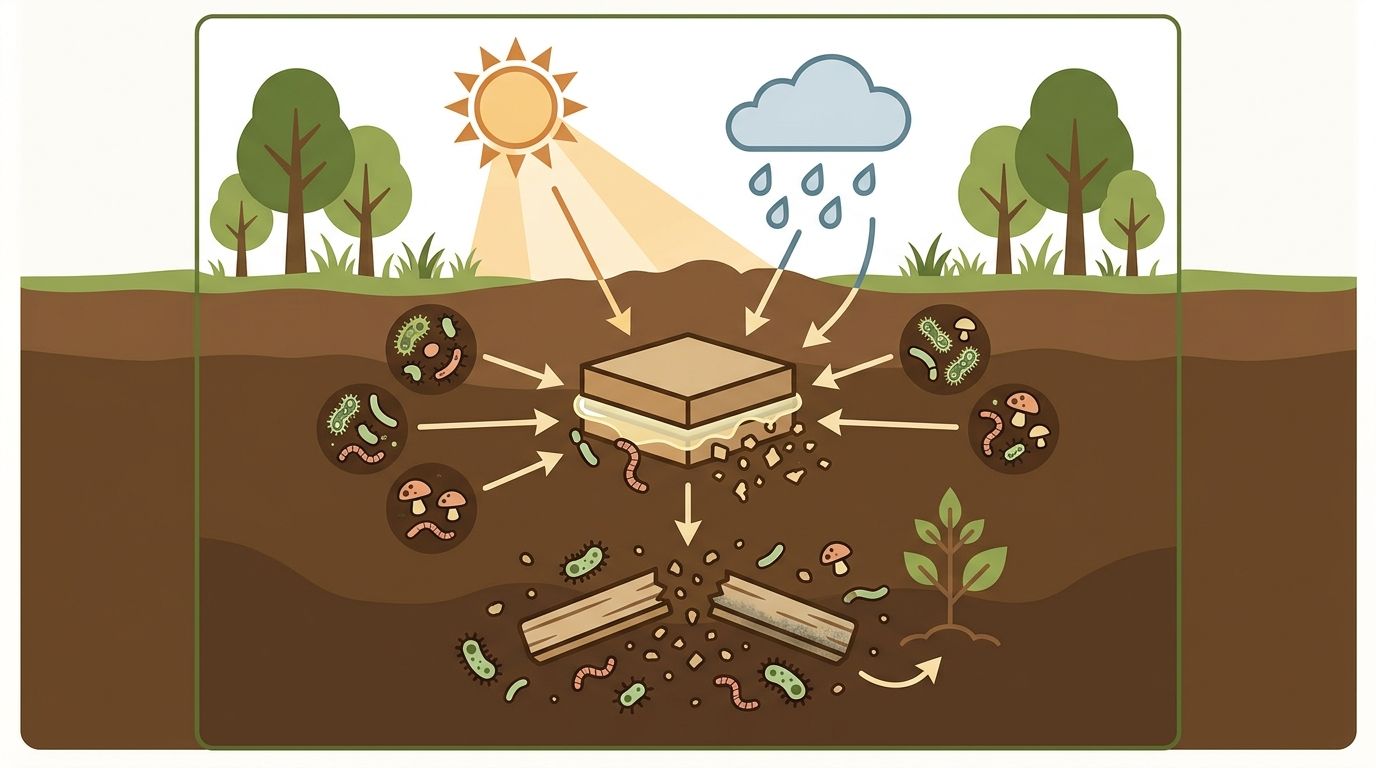
For a biodegradable hot melt to break down, it requires a "trigger"—a specific combination of environmental factors that initiate the decomposition process. Without these conditions, the adhesive can remain stable for a very long time, behaving much like its non-biodegradable counterparts. These triggers are almost exclusively found in controlled environments, not in a typical office, home, or standard landfill.
The three primary triggers for effective biodegradation are:
- Elevated Heat: The process requires sustained high temperatures, typically between 55-70°C (131-158°F). This heat helps to break down the polymer structure, making it accessible to microorganisms.
- Sustained Moisture: A consistently humid environment is necessary to facilitate microbial activity. Water acts as a medium for the enzymes that microorganisms use to consume the material.
- High Concentration of Microorganisms: A rich and diverse population of specific bacteria and fungi is essential. These organisms are the engines of decomposition, consuming the organic material and converting it into water, carbon dioxide, and biomass.
The table below illustrates the stark difference between the ideal conditions for biodegradation and typical disposal environments.
| Environmental Factor | Ideal Condition (Industrial Compost) | Typical Environment (Landfill/Office) |
|---|---|---|
| Temperature | Consistently 55-70°C | Fluctuates, generally below 25°C |
| Moisture | High and controlled humidity | Variable, often low or anaerobic |
| Microorganisms | Abundant and active aerobic microbes | Limited and often anaerobic microbes |
| Oxygen | Actively aerated | Deprived of oxygen (anaerobic) |
This contrast highlights why a biodegradable adhesive on a cardboard box thrown into a landfill will likely not break down as intended. The conditions are simply not right to activate the decomposition process.
Industrial Composting vs. Real-World Disposal
The distinction between different disposal methods is crucial for understanding the real-world impact of biodegradable hot melts. While the term "biodegradable" implies a natural process, the effective breakdown of these specialized adhesives is almost entirely dependent on the highly managed environment of an industrial composting facility.
Industrial composting is a controlled process where organic waste is decomposed under optimized conditions of heat, moisture, and oxygen. These facilities are specifically designed to meet the trigger requirements needed for materials like PLA-based adhesives to break down efficiently and safely within a set timeframe, typically 90 to 180 days. In this environment, the adhesive breaks down into humus (a nutrient-rich soil component), water, and CO2, leaving no toxic residue behind. This is the ideal and often only pathway for these products to fulfill their environmental promise.
In contrast, most real-world disposal scenarios are inadequate.
- Landfills: Most modern landfills are designed to be anaerobic (oxygen-deprived) to limit the production of greenhouse gases. This lack of oxygen, combined with low temperatures, effectively mummifies organic waste, preventing materials like biodegradable adhesives from breaking down.
- Home Composting: A backyard compost pile rarely reaches the sustained high temperatures required to break down certified compostable bioplastics and adhesives. While it's great for fruit and vegetable scraps, it is not a suitable environment for these engineered materials.
- Recycling Streams: Biodegradable adhesives can act as a contaminant in traditional plastic or paper recycling streams, potentially lowering the quality of the recycled material.
⚠️CAUTION
Be cautious of vague "biodegradable" claims. Without a specific certification for industrial composting, a product may not break down in any managed waste system. Its disposal could lead to contamination or long-term persistence in a landfill, undermining its intended eco-friendly purpose.
Decoding Certifications and Eco-Labels
For consumers and businesses trying to make responsible choices, navigating the world of eco-labels can be confusing. To ensure a biodegradable hot melt performs as advertised, it is essential to look for specific, third-party certifications. These standards verify that a product has been scientifically tested and proven to break down under the correct conditions.
The most recognized and trusted certifications for compostable materials in North America and Europe are ASTM D6400 and EN 13432.
- ASTM D6400: This is the American standard for labeling plastics and products designed to be composted in municipal and industrial facilities. To meet this standard, a material must disintegrate and biodegrade fully into non-toxic byproducts within a specific timeframe.
- EN 13432: This is the equivalent European standard. It sets rigorous criteria for compostability, including requirements for material characterization, biodegradation, disintegration, and ecotoxicity (ensuring the final compost is safe for plant growth).
When you see these certifications on a product's technical data sheet, it provides a high level of confidence that the adhesive is genuinely compostable in an industrial setting.
The following table breaks down what to look for on product labels and data sheets.
| Certification / Term | What It Guarantees | Key Checkpoint for Users |
|---|---|---|
| ASTM D6400 / EN 13432 | The product will break down in an industrial composting facility. | Confirm that such facilities are available for your waste stream. |
| "Compostable" | Should be certified to a standard like the ones above. | Look for the official certification logo (e.g., BPI, TÜV AUSTRIA). |
| "Bio-based" | The material is derived from renewable plant sources. | Does not guarantee biodegradability or compostability. |
Choosing a product with the right certification is the first step. The second, equally important step is ensuring that the end product will be disposed of in a facility that can process it correctly.
Making an Informed Choice: Myths vs. Reality
Adopting sustainable materials like biodegradable adhesives requires a clear understanding of their capabilities and limitations. Misconceptions can lead to improper use and disposal, negating the environmental benefits. It's time to separate the common myths from the reality of these advanced materials.
A prevalent myth is that "biodegradable" means a product will break down anywhere, including in soil, oceans, or a backyard compost bin. As we've established, this is false. Biodegradable hot melt adhesives are engineered for stability in normal use and require the specific, high-heat conditions of industrial composting to decompose. They are not designed to dissolve in nature and can contribute to pollution if disposed of improperly.
Another misconception is that "bio-based" is synonymous with "biodegradable." A product can be made from renewable, plant-based sources (bio-based) but not be biodegradable. Conversely, some fossil fuel-derived materials can be engineered to be biodegradable. The key is to focus on the end-of-life properties, which are verified by certifications like ASTM D6400 and EN 13432. An informed choice means matching the product's certified disposal pathway with your available waste management infrastructure. If you don't have access to industrial composting, a product designed for recycling may be a more sustainable option for your specific situation.
💡KEY POINT
- Biodegradation is conditional: These adhesives only break down under the specific high-heat, high-moisture, and microbe-rich conditions of an industrial composting facility.
- Labels are not all equal: Look for official third-party certifications like ASTM D6400 or EN 13432 to ensure a product is genuinely compostable. "Bio-based" does not automatically mean biodegradable.
- Disposal is key: The environmental benefit of a biodegradable glue is only realized if it is disposed of in a facility that can process it. Always verify that you have access to the correct waste stream.