


Table of Contents
- Differences
- Key Benefits
- Limitations
- Selection Criteria
- Practical Tips
In 2026, the industrial packaging sector faces strict regulatory pressure to eliminate harmful emissions. While traditional solvent-based materials pose measurable health risks, VOC-free hot melt solutions have emerged as a prominent alternative. However, a critical question remains: does eliminating volatile organic compounds automatically equate to complete sustainability? Evaluating the true environmental impact requires a deeper analysis beyond surface-level claims, focusing on formulation, lifecycle, and end-of-life management.
Differences 🏭
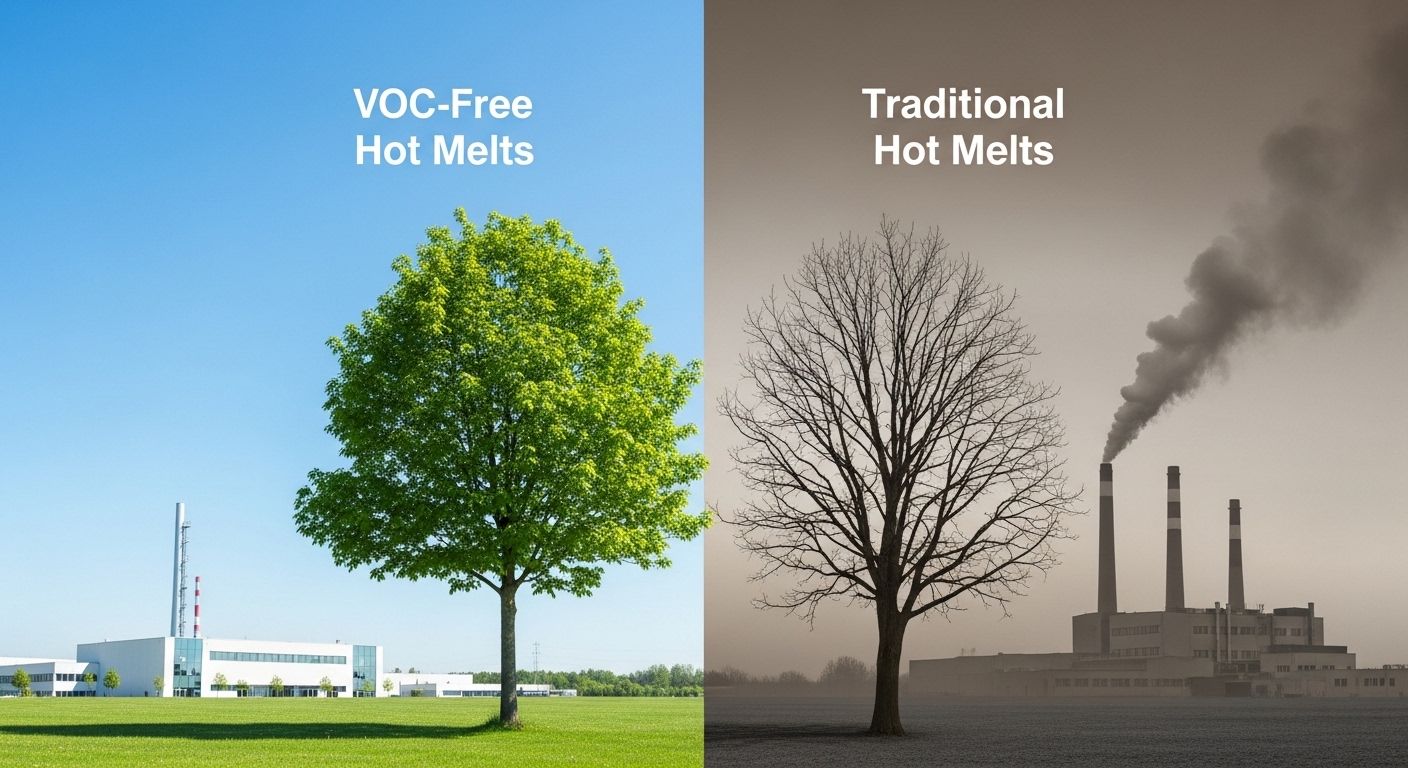
Understanding the fundamental contrast between traditional options and a VOC-free hot melt adhesive is crucial for modern manufacturing. Volatile organic compounds are chemicals that vaporize at room temperature, contributing to air pollution and respiratory hazards. Unlike solvent-heavy alternatives, VOC-free hot melt products emit little to no harmful air pollutants during application. They rely entirely on thermal energy to transition from a solid state to a functional liquid, bypassing the need for hazardous chemical solvents. This operational shift significantly improves indoor air quality and facility safety.
- Eliminates hazardous chemical solvents during the application process.
- Relies on thermal energy rather than volatile evaporation.
- Significantly improves indoor air quality and standard worker safety.
Key Benefits 🌍
The transition to a hot melt adhesive without volatile emissions offers substantial environmental and occupational advantages. By removing airborne pollutants, facilities dramatically reduce their overall toxic footprint. Workers experience a safer environment, free from the respiratory risks associated with inhaling vaporized solvents. Furthermore, regulatory compliance becomes highly streamlined in 2026, as global environmental standards increasingly penalize high-emission manufacturing processes. Implementing these adhesives provides an immediate upgrade to workplace health metrics.
| Feature | Solvent-Based | VOC-Free Hot Melt |
|---|---|---|
| Emissions | High volatile output | Near-zero emissions |
| Worker Safety | Requires intense ventilation | Significantly safer |
| Compliance | Strict regulatory limits | Easily meets 2026 standards |
Limitations ⚠️
Despite their clear advantages, labeling a VOC-free hot melt as entirely eco-friendly oversimplifies a complex reality. Most conventional formulations are derived from synthetic, petroleum-based polymers, meaning they rely on finite fossil fuels. Furthermore, these materials generally lack biodegradability. When products reach the end of their lifecycle, adhesive residues often remain as sticky contaminants. These persistent remnants can severely disrupt recycling streams, degrading the quality of recycled paper and clogging processing machinery. Their sustainability heavily depends on end-of-life handling rather than just emission reduction.
Zero emissions do not equal zero environmental impact. Petroleum-based ingredients and poor biodegradability remain significant hurdles for achieving complete sustainability in packaging.
Selection Criteria 📋
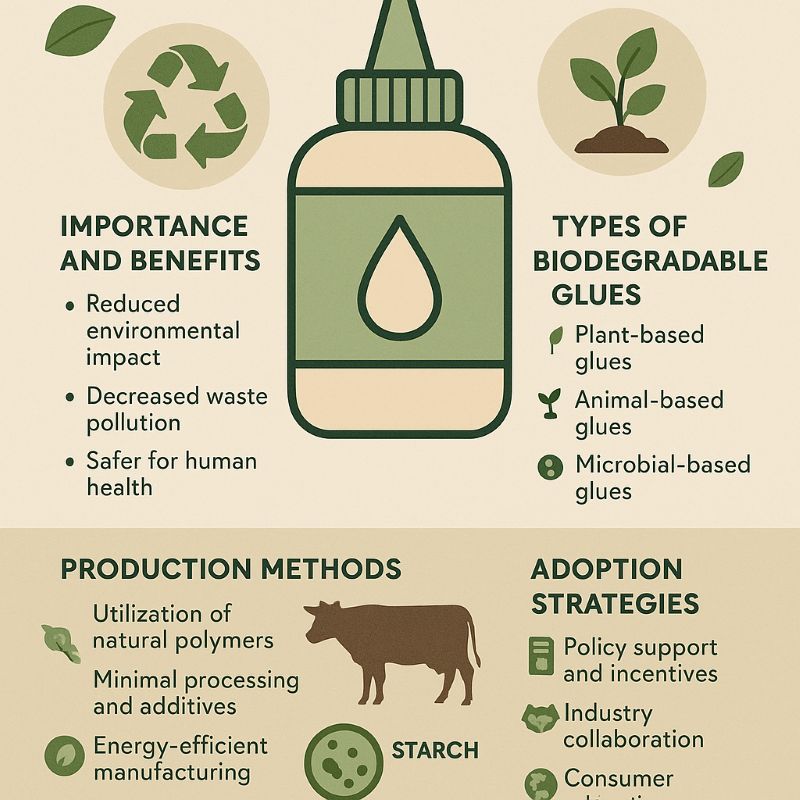
To achieve genuine sustainability, decision-makers must evaluate multiple parameters beyond the basic VOC-free hot melt adhesive designation. The focus must shift toward bio-based content derived from renewable resources and verified end-of-life behavior. Products certified under strict international standards, such as ASTM D6400 or EN 13432, provide verifiable proof of industrial compostability. Additionally, adhesives engineered to melt at lower temperatures actively reduce energy consumption during the application phase, lowering the total carbon footprint of the manufacturing process.
| Evaluation Metric | Key Consideration | Impact Area |
|---|---|---|
| Bio-Based Content | Renewable resource usage | Resource depletion |
| Certifications | ASTM D6400, EN 13432 | Verified compostability |
| Operating Temp | Low-temperature application | Energy consumption |
Practical Tips 💡
Selecting the optimal hot melt adhesive requires aligning specific application needs with broader environmental targets. Begin by auditing your facility's current recycling infrastructure to ensure compatibility with chosen materials. Prioritize certified biodegradable options if the end product is destined for composting facilities. For high-volume packaging lines, low-temperature formulations offer immediate energy savings while maintaining structural integrity. Always demand comprehensive lifecycle data from suppliers rather than accepting generic green marketing claims.
Always match the adhesive's end-of-life profile with your specific product's disposal method. A compostable adhesive offers minimal benefit if applied to a non-compostable plastic substrate.