



Table of Contents
- What Makes Hot Melts ‘Biodegradable’?
- Are Biodegradable Hot Melts Truly Eco-Friendly?
- Environmental Impact Depends on Real-World Conditions
- Best Practices for On-Site Application and Disposal
- Key Considerations Before Choosing Biodegradable Hot Melts
As sustainability targets become more ambitious in 2026, industries are scrutinizing every component of their supply chain, right down to the adhesives holding their packages together. The term "biodegradable hot melt" has emerged as a promising solution, suggesting a greener alternative to traditional petroleum-based glues. But does this label automatically equate to an environmentally sound choice? The answer is far more complex than a simple yes or no. It requires a deeper look into the materials, the manufacturing process, and, most importantly, the end-of-life journey of these modern adhesives.
What Makes Hot Melts ‘Biodegradable’?
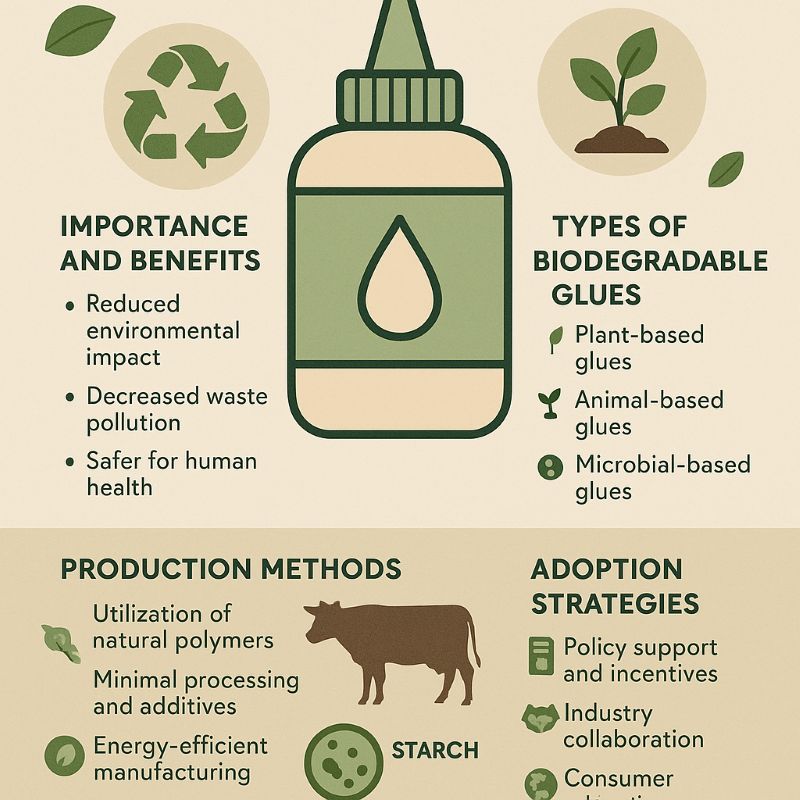
A biodegradable hot melt is an adhesive designed to break down into natural substances like water, carbon dioxide, and biomass through the action of microorganisms. Unlike conventional hot melts derived from synthetic polymers, these greener alternatives are often formulated with a significant portion of bio-based materials, such as polylactic acid (PLA) derived from corn starch or other renewable resources.
However, the term "biodegradable" is not a blanket guarantee of environmental friendliness. For an adhesive to be legitimately classified as such, it must typically meet specific industry standards, which certify that it will decompose under controlled conditions within a set timeframe. The key distinction lies in the composition and the certified end-of-life outcome. While a traditional adhesive may persist in the environment for hundreds of years, a certified biodegradable glue is engineered to return to the ecosystem, provided the right conditions are met.
| Feature | Traditional Hot Melt | Biodegradable Hot Melt |
|---|---|---|
| Primary Source | Petroleum-based synthetic polymers | Renewable, bio-based polymers (e.g., PLA) |
| End-of-Life | Persists in landfills for centuries | Breaks down into natural elements under specific conditions |
| Ideal Use Case | General purpose bonding | Compostable packaging, eco-conscious product assembly |
Are Biodegradable Hot Melts Truly Eco-Friendly?
The "eco-friendly" status of a biodegradable adhesive depends on its entire lifecycle, not just its ability to decompose. While using renewable, plant-based raw materials is a significant step forward, it's crucial to consider the complete picture. The production process, including the energy consumed and any chemical additives used to achieve desired performance characteristics like open time and viscosity, contributes to its overall environmental footprint.
Furthermore, transportation from the manufacturer to the application site adds to carbon emissions. A product's label might highlight its bio-based content, but this doesn't account for the impact of its journey or the non-biodegradable additives that may still be present in the formula. Therefore, a biodegradable hot melt is more accurately described as a potentially more sustainable option rather than an inherently perfect one. Its true benefit is realized only when its entire lifecycle—from creation to disposal—outperforms that of its conventional counterparts.
💡KEY POINT
Factors Beyond Biodegradability
- Production Footprint: The energy and resources used to manufacture the adhesive.
- Raw Material Sourcing: The sustainability of the crops used for bio-based polymers.
- Chemical Additives: The environmental impact of tackifiers, waxes, and other performance enhancers.
- Transportation: The carbon emissions generated from shipping the product.
Environmental Impact Depends on Real-World Conditions
The effectiveness of a biodegradable hot melt is critically dependent on its disposal environment. The term itself can be misleading, as many consumers assume the product will simply disappear if left in a backyard or sent to a landfill. In reality, most certified biodegradable adhesives require the specific environment of an industrial composting facility to break down efficiently.
These facilities provide the necessary conditions—sustained high temperatures, adequate oxygen, and a healthy population of microorganisms—that are absent in a typical landfill. When a biodegradable product ends up in a landfill, it is often buried in an anaerobic (oxygen-deprived) environment. This not only halts the intended decomposition process but can also lead to the release of methane, a potent greenhouse gas. Therefore, the availability and use of proper waste management infrastructure are non-negotiable for realizing the environmental benefits of these adhesives. Without the right system, the "biodegradable" label loses its meaning.
| Disposal Environment | Required Conditions for Decomposition | Typical Outcome for Biodegradable Hot Melt |
|---|---|---|
| Industrial Composting | High heat (~60°C), oxygen, moisture, microbes | Complete breakdown into biomass, CO2, and water within months. |
| Standard Landfill | Low oxygen, low microbial activity, inconsistent temperature | Fails to decompose properly; may release methane. |
| Natural Environment | Variable conditions; not designed for this type of waste | Persists for an unknown and potentially long period. |
Best Practices for On-Site Application and Disposal
To maximize the environmental advantages of environmentally friendly adhesives, businesses must adopt a systemic approach that goes beyond simple procurement. The selection and application process should be guided by a clear understanding of the product's end-of-life path. This starts with ensuring that the adhesive is paired with equally sustainable materials.
Applying a biodegradable adhesive to a non-compostable package, for example, creates a contaminated product that cannot be processed in a single waste stream. The entire package—substrate, ink, and adhesive—should be designed for the same disposal method. Before implementation, companies must verify that their customers or end-users have access to the necessary industrial composting facilities. Communicating proper disposal instructions clearly on the packaging is essential to prevent these materials from ending up in landfills or recycling streams, where they can cause contamination.
Implementation Checklist for Maximum Impact
- Verify Infrastructure: Confirm that industrial composting facilities are accessible in your target markets.
- Match Materials: Ensure the adhesive is used on packaging that is also certified compostable.
- Educate End-Users: Provide clear and simple disposal instructions on the final product.
- Engage Suppliers: Ask your adhesive provider for certification documents and data on the product's entire lifecycle.
Key Considerations Before Choosing Biodegradable Hot Melts
Making the switch to biodegradable hot melts is a commendable step toward corporate sustainability goals, but it requires careful diligence. Before committing, decision-makers should evaluate several critical factors to ensure the choice is both environmentally responsible and operationally sound. The primary consideration is confirming that the product's performance meets the application's demands for bond strength, heat resistance, and processing speed.
Equally important is a thorough assessment of the end-of-life scenario. As of 2026, the term "biodegradable" lacks its intended value without a corresponding, accessible disposal infrastructure. It is crucial to look past marketing claims and demand transparent data from suppliers regarding certifications, material composition, and the specific conditions required for decomposition. A truly sustainable choice is an informed one, based on a holistic view of the product's impact from cradle to grave.
⚠️CAUTION
Common Misconceptions to Avoid
- "Biodegradable" does not mean "Recyclable." These materials can contaminate traditional plastic recycling streams.
- It is not a solution for litter. Biodegradable adhesives are not designed to break down quickly in the open environment like oceans or soil.
- Not all formulas are equal. The percentage of bio-based content and the types of additives can vary significantly between products.