


Table of Contents
- Understanding Hot Melt Adhesives
- Core Chemical Differences Explained
- Durability, Heat, and Environmental Resistance
- Choosing the Right Hot Melt for Your Needs
- Key Takeaways for Making Informed Decisions
Imagine assembling a critical component for an automotive interior. The adhesive must withstand scorching summer heat and freezing winter temperatures for years. Now, picture crafting a simple cardboard model for a school project. The demands are vastly different, yet both tasks might involve a "hot melt" adhesive. This is where the crucial distinction begins. While they may look similar coming out of a glue gun, standard and high-performance hot melt adhesives are worlds apart in their chemistry, capabilities, and intended applications. Understanding these differences is not just a matter of preference; it's essential for project success, product longevity, and safety.
Understanding Hot Melt Adhesives
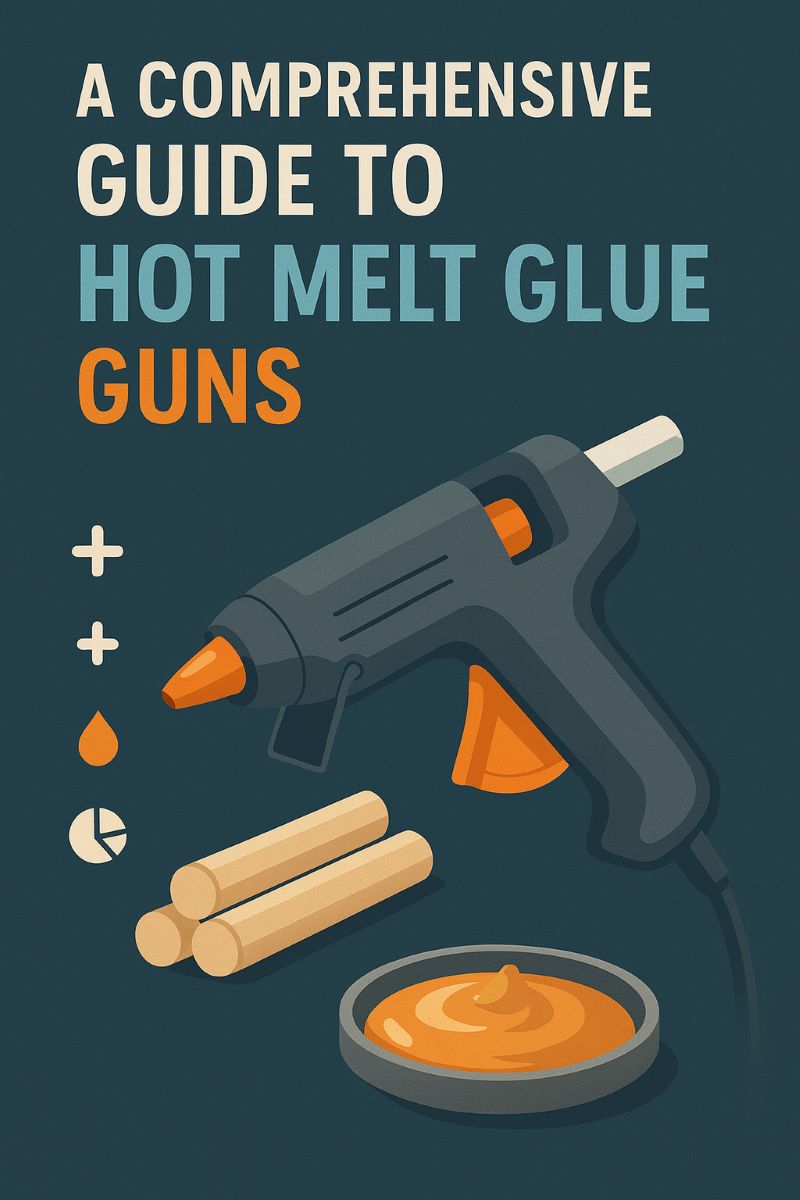
Hot melt adhesives are thermoplastic polymers that are applied in a molten state and form a bond upon cooling. Their rapid setting time, ease of use, and solvent-free nature have made them a popular choice across countless industries, from packaging and woodworking to electronics and product assembly. The basic principle is simple: heat to melt, apply, and let it cool to bond. This efficiency is their primary appeal.
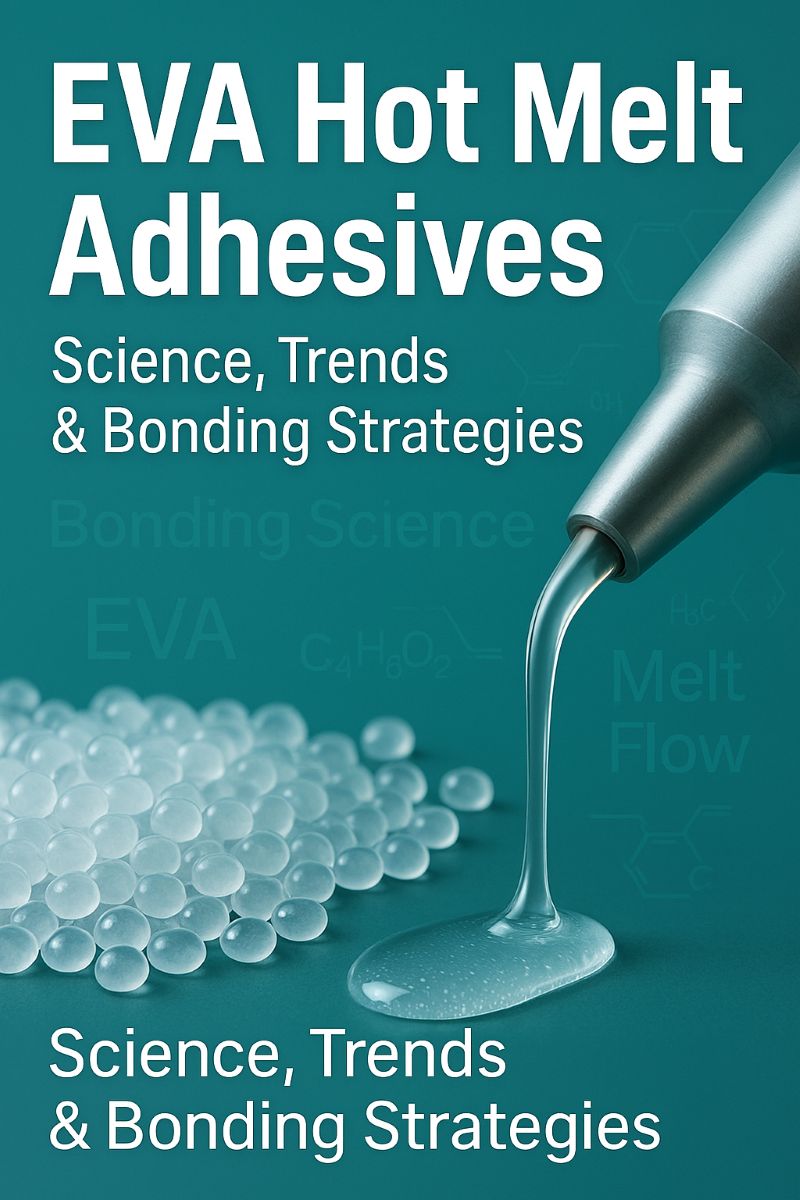
However, the term "hot melt" encompasses a broad spectrum of formulations. At one end, we have standard hot melts, typically based on Ethylene-vinyl acetate (EVA). These are the familiar, all-purpose sticks used for general crafts, packaging, and light-duty assembly. They offer a reliable bond for everyday materials under normal conditions. At the other end is high-performance hot melt, a category engineered for much more demanding scenarios. These advanced formulations are designed to deliver superior strength and resilience where standard adhesives would fail.
💡KEY POINT
- Standard Hot Melt: Ideal for general-purpose, low-stress applications like crafts, packaging, and temporary fixes. Typically EVA-based.
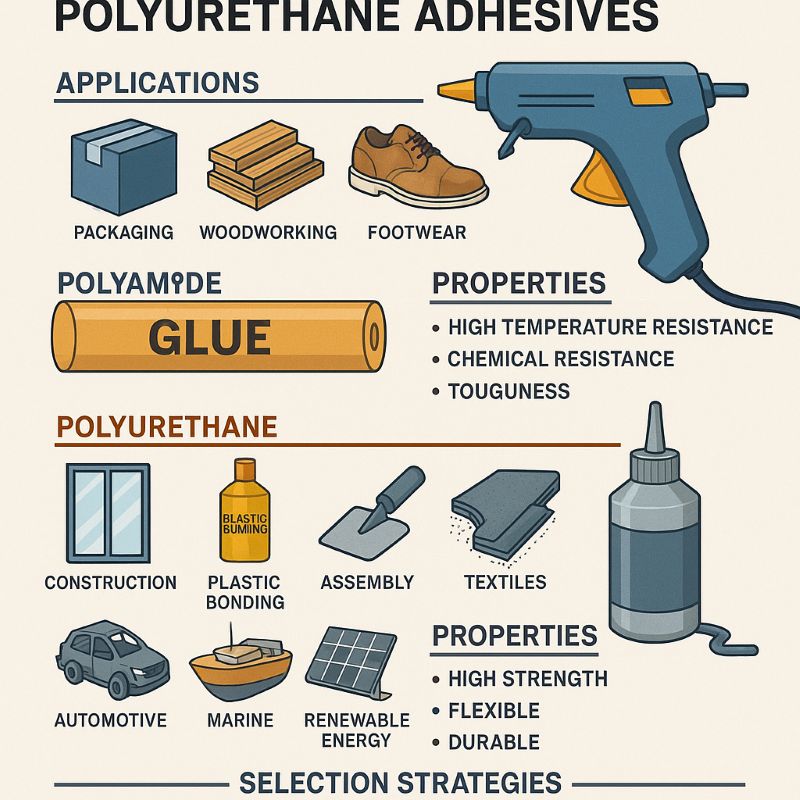
- High-Performance Hot Melt: Engineered for demanding industrial applications requiring superior strength, temperature resistance, and long-term durability. Based on advanced polymers like polyamides or polyurethanes (PUR).
- Core Function: Both types are applied hot and bond as they cool, but their underlying chemistry dictates their performance limits.
Core Chemical Differences Explained
The distinction between standard and high-performance hot melt is not just a marketing label—it represents a fundamental shift in the chemical makeup of the adhesive. This chemical foundation directly dictates the adhesive's strength, flexibility, and resistance to external factors.
Standard hot melts are primarily physical adhesives. They melt when heated and solidify upon cooling, a process that is reversible. They create a bond by flowing into the surface pores of the materials and then hardening. High-performance hot melt adhesives, particularly reactive types like Polyurethane (PUR), go a step further. After the initial physical bond is formed through cooling, they undergo a secondary chemical reaction, typically by reacting with moisture in the air or the substrate. This process, called cross-linking, creates an incredibly strong, permanent, and irreversible bond that is far more robust than a simple physical bond. This is the key reason they are specified for structural or critical applications.
| Feature | Standard Hot Melt (e.g., EVA) | High-Performance Hot Melt (e.g., PUR, Polyamide) |
|---|---|---|
| Bonding Mechanism | Physical (melts and solidifies) | Physical, then Chemical (cross-linking) |
| Reversibility | Reversible (can be re-melted) | Irreversible (permanent chemical bond) |
| Primary Polymer | Ethylene-vinyl acetate (EVA) | Polyurethane (PUR), Polyamide, Metallocene |
Durability, Heat, and Environmental Resistance
The true test of an adhesive lies in its ability to perform under stress. This is where the superiority of high-performance hot melt becomes undeniable. While a standard hot melt may hold a cardboard box together perfectly, it will likely fail when exposed to the high temperatures inside a shipping container in summer or the moisture of a humid environment.
Heat and Cold Resistance
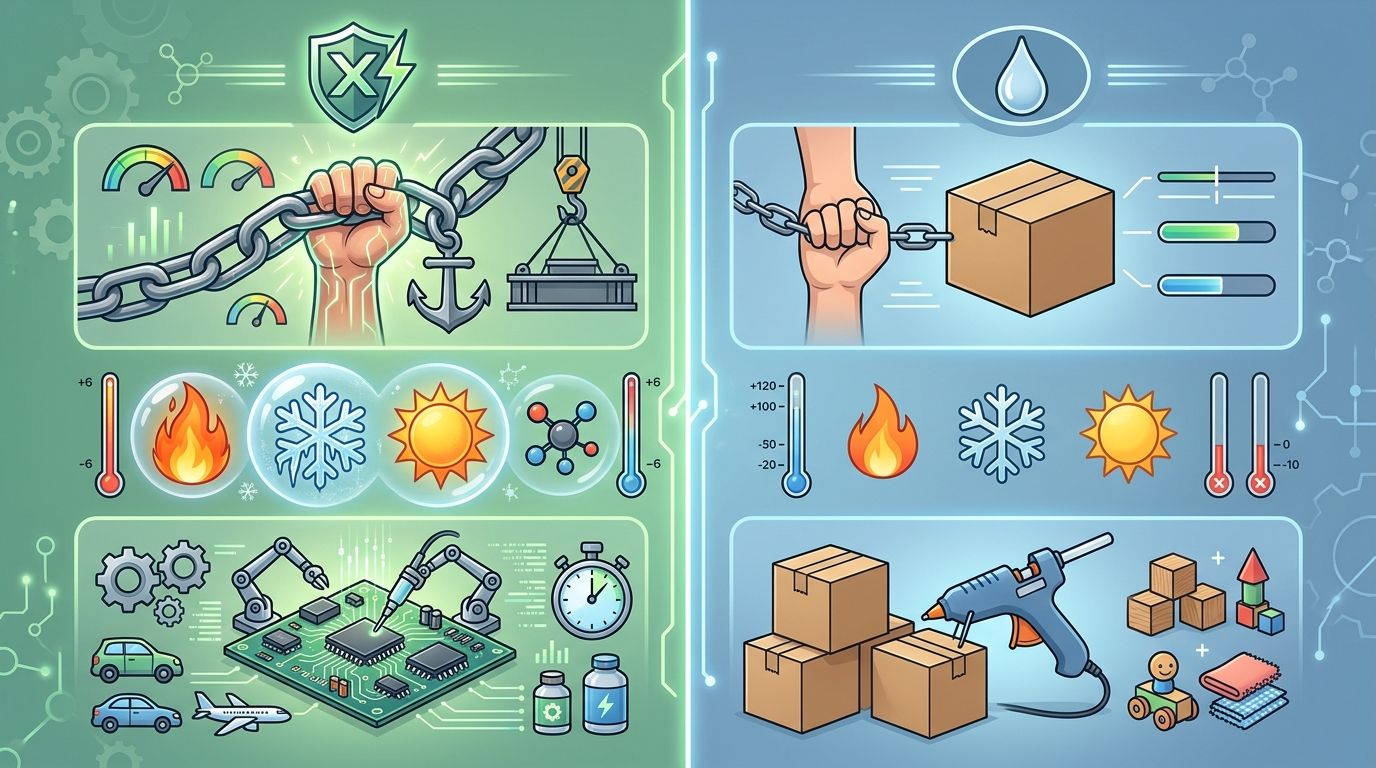
Standard EVA hot melts typically have a low service temperature range and can soften or become brittle at temperature extremes. In contrast, high-performance hot melt formulations are engineered to maintain their bond integrity across a much wider temperature spectrum. They resist softening at high temperatures and remain flexible without cracking in the cold, making them essential for automotive, electronics, and outdoor applications.
Environmental Resilience
Beyond temperature, these advanced adhesives offer superior resistance to moisture, solvents, oils, and other chemicals. The cross-linked chemical structure of a PUR hot melt, for example, creates a formidable barrier that protects the bond from degradation. This resilience is critical in applications where the final product will be exposed to cleaning agents, weather, or industrial fluids.
When evaluating an adhesive for a demanding application, always test it under simulated real-world conditions. Expose bonded samples to the highest and lowest expected temperatures, as well as any moisture or chemicals they might encounter. This practical test is the best way to confirm that the chosen adhesive meets the long-term durability requirements of your project.
Choosing the Right Hot Melt for Your Needs
Selecting the correct adhesive is a critical decision that impacts the quality, safety, and lifespan of your product or project. The choice is not about which hot melt is "better" in a general sense, but which is the right tool for the specific job at hand. Using a high-performance adhesive for a simple craft project is unnecessary and not cost-effective, while using a standard adhesive for a structural automotive part is a recipe for failure.
Consider the following factors to guide your decision:
- Substrates: What materials are you bonding? Some high-performance adhesives offer better adhesion to difficult-to-bond plastics or metals.
- End-Use Environment: Will the bond be exposed to extreme heat, cold, moisture, or chemicals? If so, a high-performance hot melt is almost certainly required.
- Stress and Load: Will the bond be under constant stress, vibration, or impact? Structural applications demand the superior strength of a performance-grade adhesive.
- Required Lifespan: For products that need to last for years, the long-term stability of a high-performance, cross-linking adhesive is essential.
| Application Scenario | Recommended Adhesive | Key Consideration |
|---|---|---|
| DIY Crafts, Hobbies, Prototyping | Standard Hot Melt | Low stress, controlled environment |
| Packaging and Case Sealing | Standard or Mid-range Hot Melt | Speed and cost-effectiveness |
| Automotive Interior Assembly | High-Performance Hot Melt | Extreme temperature resistance, vibration |
| Electronics Potting/Encapsulation | High-Performance Hot Melt | Heat dissipation, chemical resistance |
| Window and Door Manufacturing | High-Performance Hot Melt (PUR) | Structural strength, weather resistance |
Key Takeaways for Making Informed Decisions
The choice between standard and high-performance hot melt is a crucial engineering and manufacturing decision. While they may appear similar, their fundamental chemical differences lead to vastly different performance outcomes. Simply opting for a stronger adhesive is not the full picture; it's about matching the adhesive’s specific properties to the demands of the application.
Remember that the adhesive is often one of the most critical components in an assembly, yet it can be overlooked. An incorrect choice can lead to product failure, safety hazards, and costly recalls. For everyday tasks in stable environments, a standard hot melt is a perfectly suitable and economical choice. However, for any application where the bond will face harsh conditions—be it temperature, moisture, or physical stress—investing in a high-performance hot melt adhesive is non-negotiable. As of 2026, the advancements in polymer chemistry continue to expand the capabilities of these adhesives, making them integral to innovation in demanding industries.
⚠️CAUTION
Under-specifying an adhesive is a critical risk. Using a standard hot melt in an application that requires high-performance characteristics can lead to catastrophic bond failure. This can compromise the structural integrity of the final product, pose a significant safety risk to end-users, and result in severe damage to a brand's reputation. Always err on the side of caution and select an adhesive that exceeds the minimum requirements of the application.