



Table of Contents
- Understanding the Core Composition of Biodegradable Hot Melt
- The Durability Spectrum: How Long Does It Really Last?
- Key Environmental Triggers for Degradation
- The Performance vs. Planet Trade-Off
- Practical Applications and Ideal Use-Case Scenarios
- A Strategic Guide to Selecting the Right Adhesive
As sustainability shifts from a corporate buzzword to a core business imperative in 2026, industries are re-evaluating every component of their supply chain—right down to the glue that holds products together. The rise of biodegradable hot melt adhesives represents a significant step forward, but it also introduces a critical question for engineers, product managers, and environmentally-conscious consumers: How durable are these eco-friendly solutions? The answer isn't a simple "yes" or "no." It lies in understanding that these materials are engineered for a specific lifecycle, balancing robust performance during their intended use with a designed-for-disposal end. This guide explores the nuanced reality of their durability.
Understanding the Core Composition of Biodegradable Hot Melt
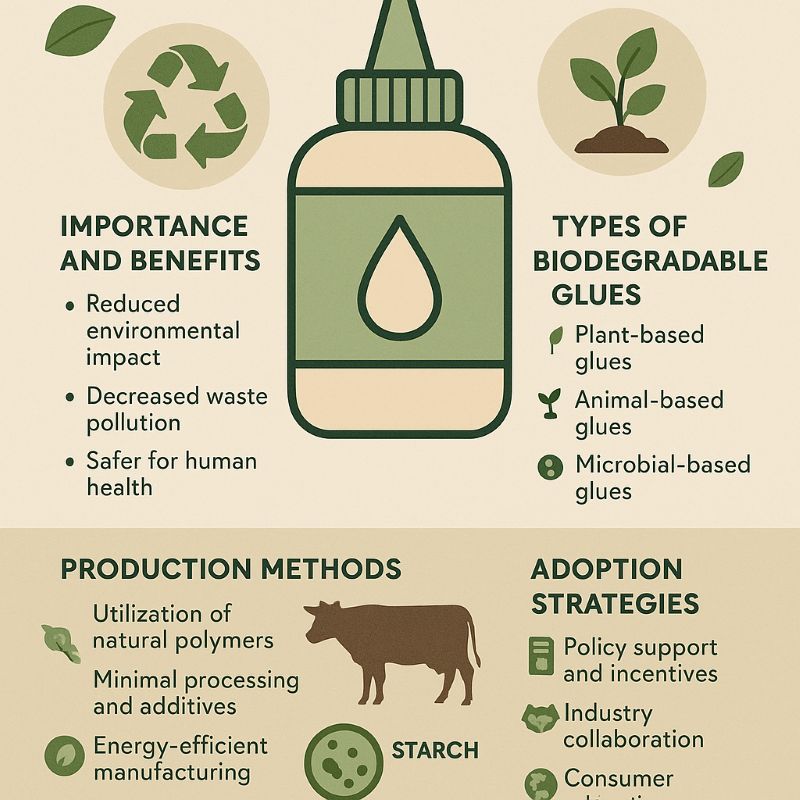
The durability of a biodegradable hot melt adhesive is intrinsically linked to its formulation. Unlike traditional synthetic polymer-based adhesives designed for maximum longevity, these eco-friendly alternatives are typically derived from renewable resources. The most common base materials include polylactic acid (PLA), starch-based polymers, and polycaprolactone (PCL). Each of these components imparts unique characteristics that define the adhesive's strength, flexibility, and, most importantly, its lifespan.
PLA, derived from fermented plant starch, offers good rigidity and a strong bond, making it suitable for packaging applications. Starch-based adhesives are often more cost-effective and have excellent biodegradability but may be more sensitive to moisture. PCL provides greater flexibility and a slower degradation rate, offering a middle ground. The key takeaway is that these materials are not inherently weak; they are specifically engineered to maintain structural integrity under normal storage and use conditions. Their "weakness" is a designed feature that activates only when specific environmental triggers are introduced, ensuring they return to the ecosystem without causing long-term pollution.
💡KEY POINT
- Source Materials: Biodegradable adhesives are made from renewable resources like PLA, starch, and PCL.
- Engineered Lifespan: Their composition is designed for durability during use and rapid breakdown at the end of life.
- Variable Properties: The specific material used determines the adhesive's strength, moisture resistance, and degradation speed.
The Durability Spectrum: How Long Does It Really Last?
The lifespan of a biodegradable glue can be divided into two distinct phases: shelf life and in-use durability. When stored correctly in a cool, dry environment, many high-quality biodegradable hot melts can maintain their performance characteristics for up to 24 months. During this period, they remain stable and ready for application, performing similarly to their non-biodegradable counterparts.
However, once applied, their durability is subject to the conditions of the product's lifecycle. In a controlled, indoor environment, a bond from a biodegradable adhesive can last from several months to a few years. For its intended purpose—such as sealing a cardboard box for shipping or assembling a disposable product—this is more than sufficient. The bond is designed to be robust enough for temporary or semi-permanent uses. The degradation process only accelerates significantly when the product is discarded and exposed to the elements required for composting or biodegradation.
| Condition | Expected Durability | Key Influencing Factor |
|---|---|---|
| Dry, Indoor Storage | 12-24 months | Low humidity, stable temperature |
| Standard Product Use | Several months to 2 years | Minimal exposure to moisture/microbes |
| High-Moisture/Outdoor | Weeks to a few months | Presence of water, heat, and microbes |
Key Environmental Triggers for Degradation
The "biodegradable" aspect of these adhesives is not a passive trait; it is an active process initiated by specific environmental factors. Understanding these triggers is crucial for predicting and managing the adhesive's durability. The three primary catalysts for decomposition are moisture, heat, and microorganisms.
Moisture is often the first and most critical trigger. Water can hydrolyze the polymer chains in materials like PLA, weakening the adhesive bond over time. This is why these adhesives are not typically recommended for products that will be exposed to prolonged high humidity or direct contact with water. Heat accelerates this chemical reaction, meaning a product left in a hot, damp environment will degrade much faster than one kept in a cool, dry place. Finally, microorganisms such as bacteria and fungi found in soil or compost environments are the final agents of decomposition. They consume the organic material of the adhesive, breaking it down into natural elements like water, carbon dioxide, and biomass. Without these conditions met, the adhesive remains surprisingly stable.
⚠️CAUTION
To maximize the in-use lifespan of products using biodegradable hot melt, it is critical to protect them from prolonged exposure to high humidity, extreme temperatures, and direct contact with bioactive environments like soil or compost until disposal.
The Performance vs. Planet Trade-Off
Adopting eco-friendly hot melt requires a shift in perspective from seeking indefinite durability to embracing a "fit-for-purpose" lifespan. The central concept is a strategic balancing act between performance and environmental responsibility. A traditional adhesive might hold a bond for decades, but if the product it's used on is designed to be discarded in months (e.g., a shipping box), that excess longevity contributes to landfill waste.
Biodegradable adhesives resolve this mismatch. They are formulated to be strong and reliable for their intended use cases but no longer. This trade-off is not a compromise on quality but rather an intelligent design choice. The goal is to ensure the adhesive does not outlive the product it holds together. By accepting a finite lifespan, companies can significantly reduce their environmental footprint without sacrificing the performance needed during the product's active life. This balance is the core value proposition of biodegradable adhesives and a key consideration for sustainable product design in 2026.
Practical Applications and Ideal Use-Case Scenarios
The unique properties of biodegradable hot melt make it an ideal solution for a wide range of short-to-medium-term applications. Its ability to provide a strong bond that breaks down under specific conditions is a perfect match for industries focused on sustainability and circular economy principles. The primary market is in packaging, where it is used for case and carton sealing, tray forming, and labeling.
Beyond packaging, these adhesives are increasingly used in disposable consumer goods. This includes items like paper-based food service products, disposable hygiene products, and even certain types of bookbinding where longevity is not the primary concern. The key is to match the adhesive's expected lifespan with the product's intended lifecycle. For applications requiring decades of performance or resistance to harsh weather, traditional adhesives remain the better choice. However, for the vast majority of consumer goods and shipping materials, biodegradable hot melt offers more than adequate performance.
| Application Type | Suitability for Biodegradable Hot Melt | Rationale |
|---|---|---|
| E-commerce Packaging | High | Product lifecycle is short; compostability is a key benefit. |
| Disposable Food Service | High | Designed for single use and disposal in organic waste streams. |
| Long-Term Archiving | Low | Requires indefinite bond strength and stability over decades. |
| Outdoor Construction | Low | Constant exposure to moisture and temperature fluctuations. |
A Strategic Guide to Selecting the Right Adhesive
Choosing the correct biodegradable adhesive is a critical decision that impacts both product performance and sustainability goals. A one-size-fits-all approach does not work. Instead, a careful evaluation of the specific application and its environmental context is necessary. Before making a selection, product designers and engineers should consider a series of key questions to ensure the chosen adhesive aligns with their requirements.
This strategic selection process ensures that you leverage the environmental benefits of biodegradability without compromising the integrity of your product during its intended lifecycle. By matching the adhesive's properties to the application's demands, you can confidently adopt these innovative materials as part of a responsible and effective manufacturing process.
Before selecting a biodegradable hot melt, ask these critical questions:
- What is the product's required lifespan? Does it need to last weeks, months, or years?
- What environmental conditions will it face? Consider temperature, humidity, and potential exposure to UV light or moisture during shipping and storage.
- What are the substrate materials? The adhesive must bond effectively with the specific types of paper, cardboard, or bioplastics being used.
- What is the end-of-life scenario? Is the product intended for industrial composting, home composting, or another disposal method? This will determine the required rate of biodegradation.