


Table of Contents
- Overview of the Hot Melt Adhesive Market Structure
- Purchasing from Local Retail and Hardware Stores
- The Pros and Cons of Online Marketplaces
- Sourcing from Specialized Industrial Suppliers
- Key Considerations: From Brands to After-Sales Support
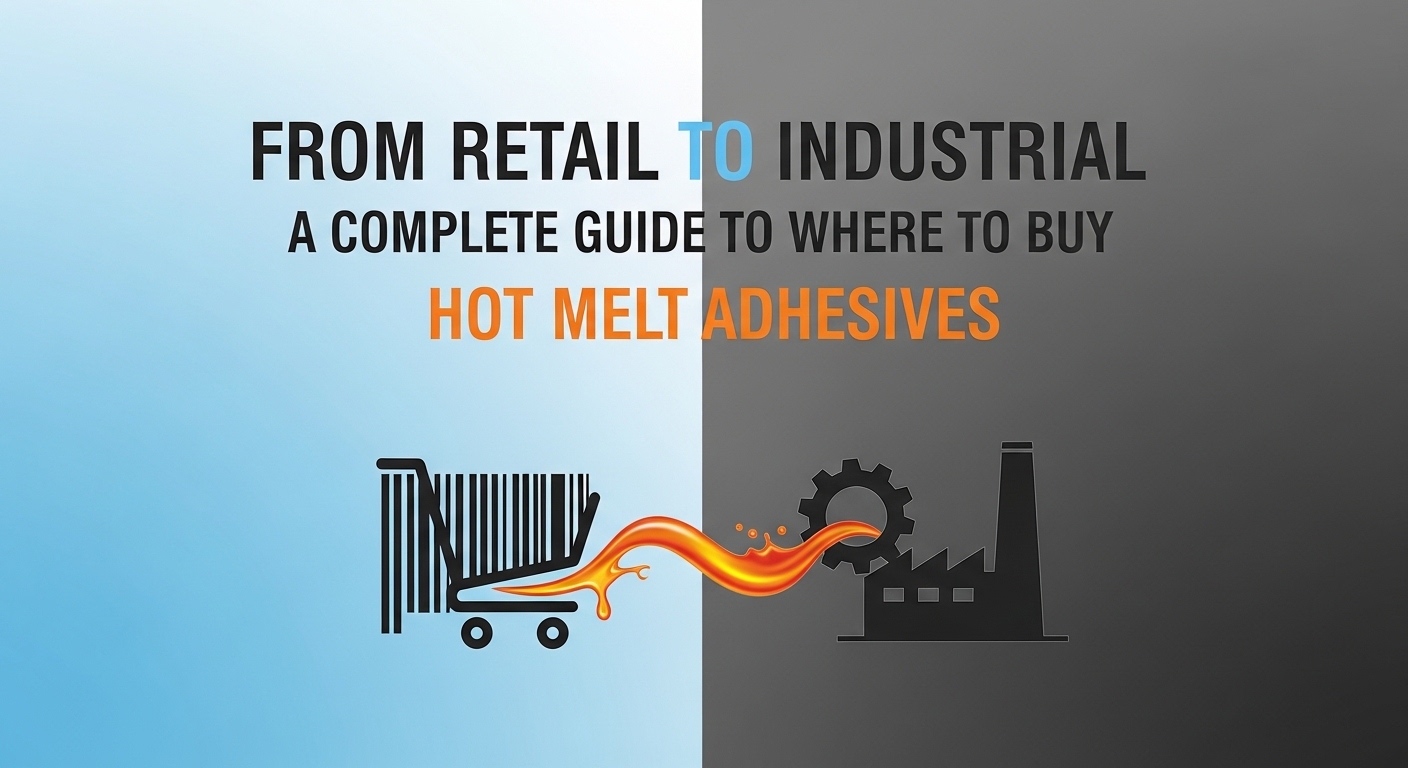
In 2026, the global market for hot melt adhesives continues to expand, a testament to their versatility in everything from home crafting to high-speed industrial packaging. For the end-user, however, a fundamental question persists: where is the best place to acquire these thermal adhesives? The answer is not a single destination but a strategic choice dependent on the project's scale, technical requirements, and urgency. Whether you need a few sticks for a weekend DIY project or a metric ton for a manufacturing line, understanding the distinct purchasing channels is the first step toward a successful application. This guide provides a comprehensive map of the procurement landscape, helping you navigate from local storefronts to global industrial suppliers.
Overview of the Hot Melt Adhesive Market Structure
The hot melt adhesive (HMA) market is broadly segmented into two primary sectors: the consumer retail market and the business-to-business (B2B) industrial market. This division directly influences where and how these products are sold. The consumer market typically handles general-purpose adhesives, commonly known as hot melt glue sticks, designed for crafts, household repairs, and small-scale projects. These are distributed through an extensive network of retailers. In contrast, the industrial market focuses on high-performance, specialized formulations sold in bulk forms like pellets, chips, or blocks. These products are engineered for specific applications in manufacturing, packaging, and assembly, and are procured through more direct, specialized channels. Understanding this fundamental structure is crucial for identifying the most efficient and cost-effective source for your needs.
💡KEY POINT
- Consumer Market: Primarily offers general-purpose glue sticks for DIY and small repairs. Distribution is wide through retail channels.
- Industrial Market: Provides specialized, high-performance adhesives in bulk (pellets, blocks) for manufacturing. Distribution is direct through specialized suppliers.
- Form Factor: The product's form—stick, pellet, or block—is often a clear indicator of its intended market and application.
Purchasing from Local Retail and Hardware Stores
For immediate needs and small-scale applications, local retail outlets and hardware stores are the most convenient option. These stores are ideal for hobbyists, DIY enthusiasts, and anyone needing to make a quick household repair. The primary advantage is instant availability; you can walk in, purchase the product, and begin your project on the same day without waiting for shipping. You also have the opportunity to physically inspect the packaging and product. However, this convenience comes with trade-offs. The selection is typically limited to standard, all-purpose glue sticks in common sizes. Specialized formulations for specific materials or temperature requirements are rarely available. Furthermore, the per-unit cost is generally higher compared to buying in larger quantities from other sources.
| Feature | Local Retail/Hardware | Online/Industrial Suppliers |
|---|---|---|
| Availability | Immediate | Requires shipping/lead time |
| Selection | Limited to general-purpose types | Extensive and specialized |
| Unit Cost | Higher | Lower (especially in bulk) |
| Expertise | General staff assistance | Access to technical specialists |
The Pros and Cons of Online Marketplaces
Online marketplaces have revolutionized access to a vast array of products, and hot melt adhesives are no exception. The most significant benefit of purchasing online is the immense selection. Consumers and businesses can find everything from standard craft sticks to semi-industrial formulations for more demanding projects, all from a single interface. Competitive pricing is another major draw, as numerous sellers compete for business, and purchasing in larger packs often yields significant savings. User reviews can also provide valuable insight into a product's real-world performance. However, the primary drawback is the inability to physically inspect the product before purchase, which can sometimes lead to quality inconsistencies. Additionally, you must account for shipping times, which makes online purchasing unsuitable for urgent needs.
When buying hot melt adhesives from online marketplaces, always scrutinize the product's technical data sheet if available. Pay close attention to key specifications like viscosity, open time, softening point, and recommended application temperature to ensure it matches your project's requirements. Prioritize sellers with detailed product descriptions and positive, credible reviews.
Sourcing from Specialized Industrial Suppliers
When the application is critical and the volume is high, sourcing directly from a specialized industrial supplier is the standard professional practice. These suppliers cater to manufacturing sectors such as packaging, automotive, electronics, and construction. Their core advantage lies in providing expert consultation and highly specialized products. An industrial user can work with a technical representative to identify the precise adhesive formulation for their substrate, equipment, and performance needs. This channel ensures consistent quality, access to technical support, and the most favorable pricing for bulk orders. The procurement process is more involved, often requiring a formal inquiry, sample testing, and contract negotiation, but it is essential for ensuring operational efficiency and final product integrity in a commercial setting.
| Step | Action | Purpose |
|---|---|---|
| 1. Define Needs | Document substrates, application temp, open time, and volume. | To provide clear requirements to the supplier. |
| 2. Identify Suppliers | Research manufacturers specializing in your industry. | To find a partner with relevant expertise. |
| 3. Request Consultation | Contact sales or technical teams for recommendations. | To leverage expert knowledge for optimal product selection. |
| 4. Test Samples | Obtain and test recommended adhesive samples on your line. | To validate performance before committing to a large order. |
| 5. Negotiate & Order | Finalize pricing, delivery schedules, and place a bulk order. | To establish a reliable and cost-effective supply chain. |
Key Considerations: From Brands to After-Sales Support
Selecting the right purchase channel is only half the battle; choosing the right product is equally critical. While specific brand names vary, it's important to recognize that established manufacturers often specialize in adhesives for particular industries. A company known for packaging adhesives may not be the best source for woodworking or electronics applications. Therefore, look for suppliers whose expertise aligns with your field. Always verify the product's quality and authenticity by checking its technical specifications and ensuring it comes from a reputable source. For industrial users, after-sales support is non-negotiable. This includes access to technical assistance for troubleshooting application issues and clear policies regarding product returns or defects. Using an incorrect or low-quality adhesive can lead to bond failure, damaged equipment, and significant financial loss.
⚠️CAUTION
The risks associated with using an unsuitable hot melt adhesive are significant. A low-quality product can result in weak bonds that fail under stress or environmental changes. Using an adhesive with the wrong viscosity or temperature profile for your equipment can cause nozzle clogs, equipment damage, and production downtime. Always prioritize quality and compatibility over minimal cost savings.